Sea Cock Advice

Little Dorrit

Well-Known Member
Joined
27 Jan 2010
Messages
1,295
Location
South Coast
Visit site
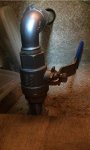
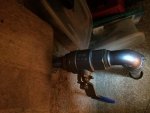
I have a 3/4 inch ball valve as shown on the attached.

This is for a sink drain which due to the height and placement of the ball valve is not draining properly as a result of there being little run on the waste before it reaches the ball valve.

I plan to remove the 90-degree bend and replace it with a bend with 135-degree or close to improve the water flow out of the sink.

I have tried to remove the bend only but it's proving difficult (although I haven't) hit it with a mallet in fear of doing serious damage to the skin fitting. It appears to have something resembling horse hair around the tread?!

If possible I would like to remove the seacock and leave the skin fitting in place and then either replace the bend or replace the entire seacock with one the sits closer to the hull.

Can, as best you can from the attached, tell me how best to remove the seacock without damaging the skin fittings?

Once removed will I be able to screw the ball valve down more or will I need to cut some of the thread off the through hull fitting or should I replace the entire fitting.
IMG_3758.jpg
 
Last edited:
It looks like the image is rotated 90 degrees, so unsure where the skn fitting is, but it appears to be next to the valve, opposite the elbow side?
If so, then it should be possible to remove the hose clip and hose from the elbow, then, using two suitable sized spanners, to rotate the valve and elbow together to remove them as a unit. (assuming the boat is out of the water??). Then split the elbow from the ball valve using a stillson type pipe wrench on the elbow and a spanner on the valve.
If the boat is still in the water: Remove hose clip and hose. Hold valve steady with one spanner while turning the elbow with a pipe wrench. The horse hair is an old method of thread sealing. More common now to use PTFE tape.
 
Can, as best you can from the attached, tell me how best to remove the seacock without damaging the skin fittings?

Brute force, but you need some way to stop the skin fitting turning, which is a step wrench in the outside or some bodged substitute.

As a result of a few accumulated days spent strugling to do this in the past I now just take an angle grinder to the skin fitting (on the outside). Takes about 30 mins and the time and knuckles saved is worth the cost of a new skin fitting. Wear goggles etc.

I don't understand the 135 degree plan you have.
 
To increase the flow from the sink won't you have to either have a steeper fall or increase the pipe size. Increasing the bend is not, in my non-engineer brain, likely to have much effect if any.

I have the same problem - the main restriction seems to at the plug hole end. Cleaning it out now and then helps. I use very hot water and the pump from the Pela, the latter dislodging stuff by sucking rather than compacting.
 
I would leave the valve in place if it is still sealing properly. As for the elbow I would see if a large radius bend or 'easy bend' would fit instead of the one that is in the photo.
Note that when tightening a thread over PTFE tape (instead of the hemp yarn that you have now) you should turn whatever it is slowly until it approaches the correct position / alignment because PTFE tape doesn't take too kindly to being unscrewed for correcting the alignment. Also, there is no need to over-tighten.

As always, what I write is IMHO.

P.S. A frequent cause of poor draining is barnacle growth after the valve, especially when the skin fitting incorporates a grid and / or a scoop.
 
Last edited:
I would first check you haven't got a blockage in he pipe or bend .
If then you still need to remove the elbow use 2 stillsons , you will have a better grip then using spanners, hold the seacock with one and use the other one to turn the elbow .
You could also use a hot air gun on the elbow , just warm it up but put some wet rags on the hull fitting and around the hull to stop them getting hot.
I never had a problem removing sea cock or elbow, it's the hullfitting that have couse me problem, so now I just grind them off.
 
. It appears to have something resembling horse hair around the tread?!

View attachment 68023

This was a vegetable fibre material, called "Tow" and was used in conjunction with a putty-like liquid called "Boss White". There was a certain level of skill required to form this stuff into a circular gasket of just the right size. I've used it, many years ago, on DIY plumbing projects, but could never do it as neatly as a trained plumper could.
 
This was a vegetable fibre material, called "Tow" and was used in conjunction with a putty-like liquid called "Boss White". There was a certain level of skill required to form this stuff into a circular gasket of just the right size. I've used it, many years ago, on DIY plumbing projects, but could never do it as neatly as a trained plumper could.

It was hemp that was used for plumbing with a slim of boss white to seal it , great stuff , I would use loctite 55 rather then PTFE tape , it seal very well plus you can move the seacock back to have it where you want it without it leaking .
 
As a result of a few accumulated days spent strugling to do this in the past I now just take an angle grinder to the skin fitting (on the outside). Takes about 30 mins and the time and knuckles saved is worth the cost of a new skin fitting. Wear goggles etc.

Slight thread drift ......

I recently replaced five brass skin fittings in my transom. Anyone who has worked on a Westerly will know how much fun that was. Westerly stick them in with what appears to be gelcoat, then they put gelcoat on the inside, screwed the nut on and went over that with gelcoat too. I used a multi tool with a metal cutting blade, brilliant bit of kit. Chop the fitting off inside, flush with the nut, split the nut into four and remove those bits then outside, cut the flange into four. Finally, stick a hacksaw blade through the hole to complete splitting the fitting into four, it falls apart then with a tap from a hammer and punch.

Still not a particularly nice job, but no bits of hot brass flying around and no danger of scorching the gelcoat. Every boat owner needs a multi tool :)
 
Slight thread drift ......

I recently replaced five brass skin fittings in my transom. Anyone who has worked on a Westerly will know how much fun that was. Westerly stick them in with what appears to be gelcoat, then they put gelcoat on the inside, screwed the nut on and went over that with gelcoat too. I used a multi tool with a metal cutting blade, brilliant bit of kit. Chop the fitting off inside, flush with the nut, split the nut into four and remove those bits then outside, cut the flange into four. Finally, stick a hacksaw blade through the hole to complete splitting the fitting into four, it falls apart then with a tap from a hammer and punch.

Still not a particularly nice job, but no bits of hot brass flying around and no danger of scorching the gelcoat. Every boat owner needs a multi tool :)

Sounds like a nice easy job!
 
Is it easy to shift? Could I loosen it?

You won't know until you try, but the general consensus is that the problem is holding the skin fitting tight. However, as yours is above the waterline it really does not matter. Just und it if you can - if the boat is out of the water get somebody to jam a bar in the outlet - many have some lugs so you can stop the skin fitting from turning while you undo the valve.

However from the way you have described your drain doubt that just changing the angle will not make any difference. If it is not running and the pipe and valve are clear the only answer is a greater vertical fall which will mean a new outlet lower down. You may get away with one just above the waterline depending on how high up your sink drain is.
 
It looks like the image is rotated 90 degrees, so unsure where the skn fitting is, but it appears to be next to the valve, opposite the elbow side?

This way up perhaps

Paella's sink drain.jpg

You won't know until you try, but the general consensus is that the problem is holding the skin fitting tight. However, as yours is above the waterline it really does not matter. Just und it if you can -

Are you sure?
 
It's below the waterline.

Sorry for that assumption. Misled by the orientation of the original photo.

Changing the angle of the bend may help, but the real problem is because the outlet is below the waterline so the bottom of the run fills with water and the water coming from the sink has to displace that water which reduces the head and pressure. Coupled with a small bore leads to slow draining. Add a bit of debris and it gets even slower.

The only real improvement is to move it to just above the waterline so the waste goes out into air. Of course not everybody likes seeing their waste go that way, but it does mean it drains better.

I would not try and undo any of the below the waterline plumbing while still in the water. Better to wait until you are hauled out.
 
It was hemp that was used for plumbing with a slim of boss white to seal it , great stuff , I would use loctite 55 rather then PTFE tape , it seal very well plus you can move the seacock back to have it where you want it without it leaking .

That sounds right - hemp is the fibre used for sealing threads, I think tow is cotton waste.
 
Use a hot air gun to heat the joint, that usually cracks the seal and it should undo easily enough. Be careful where it’s pointing, use a shield to prevent collateral damage.
 
Once removed will I be able to screw the ball valve down more or will I need to cut some of the thread off the through hull fitting or should I replace the entire fitting.

You will not be able to screw the ball valve down any more and you obviously can't cut the fitting down whilst in the water. But, it won't make any difference whatsoever where the valve is located.

Changing the angle of the elbow will also not make any difference, the hose bore will still be the same and the fall from the plug hole to the waterline will not have changed. The only benefit in having a shallower angled bend would be that it's less susceptible to blockages in the bend. If i was making changes for that reason i wouldn't fit an elbow at all, i'd fit a hose tail in place of the elbow and just use hose from the plug hole to the valve.

Making sure nothing but water goes down the plug hole is the easiest way of stopping problems. If something goes down the hole that has any sort of tendency to float, you have a problem, it will sit at waterline level in the pipe. Sweetcorn is good at that.
 
Top