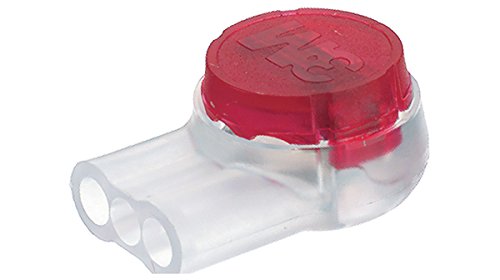
Scotchlock connector

youen

Well-Known Member
Joined
3 Jan 2005
Messages
696
Location
Brittany
Visit site
Do you you use the Scotchlock connector to bind electronics wires ,are you happy with them.Do you need a special plyer to crash the connectors.Thanks

 
Avoid them if you can. They only come in a couple of sizes and it's not uncommon for them to cut into the wire you are connecting to reducing it's effective size.
Ordinary pliers (if big enough) are fine to crush them.
 
Normal plyers will suffice for fitting scotchlocks but I would not use them the connection they make can be poor . Wago connectors are a better connector imho as is a crimp or soldered connection .
 
There's probably about a half million cars running happily around the UK with the trailer wiring connected via Scotchlocks.
Used with care, they can be handy when access is poor and you need to tap into an existing wire with little slack in it.
Fitting trailer wiring is probably the best example of that?

I've never used them on a boat, but I wouldn't hesitate to use them to get me home if I needed to tap into a wire.
The trouble is, they only work on a limited range of wire sizes. Boat wiring has a lot of fat cable in it compared to cars.
 
I want only to connect thin electronics wires from my cp 180i to an Ais receiver,do you know which color of the CP 180 I need to connect to the Cypho ais receiver?
 
I want only to connect thin electronics wires from my cp 180i to an Ais receiver,do you know which color of the CP 180 I need to connect to the Cypho ais receiver?
I'd suggest starting a new thread asking that then.
I'd suggest not using scotchlocks for very thin wires.
 
There's probably about a half million cars running happily around the UK with the trailer wiring connected via Scotchlocks.
Used with care, they can be handy when access is poor and you need to tap into an existing wire with little slack in it.
Fitting trailer wiring is probably the best example of that?

I've never used them on a boat, but I wouldn't hesitate to use them to get me home if I needed to tap into a wire.
The trouble is, they only work on a limited range of wire sizes. Boat wiring has a lot of fat cable in it compared to cars.

Indeed so. Every classic car I've worked on, especially Land Rovers, will have a selection of Scotchloks where the original wiring has been augmented, replaced or bodged.

Of course, I've never knowingly used them myself. :whistle:

Richard
 
There's probably about a half million cars running happily around the UK with the trailer wiring connected via Scotchlocks.
Used with care, they can be handy when access is poor and you need to tap into an existing wire with little slack in it.
Fitting trailer wiring is probably the best example of that?

I've never used them on a boat, but I wouldn't hesitate to use them to get me home if I needed to tap into a wire.
The trouble is, they only work on a limited range of wire sizes. Boat wiring has a lot of fat cable in it compared to cars.

Used thousands over the past 40 years, very few failed. They are acceptable in warm dry enviroment.
Under no circustances would I use on a boat except for very short term or emergency.
Salt water will make them corrode 10 times as fast.
 
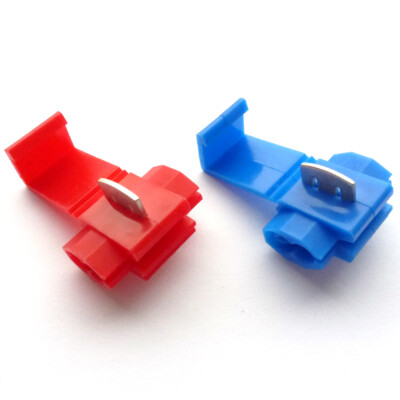
There are two main types of Scotchlok. There's the rather clunky fold-over connectors, often used in vehicles for joining into existing wiring, which look like this...

s-l400.jpg


And then there are the butt connectors, designed for joining separate bits of wire, and generally intended for much thinner wire. These look like...

31RsFisT-8L.jpg


These butt connectors are available filled with grease which seals the wires against water when the connection is made. They are used extensively by BT, and Raymarine used to supply them for reliable wiring of their products. I've used these on my boat and find they're fine.
 
as with everything in this world there is not something that somebody cannot make cheaper and nastier.
Lots of nasty cheapo Scotchlock clones out there.
A few pence more usually gets you some good quality ones where the plastic casing does not snap when used in cold temperatures and the internal stamped metal blade is so thin, it simply folds in half when any pressure is applied.
 
Top