Revive Dead Vicrton Inverter?

Status
Not open for further replies.

Slowboat35

Well-Known Member
Joined
4 Apr 2020
Messages
2,655
Visit site
My Victron Phoenix 12/1200 inverter has just died after a short, dry life of almost regal idleness.

There is no sign of life on the front panel and upon removing the cover I find a healthy 12v at the big 25mm input cable terminals but not a sign of life elsewhere on the board which I have not yet removed. The stonking great purple 12v fuse is intact. deffo.
Is there a lower rated fuse elsewhere to protect the circuit board? If so I didn't find it.

Victron appear to hide behind their agents and one of those I spoke to wasn't interested unless they were the vendors - which I cannot tell as I bought the unit with the boat!

To their credit ASAP Supplies did call me back with the number of a company that might help but I haven't been in touch yet. Big chuck-up again for ASAP's customer service and helpfulness!

What I really need is a small jobbing local electrical/electronic engineer who can just stick a 'scope on it and find out what's wrong. It can't be that difficult!
Anyone know one of these in E Anglia, closer to Ipswich/Lowestoft/Norwich the better? Failing that any workshop answering the description.

Next, to get the damn thing out of the boat. Apart from the usual inconvenience of it being attached upside down in an inaccessible hole and constrained by cables about as flexible as broomsticks it should be easy...

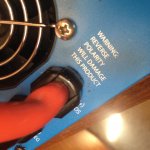
To get it out I need to disconnect the 12v power cables. They enter the unit via these fittings - but what is it and how does it work?
Is it a plug by which I can disconnect the cable or is it merely a gland to allow that cable to pass through the case undamaged - and to be attached somewhere rather inaccessible inside? Either way I need to know how to release tha cable from it without breaking it.

Can anyone please tell me:
a) what these fittings are called?
b) how to release a cable from one?
c)how are inverters like this fitted? Is it really dockyard job for an electrician to dismantle the unit, remove circuit boards, fabricate cable end fittings to suit taking hours - seems a heck of a plalaver when I'd expect it to more or less plug in- or am I way off the mark here?
IMG_3146.jpg

It seems a terrible shame to ditch a perfectly servicable unit in virtually as new condition just because a component has popped -
it also doesnt' help that Victron's current replacent model is considerably bigger and won't fit the space at all - even if I fancied paying for it!

Agh! Boats!
 
Last edited:
My Victron Phoenix 12/1200 inverter has just died after a short, dry life of almost regal idleness.
To get it out I need to disconnect the 12v power cables. They enter the unit via these fittings - but what is it and how does it work?
Is it a plug by which I can disconnect the cable or is it merely a gland to allow that cable to pass through the case undamaged - and to be attached somewhere rather inaccessible inside? Either way I need to know how to release tha cable from it without breaking it.
Oh dear!

By reading my post it is pefectly clear I've been inside the box and if it was obvious I wouldn't be asking the question, would I?

I'd really appreciate actual answers rather than smart and unhelpful dismissals like that...

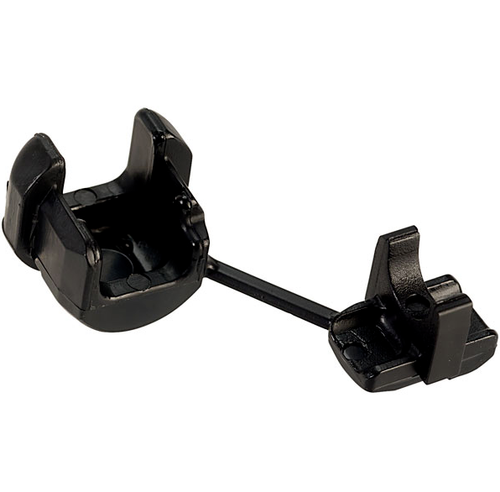
Its a combined cable entry and strain relief bush They are fairly common They clamp around the cable and the push into the hole

They can be effin difficult to get out again. You need to squeeze it tighter with pliers then pull it or probably better push it back out the way it went in

s-l500.png
 
Last edited:
I have a friend who’s a marine electrician. He’s based near Colchester but travels through Ipswich a fair bit as he does marine electrickery for Aldeburgh boatyard. He fixed my (far less posh) inverter. PM me for his number.
 
If looking directly at the inverter where those leads go in you will see screws around the outside, the opposite side should have the same. This should let the main top cover to be removed.
I am not 100% sure but try it.
 
My Victron Phoenix 12/1200 inverter has just died after a short, dry life of almost regal idleness.

What I really need is a small jobbing local electrical/electronic engineer who can just stick a 'scope on it and find out what's wrong. It can't be that difficult!
Anyone know one of these in E Anglia, closer to Ipswich/Lowestoft/Norwich the better? Failing that any workshop answering the description.
Agh! Boats!

Matthew Riches, Southwold Boatyard. ( also an occasional contributor to these forums)

Top man in the area for marine electronics
 
Frankly, with the current prices these things (as most of the consumer electronics) can be considered throwaway items. The fees of qualified technician will probably exceed the purchase price of similar item on E-Bay by the time he opens the box.
I'd suggest to check the fuses, visually inspect the printed board for any obvious burned tracks component or dry soldering and bin the thing if there is nothing what can be fixed by a soldering gun with 10 minutes.
 
Wise advice, BM.
But there are times when 240v is useful. I'm not sure I'd have specified such a big invertor myself but the ability to run power tools etc is sometimes handy.
 
As said the plastic bit is a grommet used to take the strain of the cable. To remove the inverter you need to remove the wire from what it is connected to. Take the wire out of the wiring bundle so remove the inverter with wire still attached. If that is too hard cut the wire outside the inverter. These things can draw a lot of current so any connector switch or fuse in the line is a likely source of volt drop and failure. hence hard wired is best.
Inverters usually have a low voltage drop out feature so it will turn off if voltage falls too low. Perhaps not likely but just check that it has lots of volts supplying ie with batteries on charge.
Once you get the inverter out the most likely cause of failure is corrosion on circuit board. This is usually obvious and may be fixed by cleaning up and repair of fine bridges of copper on the board . However this might also mean terminal ..... good luck ol'will
 
make sure the next one (or once and if this is repaired) goes in a WELL VENTILATED spot. From reading your posts it seems that its stuck somewhere rather tight. That's a recipe for disaster. Keep that in mind when refitting.
Had a DOMOTIC (iirc) 2000W quasi sine inverter fail on me, started repairing the obvious (2 large capacitors blown) then smaller bits, till I reached a point that I had no idea what some diodes/zeners/resistors were. There I stopped and bought a much bigger and better Victron Multiplus...
 
make sure the next one (or once and if this is repaired) goes in a WELL VENTILATED spot. From reading your posts it seems that its stuck somewhere rather tight. That's a recipe for disaster. Keep that in mind when refitting.
Had a DOMOTIC (iirc) 2000W quasi sine inverter fail on me, started repairing the obvious (2 large capacitors blown) then smaller bits, till I reached a point that I had no idea what some diodes/zeners/resistors were. There I stopped and bought a much bigger and better Victron Multiplus...
Inverters are in the class of electronic circuit where the obvious blown up bit usually dies as a result of something else already having failed. It's a bit like some audio amps, where standard repair procedure is to replace most of the transistors.

Do double and triple check the obvious.
Could there be a remote on/off control gone bad?
Has it shut down due to overload or over heat and needs to be reset in some way?
A long careful read of the manual may help.
Has it ever worked? Did the previous owner use it?
Those cable cleat grommet things generally are not intended to be reoved and re-used. Unless you have good access to squeeze it hard onto the cable from the inside of the box, then either cut the flange off the outside so it goes intothe box, or remove the box complete with cables.
 
Thanks to the others who have contrubuted very useful and helpful suggestions - now I 'just' need to find an electronics troubleshooter to see if the problem is fixable.
 
Inverters are very difficult to repair. Circuits tend to be unavailable making repair an order of magnitude harder. The modern cheaper ones have rows of transistors/MOSFET/IGBT any number of which may have failed and it only takes one defective part to destroy the rest if not replaced.
 
Inverters are very difficult to repair. Circuits tend to be unavailable making repair an order of magnitude harder. The modern cheaper ones have rows of transistors/MOSFET/IGBT any number of which may have failed and it only takes one defective part to destroy the rest if not replaced.
Fair comment.
If it was mine I'd have a go, but to do it commercially it would be a non starter at a decent hourly rate unless you know your way around the model.
There may be people out there who can fix it.
There are for instance people who fix cheap chinese inverter welders, but there are many thousands of those about and the schematics are largely known.
It may be something trivial.

It's also potentially hazardous, take car if poking around in this kind of thing!
 
The cable glands are difficult to get out as they are usually factory fitted with a special tool, but not impossible. It is more likely that the cable that comes out of it came with the unit and that the disconnect point is at the other end of the cable.

With a high current device such as this a poor connection anywhere can cause issues such as I posted about regarding my radio a few days ago within another thread regarding furling problem. You can have the voltage expected but the circuit not be able to deliver the required current.

I had 13V at the radio power in, then it seemed to come and go depending, no radio connected -13V, connect radio 0V. Plugged radio into temporary supply and it worked. Eventually traced fault to oxidisation on fuse terminals. That was with a radio I know was working at the end of last season.

Check the rest of the wiring and connections again before you remove the unit.

Whatever you do make sure the power cables are not powered when the unit is being removed and tape any exposed conductors up.

Some fuses on boards are not readily apparent and look like other components.
 
This thread has now been reviewed and re-opened, apologies for the delay and any inconvenience caused.

Two of the respondents comments have been removed from this thread, along with posts from other users that reference them. As we are not permitted to edit user generated content some useful information may also have been removed in the process.

Please feel free to re-post your helpful contributions, keeping it purely on-topic without reference to the removed content and/or users.
 
My link to the fitting/ removal tool ( pliers) for these strain relief grommets appears to have been expunged.

Seemed harmless enough at the time , but not going to risk re-posting so if anyone wants/ needs/craves them Google will find for about £10 or less
 
Status
Not open for further replies.
Top