
Removing Stanchions and Guardwires.

Mark-1

Well-Known Member
Joined
22 Sep 2008
Messages
5,546
Visit site
Apart for hanging fenders I've always thought stanchions and guardwires were a bit pointless and perhaps even counter productive.

Anyone removed them and missed them, or not missed them?
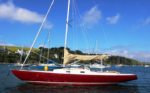
 
A lot of safety kit has it's own dangers, life jackets and tethers for example. Particularly tethers, which can trip you, slow you up and generally get in the way. So you have to strike a balance.

I have thought about removing guardwires but it would leave the pushpit and pulpit looking lost plus a row of redundant deck fittings which become hazards themselves. Removing the lot would be a huge job and may not impress future prospective buyers of the boat. When the boat is ashore I think the wires are extremely useful, I know someone who fell from his boat in trivial circumstances and he is lucky still be with us.

For me it is a non starter but if I owned a classic day boat I would not be in a hurry to fit them.


1636278706855.png
Courtesy Red Ensign


.
 
Have you tried just removing the wires from the stanchions and then going sailing or better still whilst ashore. Bet you refit them quickly.

I have sailed on a boat without lifelines and felt very unsafe, but it certainly concentrated the mind to follow the advice of "One hand for the boat and one for yourself".
 
Apart for hanging fenders I've always thought stanchions and guardwires were a bit pointless and perhaps even counter productive.

Anyone removed them and missed them, or not missed them?
I sailed on a replica Bristol Pilot Cutter in early September and that didn't have guardwires, etc. Found it most disconcerting to start with. The 'toe rail' though was quite tall so I soon got used to it.
 
I have sailed with lots of boats that never had guard wires (or pulpits). Apart from the initial sails of the season before sea legs were regained I was happy and safe. It was also a lot easier to sheet home the genoa,
 
I sailed on a replica Bristol Pilot Cutter in early September and that didn't have guardwires, etc. Found it most disconcerting to start with. The 'toe rail' though was quite tall so I soon got used to it.


A good example, I think bulwarks are a great thing, they are probably a foot high, or more, on some of these boats. Must have been a grand trip.

.
 
On my Folkboat I've always thought that it's safer without guardrails & stanchions. They're something that I perceive as a trip hazard on this scale of boat. I can understand though, that scaling up to a larger yacht might be the reverse of that, and that they're an effective safety device.
 
After decades of charters, mostly in the Med, this year I (also) had two charters on the Norfolk Broads. The Med yachts all had guard wires; the Broads yachts (27ft & 34ft) had none.

It initially seemed strange, but given the differences between sea and inland sailing it is entirely appropriate. But I would not like to be given a Med yacht without guard wires...
 
Classic racers like J Class often have removable stanchions and lifelines - in place most of the time, but removed for classic regattas. ………. but then they have a dedicated high speed chase boat, typically one per race boat, to pick up those who may fall off.
 
Classic racers like J Class often have removable stanchions and lifelines - in place most of the time, but removed for classic regattas. ………. but then they have a dedicated high speed chase boat, typically one per race boat, to pick up those who may fall off.
I was told at the Voiles de Saint Tropez this year, that in many cases it is a requirement of the insurance companies that the larger yachts without stanchions and guardrails should be accompanied by a chase boat at such events.
 
They are often in the way, or at least an irritating constraint, on the small boats I have owned (very narrow side decks, etc.) and inhibit quick steps onto the pontoon when single handed. (I had a tricky approach a finger pontoon once, needing excessive speed for steering control, and depended on getting a line on a cleat to stop the boat, but my shoelace knot caught on the guardwire as I hopped over and I fell flat on my face!).

On a small boat the guard wires are also of a height that's more likely to trip you over head first into the sea than actually prevent you going overboard.

But the main role of them, in my view, is not as preventative rail, but a guide so you can feel your position. Hard for me to explain, but if you close your eyes and try to stand on one leg while putting a sock on the other foot you're likely to have trouble staying upright, but if you have a rail, wall, table or whatever you can put one finger on it (no significant force required) it makes it easy to maintain control.

I really appreciated the high level solid guardrails on a couple of boats I've sailed on, but you need a big boat for that - both visually and to take the weight. It's also a challenging and expensive job to get them straight again if they take a serious knock from another boat or a shore structure!

So I'll stick with my low guard wires, appreciate having somewhere to hang fenders (something I really missed when I had a boat without them) and drying clothes from, and try not to get too stressed when people wrench them about.

That reminds me, I must rebed those stanchions!
 
In what way are they "counter productive."?

My kids grab them as though they're a strong point which is likely to end in the drink, IMHO. They're a trip hazard especially getting off the boat or into the dinghy. (I'm useless at picking my feet up.)

I'm not suggesting they're dangerous, just Just generally in the way in exchange for limited safety benefit.
 
They are often in the way, or at least an irritating constraint, on the small boats I have owned (very narrow side decks, etc.) and inhibit quick steps onto the pontoon when single handed. (I had a tricky approach a finger pontoon once, needing excessive speed for steering control, and depended on getting a line on a cleat to stop the boat, but my shoelace knot caught on the guardwire as I hopped over and I fell flat on my face!).
Oops, could have needed badly. But that sounds more like a reason why generally better to drop a rope loop round the cleat from on board, and never to try to leap ashore with a rope - rather than an argument against stanchions
 
My kids grab them as though they're a strong point which is likely to end in the drink, IMHO. They're a trip hazard especially getting off the boat or into the dinghy. (I'm useless at picking my feet up.)
So what do they grab, with smaller hands than an adult, if there are no lifelines?
What do they grab when at sea & the boat rolls awkwardly?
 
I’ve always thought, if I ever do blue water sailing, I will have stanchions and guard wires made to above waist level - with a high cut Genoa to suit. One of my worst nightmares would be to fall in the middle of the Atlantic and watch your auto-piloted boat sailing off without you.
 
Oops, could have needed badly. But that sounds more like a reason why generally better to drop a rope loop round the cleat from on board, and never to try to leap ashore with a rope - rather than an argument against stanchions

Yes, generally better, but in the real world, I find, it's it's not feasible to never do it.
 
When I was young (50+ years ago) I sailed lots of miles, often singlehanded, on boats with no guardwires or stanchions. If I wanted to reef or change headsails I went forward. Didn't even carry a lifejacket, and of course electrics/electronics were limited to a torch and a transistor radio. I did very occasionally in unpleasant weather tie a bit of rope round my waist and the other end round the mast base. Thought I was being very safety conscious when I did that. Mostly I just held on.

I'm a rotten swimmer.....

These days I quite like guardwires etc, as well as lots of other stuff that simply didn't exist then.
 
Top