Radar used or not?

Looking at the web cam yesterday while working :).

I was aware of how many boats had a radar then wondered should I spend £2-4k to get one but then I though how ofter would I actually use it.

How often do people actually use it?

My sailing area is the Clyde and the West coast.

As you will be sailing the west coast, the occurrence of fog is minimal, possibly as little as once per month.

If you want radar to be able to go out in foggy conditions then go right ahead, purchase a radar. If you can wait the few hours it takes normally for fog to disperse in the summer months it's not for you.

Ink
 
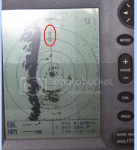
As a curiosity, another type of hazard which can be detected by radar (and nothing else apart human eyes): Nazaré wave.

Screenshot_20210604-170931_copy_372x410.png

For those who do not know, this is it during nasty days, as seen from land.


onda_gigante%255B1%255D.jpg
 
Looking at the web cam yesterday while working :).

I was aware of how many boats had a radar then wondered should I spend £2-4k to get one but then I though how ofter would I actually use it.

How often do people actually use it?

My sailing area is the Clyde and the West coast.
I did not use mine for ages after upgrading to HD Raymarine - and then I had a boat creep up on me at night without AIS. I always use it at night time and I often sail at night - I have radar with AIS targets overlay - loots of boats do not have AIS still. If you sail at night Radar is amazing - you do not need overlay - it is not pure! I use chart plotter North up as standard but on Radar I use Course Up - this makes it very simple to use at night. My radar instructor for RYA Radar course was an ex Navy chap who said you should always use radar North Up. Well at night time imho that is just not practical.

Many Scandy sailors rely on radar more than most because of all the rocks and coves they have - they swear by it. Also in Fog it is amazing. And - once off the coast of Portugal outside Porto it saved me from sailing into an unmarked fish farm during the day!
 
I did not use mine for ages after upgrading to HD Raymarine - and then I had a boat creep up on me at night without AIS. I always use it at night time and I often sail at night - I have radar with AIS targets overlay - loots of boats do not have AIS still. If you sail at night Radar is amazing - you do not need overlay - it is not pure! I use chart plotter North up as standard but on Radar I use Course Up - this makes it very simple to use at night. My radar instructor for RYA Radar course was an ex Navy chap who said you should always use radar North Up. Well at night time imho that is just not practical.

Many Scandy sailors rely on radar more than most because of all the rocks and coves they have - they swear by it. Also in Fog it is amazing. And - once off the coast of Portugal outside Porto it saved me from sailing into an unmarked fish farm during the day!
My experience with radar is entirely self-taught, as I imagine is the case with many sailors. I have read that north-up is the preferred mode but although I can happily operate it this way I generally prefer course-up as it is more instinctive. I imagine that n-up would be the more 'academic' approach and would be used by those accustomed to making plots. For myself, I find it sufficient to put a range and position marker on suspect targets and keep an eye on them that way, or even just wakes. Just occasionally, if I am in a jocular mood I will put the plotter onto course-up, which distracts my wife no end.

I have never been in the habit of using radar at night in good visibility as it seems unnecessary, but I imagine that this preference would depend on the area sailed in. My impression of Scandy sailors is that they adopt a fatalistic attitude to rocks and expect to bounce off one every couple of years or so.
 
My experience with radar is entirely self-taught, as I imagine is the case with many sailors. I have read that north-up is the preferred mode but although I can happily operate it this way I generally prefer course-up as it is more instinctive. I imagine that n-up would be the more 'academic' approach and would be used by those accustomed to making plots. For myself, I find it sufficient to put a range and position marker on suspect targets and keep an eye on them that way, or even just wakes. Just occasionally, if I am in a jocular mood I will put the plotter onto course-up, which distracts my wife no end.

I have never been in the habit of using radar at night in good visibility as it seems unnecessary, but I imagine that this preference would depend on the area sailed in. My impression of Scandy sailors is that they adopt a fatalistic attitude to rocks and expect to bounce off one every couple of years or so.
I think that the display mode will depend very much on how you are navigating. If you're essentially in "pilotage" mode - that is, navigating according to what you can see and its relationship to the boat, then "head up" would seem more intuitive (it's how I set my car's satnav). But if navigating in a more formal, preplanned mode, then "North Up" would perhaps be more intuitive. I tend to have my chart-plotter in "North Up" mode, but use the option that places the ship's position such that there is more of the screen "ahead" of the ship. But I'm afraid I may not be a good guide - a lifetime of dealing with maps makes me fairly immune to the orientation of a map! And, of course, "North up" isn't a thing when the South pole is on your map - every possible orientation is "North Up"! I don't think chart-plotters give a "Greenwich meridian up" option, which is what I'm used to! :cool::p
 
If I remember correctly, the recommendation for using radar N up goes along with the requirement for a good quality fluxgate compass. Course up, the radar image swings around as the boats head changes, N up the image remains static on the screen, hence the need for the fluxgate compass.
 
If I remember correctly, the recommendation for using radar N up goes along with the requirement for a good quality fluxgate compass. Course up, the radar image swings around as the boats head changes, N up the image remains static on the screen, hence the need for the fluxgate compass.
My plotter has the options, as well as north-up, of heading-up or course-up. Course-up is also stabilised, which is why some of us prefer it to the similar head-up which is often near-identical.
 
As the thread has ‘evolved’ I use course up on the plotter to see where I’m going and heads up on the radar to see what I’m looking at. Also makes sense when I’m drift fishing with the engine off.
 
If I remember correctly, the recommendation for using radar N up goes along with the requirement for a good quality fluxgate compass. Course up, the radar image swings around as the boats head changes, N up the image remains static on the screen, hence the need for the fluxgate compass.
If you are using chart overlay, then you need a good heading sensor for any orientation of display - to orient the radar (which is naturally oriented to the ship's head) to north for North up, and to orient the chart ( which is intrinsically North up) to the heading direction for heading up. Of course, if you don't use chart overlay, you only need a heading sensor for North up.
 
I love my radar just like the echo sounder it's completely up to date. ie it shows the actual rather than what the cartographer thinks there is!

Poor visibility is not necessary. Try approaching Brighton Marina at night. It's a mass of lights, yet radar makes it clear. On our first approach to Rompoot Sluis where there is a dog-leg on the way in turn on the radar and it easy.

I've been into Whitehead Harbour in Nova Scotia twice and never seen the shore.

Problem with it, it isn't plug n' play. It need s tuning like a musical instrument and interpretation, which comes with practice.
I've used it for Brighton too, horrible night and I wouldn't have dared go in without it.
 
I've used it for Brighton too, horrible night and I wouldn't have dared go in without it.
I‘ve entered Brighton at night a couple of time without radar or plotter and don’t remember any problems. Now, Deauville from the west, that was a different matter. Even Cherbourg inner harbour can be confusing.
 
I think that the display mode will depend very much on how you are navigating. If you're essentially in "pilotage" mode - that is, navigating according to what you can see and its relationship to the boat, then "head up" would seem more intuitive (it's how I set my car's satnav). But if navigating in a more formal, preplanned mode, then "North Up" would perhaps be more intuitive. I tend to have my chart-plotter in "North Up" mode, but use the option that places the ship's position such that there is more of the screen "ahead" of the ship. But I'm afraid I may not be a good guide - a lifetime of dealing with maps makes me fairly immune to the orientation of a map! And, of course, "North up" isn't a thing when the South pole is on your map - every possible orientation is "North Up"! I don't think chart-plotters give a "Greenwich meridian up" option, which is what I'm used to! :cool::p
Ours has a 'tits up' mode.
 
I‘ve entered Brighton at night a couple of time without radar or plotter and don’t remember any problems. Now, Deauville from the west, that was a different matter. Even Cherbourg inner harbour can be confusing.
Several factors. It was SW7+, so a bit of spray, on a ketch with storm jib and reefed mizzen. We'd come from Ipswich and the entrance wasn't clear at my 'decision distance' and no way I'd go closer without being certain. I was also aware that we were tired, most of the crew sick and there was a real danger of 'pressonitis'. It was also my first time in there, and at night. The engine was fine, but I knew that there was a good chance of crud having been dislodged in the tank over the preceding hours. With the radar on course up it was so easy to see the wall, the cliff behind and even the gap we needed - and of course once confirmed it was pretty obvious, so overstood it a bit, dropped the mizzen and went in with jib and engine.
 
Several factors. It was SW7+, so a bit of spray, on a ketch with storm jib and reefed mizzen. We'd come from Ipswich and the entrance wasn't clear at my 'decision distance' and no way I'd go closer without being certain. I was also aware that we were tired, most of the crew sick and there was a real danger of 'pressonitis'. It was also my first time in there, and at night. The engine was fine, but I knew that there was a good chance of crud having been dislodged in the tank over the preceding hours. With the radar on course up it was so easy to see the wall, the cliff behind and even the gap we needed - and of course once confirmed it was pretty obvious, so overstood it a bit, dropped the mizzen and went in with jib and engine.
My first approach to Brighton was in a Sadler 29 at 2.30 am in a rising F5-6 from the south. I had Decca but nothing more sophisticated. I actually think the entrance was quieter than when entering with a SW on other occasions, once with a very pregnant DiL on board. Yes, she was sick on the way from Eastbourne.
 
My update :)
Was away last week and was planning to go round the Mull as we left Campbeltown Loch a very thick fog came down the boat ahead of us (100m) disappeared so we decided to head to Portavdaie. As we headed up saw 1 fishing boat on the AIS only the other we heard but never saw.
Now definately thinking of Radar

Regards
Graham (Cheeky Girl)

Hope this answers the he / she debate :p
 
My update :)
Was away last week and was planning to go round the Mull as we left Campbeltown Loch a very thick fog came down the boat ahead of us (100m) disappeared so we decided to head to Portavdaie. As we headed up saw 1 fishing boat on the AIS only the other we heard but never saw.
Now definately thinking of Radar

Regards
Graham (Cheeky Girl)

Hope this answers the he / she debate :p
What? You've already got AIS! That small fact would have saved us all hours of anguish. ;)

Richard
 
Top