Pitting on an iron keel

Just out of interest Vyv, would hot-dipping in Zinc when the keel is still hot from casting be a long (enough) term answer to justify the cost?

In theory yes, provided the temperature was high enough. Based on my regalvanised chain it might last 10 years. The practicalities might make this a difficult process, assuming most keels are sand-cast.
 
In theory yes, provided the temperature was high enough. Based on my regalvanised chain it might last 10 years. The practicalities might make this a difficult process, assuming most keels are sand-cast.

ISTR galvanisers charge by the weight!!!

BTW, do cost up the work you are about to do on your keel. The last time I did mine it was a filthy and tedious job and cost me several hundred quid in epoxy primer.
 
Just out of interest Vyv, would hot-dipping in Zinc when the keel is still hot from casting be a long (enough) term answer to justify the cost?

Had a hot dip galv plant in my factory. You wouldnt need the keel hot from casting - in fact it would need to be stripped back to bare metal which it isnt "as cast". In use the duration would depend on abrasion but you would still have to antifoul and I dont know enough about antifoul paint so say how well that would get on with galv. If its anything like my lead keel, then coppercoat wouldnt work well.

But the main issue by a long way would be the cost of galvanising a keel. I'm pretty much out of touch with current prices but a quick google suggest around £1 per kg.
 
Had a hot dip galv plant in my factory. You wouldnt need the keel hot from casting - in fact it would need to be stripped back to bare metal which it isnt "as cast". In use the duration would depend on abrasion but you would still have to antifoul and I dont know enough about antifoul paint so say how well that would get on with galv. If its anything like my lead keel, then coppercoat wouldnt work well.

But the main issue by a long way would be the cost of galvanising a keel. I'm pretty much out of touch with current prices but a quick google suggest around £1 per kg.

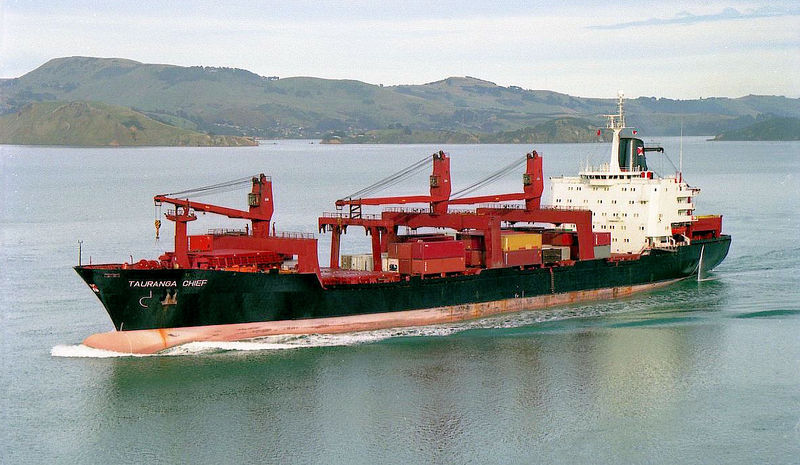
I do, though. We once bought a ship that had been built - very slowly, very carefully - in Peru, a country not known for shipbuilding, under the excellent supervision of a firm of Norwegian naval architects who had thoughtfully specified the most expensive of everything. It would be cynical of me to suggest that they might have been on commision. She had 3,700 miles on the clock when she was arrested by the High Court, on her maiden voyage, in darkest Liverpool, and we bought her from the Admiralty Marshal.

Her builders had thought that it would be a good idea to zinc spray the whole external hull. It wasn’t. Paint doesn’t stick to galvanising under water; it exfoliates. Chain goes from wet to dry, and isn't painted; a hull or a keel stays wet and is painted.

We had to blast the lot off back to SA 2.5 and epoxy everything. Good ship once we had her sorted.

800px-Sph495gTauranga_Chief_%28RP1%29.JPG
 
Last edited:
Had a hot dip galv plant in my factory. You wouldnt need the keel hot from casting - in fact it would need to be stripped back to bare metal which it isnt "as cast". In use the duration would depend on abrasion but you would still have to antifoul and I dont know enough about antifoul paint so say how well that would get on with galv. If its anything like my lead keel, then coppercoat wouldnt work well.

But the main issue by a long way would be the cost of galvanising a keel. I'm pretty much out of touch with current prices but a quick google suggest around £1 per kg.

Thought about galvanising, is it £1 per kg keel weight? Sounds like a dealbreaker to me. :(
 
Surely the £ per unit mass thing is just a guide? The amount of zinc used will depend on the surface area of the object. Mental arithmetic says that a 1,000kg keel would have the same area as about 60m of 6mm chain, the mass of which is about 50kg. If I were foolish enough to ignore Minn's experience I'd be negotiating.
 
Top