
MontyMariner
Well-Known Member
Just to comply with the original purchase survey.What's the benefit in making this change ?

Just to comply with the original purchase survey.What's the benefit in making this change ?

But why, it's a nonsense comment from the surveyor ?Just to comply with the original purchase survey.

I agree, but that wasn't what the O/P was asking about.But why, it's a nonsense comment from the surveyor ?

I wrap the mains lead around the throttle controls, so driving off without unplugging would take some ingenuity.Been there, done that, got the t-shirt


Most boats have a plug and socket shorepower like this:Other than the one on the pontoon, no.
You've lost me here, i never mentioned the previous owner, or bodging
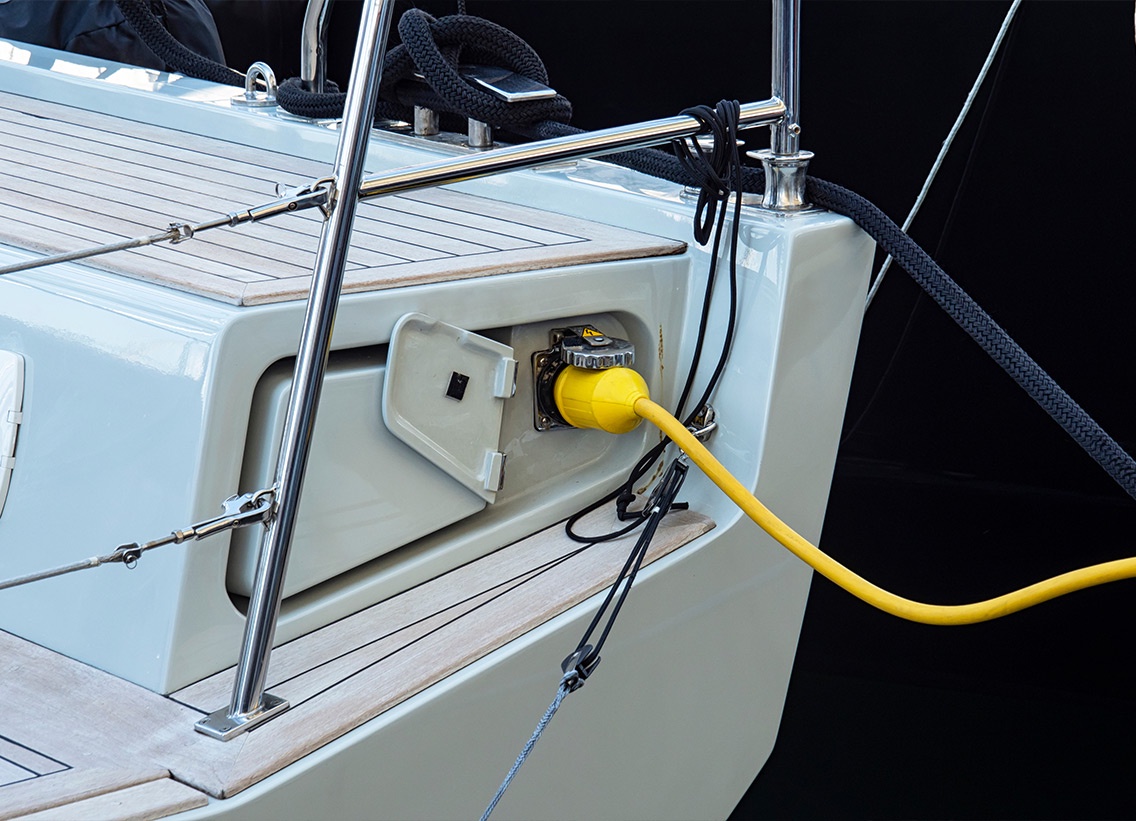
Why pray is that any safer than the installation that the OP has - and we have - which eliminates the (prone to corrosion) socket in the stern, but takes the cable directly into a stern locker and connects directly into the circuit breakers ?Most boats have a plug and socket shorepower like this:
I would regard it as rather unsafe to be without one.
As far as I see from OP's description, "my boat has the mains shore power cable wired directly to the consumer unit", there could be 30 meters of cable and a plug wired directly to the consumer unit.
Not sure about your marina, but ours doesn’t tend to have salt water spray going over the pontoon bollards - whereas the transom and cockpit plugs on many boats do often get salt spray.This 'prone to corrosion' nonsense ....
I've had caravans ... boats ... sheds ..... with Blue connections and it takes many years to have corrosion problem with them ...
As I said before ... how often do marinas change the mains blue connectors that are sitting out there on pontoons year after year .. in all weathers ??
Not sure about your marina, but ours doesn’t tend to have salt water spray going over the pontoon bollards - whereas the transom and cockpit plugs on many boats do often get salt spray.
But the point is - why cut an existing cable and insert extra connections and plus / socket which are unnecessary?
PS And our marina does periodically replace the bollard connections - not least as many seem to get a bit of abuse.
That's a Marinco plug/socket, the very worst shore power connection there is.Most boats have a plug and socket shorepower like this:
I would regard it as rather unsafe to be without one.
Could be, but again, how is that less safe that have a connector on the boat and 30 metres of cable with another connector ?As far as I see from OP's description, "my boat has the mains shore power cable wired directly to the consumer unit", there could be 30 meters of cable and a plug wired directly to the consumer unit.
I've been called out to plenty of shore power cables/socket/plugs that have failed for various reasons, corrosion being just one of them. Those blue connectors are barely splash proof.This 'prone to corrosion' nonsense ....
I've had caravans ... boats ... sheds ..... with Blue connections and it takes many years to have corrosion problem with them ...
As I said before ... how often do marinas change the mains blue connectors that are sitting out there on pontoons year after year .. in all weathers ??
I apologise for grabbing the first picture of a plug and socket that I found, and for my failure to examine it closely. I am well aware of what you write here and assumed that everybody knew to use the international standard blue (IEC?) plugs and sockets.That's a Marinco plug/socket, the very worst shore power connection there is.
Shore Power cord burnt first time I used heat
I've been called out to plenty of shore power cables/socket/plugs that have failed for various reasons, corrosion being just one of them. Those blue connectors are barely splash proof.
They'd be better than the Marinco style ones, although there are even better ones available, i like the Ratio ones Energy Solutions | Ratio Stainless steel shore power inlet. 2P+E. 240v 16AI apologise for grabbing the first picture of a plug and socket that I found, and for my failure to examine it closely. I am well aware of what you write here and assumed that everybody knew to use the international standard blue (IEC?) plugs and sockets.

... and impossible to drop a live cable into the sea. No idea at all how I might know about this......the cable going straight to the consumer unit, the lack of additional connections (plug/socket) make it safer, less failure points.


