
bikedaft
Well-Known Member
Series of thin bits of wood, getting thicker as you pull the launching trolley up on them. E.g. old skirting board, then floor board, then both, until dinghy up. Chuck it all in the boot or dinghy when on the road


Ps; or - let some air out the road trailer tyres. Get the dinghy and launching trailer on. Then reinflate road tyres.


It looks to me he welded a plate on and the unit bolted to the plate., it is better to bolt the suspension units on rather than weld. Then they can easily be replaced if needed
It looks to me he welded a plate on and the unit bolted to the plate.
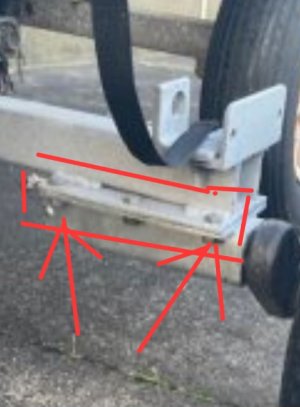
View attachment 205295
This looks to me like a plate is welded on, and the unit plate is bolted to the welded on plate....
Ok, my comment was about the criticism of welding the unit directly to the frame when it appears not to be so.Fine ... but makes no odds that the Indespension unit is not suited to this trailer as it raises the trailer too high for the trolley.
The easiest possible solution as another suggested - let down the tyres on the trailer ..... or as I said - reduce size of wheels / tyres on trailer ...
Ok, my comment was about the criticism of welding the unit directly to the frame when it appears not to be so.
The OP says doesn't remember the original suspension fixing, and photo (1) could just be an offering up...
The easiest remedy is to try taking a little weight by lifting and pushing the boat up the trailer instead of trying to pull it if possible, or little ramps,or adding a winch.
Don't think I would want the hassle of deflating, inflation of tyres, but it is of course a possible solution that really depends on launch/recovery site/situation, blocking a launch ramp while messing with tires I doubt would go down well.
Well I would expect that 99% of road base trailers for Enterprise dinghies use these indespension units (assuming he bought the right weight capacity), bolted to a plate like that under the cross beam, and with the same size tyres (though they would also have mud guards fitted). So the suspension units and fitment look normal for the job.Fine ... but makes no odds that the Indespension unit is not suited to this trailer as it raises the trailer too high for the trolley.
The easiest possible solution as another suggested - let down the tyres on the trailer ..... or as I said - reduce size of wheels / tyres on trailer ...
Well I would expect that 99% of road base trailers for Enterprise dinghies use these indespension units (assuming he bought the right weight capacity), bolted to a plate like that under the cross beam, and with the same size tyres (though they would also have mud guards fitted). So the suspension units and fitment look normal for the job.
Also, it is essential that the trolley wheels are pulled high enough off the ground so they can’t touch the road with the suspension fully compressed, eg after hitting a pothole.
So with properly designed Enterprise road base and trolley there will always be a need to pull the boat and trolley up onto the trailer. The real issue seems to be the lack of a roller system to help the trolley slide forward and engage when the weight is taken off the trolley wheels.
What happens if one lifts the front of the road trailer an inch or so,wouldn't that lower the loading end?caused trailer to be raised too high for trolley to engage properly.
What happens if one lifts the front of the road trailer an inch or so,wouldn't that lower the loading end?
