
Chiara’s slave
Well-Known Member
Mark of the course.Go on then, I'll bite.
What's a MOC?

Mark of the course.Go on then, I'll bite.
What's a MOC?

There's nothing classic I can see about the Fulmar, it's a white production boat with standard modern keel arrangement and built for cost and comfort. I would even imagine that the cockpit is relatively dry and it parks like a car at Tescos. The only reason it seems cheap is because you waited 30+ years to buy one. The BenJenBavs of 2023 will seem cheap to someone buying in 2050 too, there is always a premium for being first owner, although in most cases inflation takes care of that and losses are usually minimal when compared with maintenance costs of older boats.I do not want an AWB as I dislike the design of the hull shape and building methods. I am saying this not due to lack of funds as I could have bought a brand new fully equipped 32ft AWB when I bought my Fulmar. I chose what I felt what I felt was right for me and have then changed and improved things to get it right for me to sail singlehanded. She is almost back to a new condition and has cost only a third of what a new AWB would have cost.
The Fulmar is certainly a classic yacht. A few other classics with a racing pedigree could include the Twister, Contessa 32, S&S 34 and Sigma 33. Others yachts I feel could be included are Hustler 30, UFO 34 and Hustler 35.
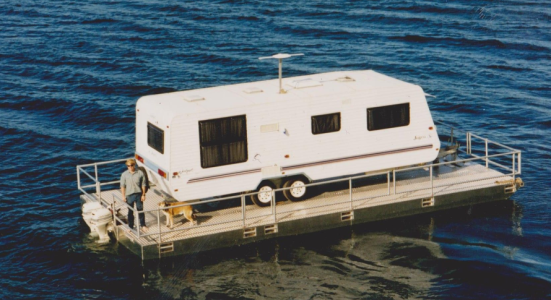
I don't think anyone is under the illusion that there is anything other than a niche market for boats that prioritize sailing over comfort. Its about what people actually do with boats now. One marina 84% (or 86?) of boats didn't leave the marina in a year. Of the 16% how many go out in more than a F3/4 or very far? Most people want floating caravans. I'm surprised we don't see more of these. At least he's honest.The weird thing about this AWB/ MAB debate is that if you just read this forum you’d assume that you could make a fortune from designing and building “traditional looking” cruising boats. As clearly there must be a massive market just fed up of the AWBs. But in fact just about everyone who tries it goes bust.

Anyone who takes MAB / AWB seriously is off their rocker. It is just a bit of fun. There are lots of good ways to classify yachts if you want to be serious about such things. Stink pots on the other hand ...
 There's nothing wrong with a good stink pot
But will still sail like an AWBAny AWB can look like a MAB after a few years of no cleaning.
So...fast, comfortable and dry?But will still sail like an AWB
But funnily enough that’s how monohull owners think of trimarans the moment they flip over.Mark of the course.

He studied yacht design at Southampton University, so it's fair to say he knows a thing ot two about yacht design.I wasn’t aware that Matt Sheehan. Was a yacht designer. I thought he was a sailing journalist. What boats has he designed?
It's well qbove average in my opinion. They handle rough weather very well and not extreme in their design and have few vices. Thr beam is not too wide, the stern is not to wide. They don't rely on form stability to the extent of a modern yacht. They are well balanced. A good allround yacht that will look after the skipperThere's nothing classic I can see about the Fulmar, it's a white production boat with standard modern keel arrangement and built for cost and comfort. I would even imagine that the cockpit is relatively dry and it parks like a car at Tescos. The only reason it seems cheap is because you waited 30+ years to buy one. The BenJenBavs of 2023 will seem cheap to someone buying in 2050 too, there is always a premium for being first owner, although in most cases inflation takes care of that and losses are usually minimal when compared with maintenance costs of older boats.
I'm not questioning your choice, it's a lovely boat and you've done a good job of restoring it but realistically by any definition I've ever seen it's an average white production boat.

He’s definitely not the first to say it. Perhaps the first time you’ve noticed.You are the first to say that, but I am not sure I agree. There is just no exact definition as to when AWB started or what features makes them one. Yacht design has been evolving since the late 1950's. The long keel narrow beam yachts with a 50% ballast ratio have changed to: separate keel and rudder, increased beam and reduced ballast radio. Also the change was partially due to the change from RORC to IOR racing rule, which also changed the position of the mast and reduced the genoa size and increased the very short foot of the mainsail. The next major change was the change of how boats were constructed in mass production factories and then the introduction of EU Recreational Craft Directive. So what defines an AWB?
I didn't say it was bad, they are fine boats. Your own description suggests they are about average in every way which backs up my statement that they aren't a classic, which would usually require something special.It's well qbove average in my opinion. They handle rough weather very well and not extreme in their design and have few vices. Thr beam is not too wide, the stern is not to wide. They don't rely on form stability to the extent of a modern yacht. They are well balanced. A good allround yacht that will look after the skipper
Very true. Well known that in 40kts of wind an AWB's keel will fall off, it's rudder be snapped like matchsticks and everyone on board will drown.Should I read anything into them not choosing an AWB to do this?

OK I was a little curious so compared the numbers with a Sun Odyssey 32.2, which I assume we can all agree is an AWB from the late '90s.They don't rely on form stability to the extent of a modern yacht. They are well balanced
This AWB skipper nearly thought about taking his bimini down in 40 knots. I have noticed over the years how much difference it makes on the perception of sea state/danger/fear whether the sun is shinning or not.Very true. Well known that in 40kts of wind an AWB's keel will fall off, it's rudder be snapped like matchsticks and everyone on board will drown.
Any sailor who's seen 40kts in a AWB's never lived to tell the tail.

Matt is a journalist not a designer. The old saw about the added weight of furling sails is just not correct for 2 reasons. First he is referring to what was going on at the time which was adding these items to boat that were designed without them and second when furling mainsails are designed in from the start the overall weight of the mast and sail is similar to a slab reefing set up because the section of the mast is smaller. Designers know all about this and if you look at the data the AVS is usually the same for either arrangement. The steering downwind does have some validity - but as others have pointed out there were some horrors among older designs, particularly those influenced by IOR. More recent hull forms for example the use of chines at the stern and twin rudders offer excellent control down wind.A quote from Matt Sheahan, yacht designer and participant in the 1979 race
'What worries me is that the lessons from the 1979 Fastnet get forgotten. Most yachts have better stability characteristics now, partly because of regulations but also because they are generally getting bigger, so they have more form stability anyway. But by the time you add in mast-furling, furling staysails, and all the other bits of kit on the mast, the centre of gravity starts to creep up and you have a problem again. There’s a trend to make cruising boats look like fancy hotel foyers down below, to make them more appealing to the family. But the minute the boat heels over, it’s a nightmare to get across. With nothing to hold onto, someone’s going to get hurt. There’s also a move towards fine bows and over-wide sterns, making boats harder to steer downwind. So stability might be better, but the handling is getting worse.’
You would think so, since the IMOCAs use that set up, but look how massively different an IMOCA hull shape is and rudder length are compared to the same set up on a modern cruising boat. It's already been reported on this forum in the past about how terrible a Southerly 42RST handles down wind in a blow in Biscay. The wide arse design and shallow twin rudders did it no favours.The steering downwind does have some validity - but as others have pointed out there were some horrors among older designs, particularly those influenced by IOR. More recent hull forms for example the use of chines at the stern and twin rudders offer excellent control down wind.


