Chiara’s slave
Well-Known Member
We will. My broker is currently moored next to us in Cowes, coincidentallySo far. Wise to check again before you do the install if you are in a new insurance period, because these lithium restrictions are often new.


We will. My broker is currently moored next to us in Cowes, coincidentallySo far. Wise to check again before you do the install if you are in a new insurance period, because these lithium restrictions are often new.

I have a led lenser torch with a 16850 cell which is often used and was new in 2012 and still working at a reasonable level. Some of my makita batteries must be around a similar age and also still seem ok.Nobody really knows how long LiFePO4 batteries will last
That's a difficult one to get around as virtually every item that has a lithium battery states in the instructions "never leave charging unattended" .disallow charging when not on board

It applies to installed lithium house batteries as well.That's a difficult one to get around as virtually every item that has a lithium battery states in the instructions "never leave charging unattended" .

Are we certain it doesn’t apply to lead house batteries? I’d be amazed if an insurer paid out if a charger had been left on leading to a fire.It applies to installed lithium house batteries as well.

Is it? Specifically what if your insurers stance on lead acid? If you had a fire related to your DIY install would they pay out? I think there’s a LOT of assumption here about how insurers see lead, and since nobody is asking that question it looks like there’s no issue.The other important 'gotcha' which has emerged through posts above is a marked reluctance by insurers. That is significant.
Not true. Restrictions on charging lithium batteries specifically mentioned in Bishop Skinner and GJW policies. No restrictions on any other battery types mentioned. No need to ask, only read. Your policy may be different.There were no insurance issues with Lithium until people started asking…
I think you’re underestimating what happens during a claim. They don’t have to write everything down, they just need to show negligence to avoid paying. Self install of ANYTHING that is related to the claim would be a red flag. Leaving any system on and unattended would likewise be a red flag.Not true. Restrictions on charging lithium batteries specifically mentioned in Bishop Skinner and GJW policies. No restrictions on any other battery types mentioned. No need to ask, only read. Your policy may be different.
While that may or not be the case, leaving a lithium system on charge unattended is specifically excluded from cover from the 2 insurers I mentioned.I think you’re underestimating what happens during a claim. They don’t have to write everything down, they just need to show negligence to avoid paying. Self install of ANYTHING that is related to the claim would be a red flag. Leaving any system on and unattended would likewise be a red flag.
Which would only affect you if it caught fire. My point was that a lot of forum members are getting their knickers in a twist over this. If you leave lead acid on charge unattended and it catches fire, your insurance company would probably also consider you liable for the fire. What’s the material difference?While that may or not be the case, leaving a lithium system on charge unattended is specifically excluded from cover from the 2 insurers I mentioned.

They don’t have to write everything down, they just need to show negligence to avoid paying.

This raises an interesting point. Would batteries connected to a solar panel be considered as being "on charge" and "unattended"?Which would only affect you if it caught fire. My point was that a lot of forum members are getting their knickers in a twist over this. If you leave lead acid on charge unattended and it catches fire, your insurance company would probably also consider you liable for the fire. What’s the material difference?
Yes.Would batteries connected to a solar panel be considered as being "on charge" and "unattended"?
I'm not getting into a discussion about what is or is not covered in various insurance policies regarding power sources other than lithium. The only point I am making is that at least 2 major marine insurance companies have restrictions on the use of lithium batteries written into their policies which may make a lithium install inappropriate for some individuals. I can post the wording if required. Everyone should check their own policy or talk to their insurer if they are unsure. My undercrackers remains untwisted.Which would only affect you if it caught fire. My point was that a lot of forum members are getting their knickers in a twist over this. If you leave lead acid on charge unattended and it catches fire, your insurance company would probably also consider you liable for the fire. What’s the material difference?
......
Any better ideas?

Yup, so would leaving your iPhone on charge overnight.This raises an interesting point. Would batteries connected to a solar panel be considered as being "on charge" and "unattended"?
That was expressly forbidden on our cruise ship.Yup, so would leaving your iPhone on charge overnight.
Not true on my policy. The restrictions only apply to devices with lithium batteries over 60 Wh. Phones, tablets, most laptops, some power tools, most torches, personal care items are all under the limit. Torqeedos and their ilk all above it.Yup, so would leaving your iPhone on charge overnight.
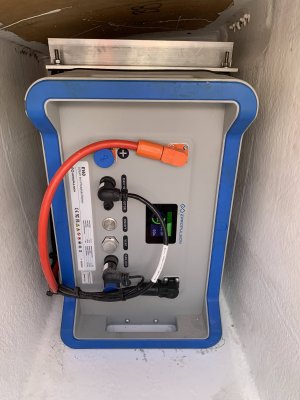
A guy on the South Coast Dragonfly group has just had his DF28 converted to electric propulsion, he has 17Kwh of battery. I think most of us here are insured through the same broker as most of us knew him sailing beach cats years ago. He has one of these bad boys in each outrigger.Not true on my policy. The restrictions only apply to devices with lithium batteries over 60 Wh. Phones, tablets, most laptops, some power tools, most torches, personal care items are all under the limit. Torqeedos and their ilk all above it.