
Poey50
Well-Known Member
Further if you see how the battery is constructed (there are some videos of guys taking prismatic cells apart) it's obvious that there is a fair amount of give in both posts.
I hadn't heard that, Vas. Do you have a link?

Further if you see how the battery is constructed (there are some videos of guys taking prismatic cells apart) it's obvious that there is a fair amount of give in both posts.

link to this guy J5GURU video taking apart a DOA prismatic cell
there's a part 2 where he unfolds the lot
to me (at least) it looks like nothing's going to break if you pull or push the terminals for 2mm or 3...
It's my assumption based on the fact I've seen in the video. Clearly having an origami of some sort with soldered (or somehow connected) terminals on a case that deforms up to 2-3mm to my eyes it's clear that it's not a rigid thing that terminals will break loose or short or whatever.
Looks rather forgiving as a construction which is a good thing!
now see when they become even cheaper ?
thin ali sheet cannot do anything but deform surely!
Nothing rigid within this casing...
not a structures engineer, don't know about you so the answer is probably, and definitely wouldn't rely on it flexing back and forth all the time!
it's unclear to me if our cells bulge when charged and shrink when discharged. If so then yes go flexbar if you cannot secure them v.tight.
but *I think* that they bulge in use and sort of stay like that if not restrained. Maybe I got that wrong...
oops, that's very different to what I did, cells were as received (more than half empty I guess) and I tightened them hard as in HARD HARD, cannot turn the 13mm nut any more with a spanner. but I have 2mm rubber between all of them and thought that I need to take some of that "slack". Oh well, we shall see.The cells expand and contract a few mm under normal charge and discharge cycles. When overcharged they bulge and never recover. There is some evidence that constraining cells during normal expanding and contracting increases longevity (number of cycles). I'm not sure if it prevents permanent damage from overcharging but I doubt it. The way I approached this was to take all the cells down to 3.2 volts (12.8 volts for the pack) and then tighten the nuts on the threaded rods that held the end-pieces until they were just 'nipped up'. I made sure the length between the end-pieces was the same so the cells are compressed evenly. I don't know how much this corresponds to the recommended torque setting but it seemed about right to me and has been fine for 18 months since I made the pack.
oops, that's very different to what I did, cells were as received (more than half empty I guess) and I tightened them hard as in HARD HARD, cannot turn the 13mm nut any more with a spanner. but I have 2mm rubber between all of them and thought that I need to take some of that "slack". Oh well, we shall see.

interesting, btw Greg Amy's supplied busbars are 2.2mm thick (just measured them)
I agree that they are v.useful when you fit your cells in a box like you did and the only means of packing them is straps.
However, having checked how mine work with 20mm endplates clamped with 4 M8 bolts, I doubt they are really necessary on really secure setups.
Slightly worried on their temp under stress, saw on some video (don't think it was the one you mention above) some flex ones that were heating up, didn't like that. Have you checked them tempwise?
Further if you see how the battery is constructed (there are some videos of guys taking prismatic cells apart) it's obvious that there is a fair amount of give in both posts. I can see why there's a trend not to bother and not to clamp them.
What is indeed necessary is insulating the bus bars! got Φ14/7 thermoshrink tube to get them in.
Then also need to find rubber 10mm nut cups (for the M6 studs on the posts). I'll have a perspex cover on the whole thing, but would really like to make sure nothing is going to make a firework out of this battery bank!
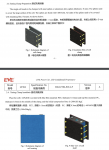
thanks Poey, just had two beers, read it (sort of carefully) didn't like it. Will sleep on it and think about it tomorrow.
What makes my situation more complicated is that the 4 65cm long M8 rods are there to keep the whole thing together, OK, but also to make sure that they all stay in one line. If I have the bolts any looser, the thing will flex/bend and the middle couple of cells will reach the floor and you definitely don't want that. So if I'm to loosen the grip on the endplates, I'll have to devise a way to support all the cells underneath so they stay in line and don't sort of bow in the middle.
Had another full discharge test and now started charging them. I'll only charge to circa 20%, let them rest overnight and tomorrow have a look at the tension.
Problem is all these 12psi or 300kgf or whatever are impossible to actually measure! If someone would come up with a formula fe saying "well lubricated M6nut to 20Nm, or M8 at 14Nm" it would be something feasible. 12psi, yeah right, come and measure it ?
tbh, I'll probably end up undoing the nuts to the point just before the whole contraption starts flexing when you try to lift it off the floor...
cheers
V.

A constant 72F (22degC) seems to be optimum. Batteries will change temperature with ambient conditions and charge/discharge. I suspect the implications of high ambient temperature are far less onerous in the UK than the Med or Caribbean. At the moment daytime temperature here is 28 dropping to 21 over night. Add in charge and discharge and my lead batteries are hitting 30degC some days. From what I have learnt recently, lifePO4 is less tolerant of high temperature than lead. How do you keep the batteries cool? You could charge and discharge them less but that isn't really the idea.


