
Neeves
Well-Known Member
rgarside
Getting there :encouragement:
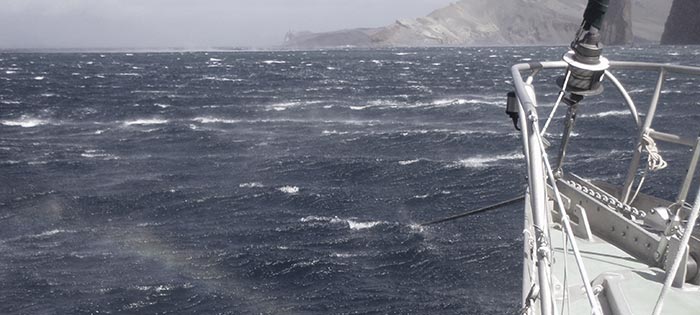
A key word is 'static'. The behaviour is not static - its dynamic. The wind gusts, to upto 40% stronger than the average and there are lulls. The wind veers and impinges on the side of the vessel, the vessel veers and the wind veers another way and impinges on the other side. The vessel moves back and forward - its dynamic. The vessel does not sit there with nothing movng.
The vessel moves back from the anchor, the chain lifts, the chain stores energy, the wind lulls, the energy in the chain is released etc. That same energy can be stored in nylon. The suggestion I make is that nylon can store energy effectively upto its point of failure in an almost linear manner - its a question of matching the diameter of the nylon to the size of the vessel - such that the nylon is effective (too thick its inelastic, too thin it might fail or have a short life).
So consider a dynamic environment where it is not the frontal surface area of the vessel but a portion (or all) of the side. Where energy is developed and that energy needs to be 'accommodated'.
As I said, just passing through
Best wishes and good luck
Getting there :encouragement:
A key word is 'static'. The behaviour is not static - its dynamic. The wind gusts, to upto 40% stronger than the average and there are lulls. The wind veers and impinges on the side of the vessel, the vessel veers and the wind veers another way and impinges on the other side. The vessel moves back and forward - its dynamic. The vessel does not sit there with nothing movng.
The vessel moves back from the anchor, the chain lifts, the chain stores energy, the wind lulls, the energy in the chain is released etc. That same energy can be stored in nylon. The suggestion I make is that nylon can store energy effectively upto its point of failure in an almost linear manner - its a question of matching the diameter of the nylon to the size of the vessel - such that the nylon is effective (too thick its inelastic, too thin it might fail or have a short life).
So consider a dynamic environment where it is not the frontal surface area of the vessel but a portion (or all) of the side. Where energy is developed and that energy needs to be 'accommodated'.
As I said, just passing through
Best wishes and good luck


 :encouragement:


