Dodgy Diver
Well-Known Member
If you do this then make sure that before you ever start your engine that you use the extractor fan first
dont work well with a microwave . thanksWhy not use a gas burner

If you do this then make sure that before you ever start your engine that you use the extractor fan first
dont work well with a microwave . thanksWhy not use a gas burner
You could get a water pump 12 v and fit a inlet down stream and lower say a foot or two of the genys
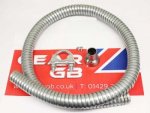
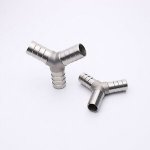
It only needs to be a Y shape bit of metal pipe connected to the exhaust extension kit the geny manufacturers sell .
Then switch this on
On it’s own just seawater runs out of the TTH fitting .
With the geny on it’s sufficient to cool the hot gasses after the Y to the hull .
Some fancy electronic device to interlock the geny so it can’t start with out the pump running ……if you wish .
Interestingly I have two “anchor “ brand 24 v pumps ( it’s a 24 v boat ) on my boat with separate TTH “in “fittings below the WL .
1 is a chain wash for the anchor chain .
2- is in the ER indeed for the geny .
This is at the bottom of the hull so near enough 0.8 M + down pressure wise but water is pumped through the geny .
This is on top of the rubber impeller pump , it as well as .I think it’s interlocked ie runs only with geny on .
Its 370 cc Diesel engines exhaust has a long run btw .
Water is injected into the exhaust stainless steel elbow which is about 30 cm long then this is cooled connected to trad vetus black rubber pipe .This pipe is 3 M or so long runs to the stern .
So the s steel manifold is effectively the Y piece i mentioned .
Where water + hot gas meet .
Incidentally There is a temp guard just a few cm below the meeting point ……so should water flow decrease and temp rise it alarms and switches off .
You could fit a temp guard on your Y down stream as well .
Then google / u tube sound boxes …….plenty of info .
Its a very do able project ….just copy existing designs …………I took CO alarms as read btw in my first response btw .
Blimey what a load of nay say doers ^^^ .


Neither will a 2kw generator ??dont work well with a microwave . thanks
Neither will a 2kw generator ??


why the shitty comment ?If I may, having spent many years building large scale model planes, exhaust manifolds is one of the very hard things to get right and never last. Every DIY method I have tried and every material I have ever used has eventually failed and needed to be replaced and I have the whole wealth of knowledge of an extremely large world wide hobby group to draw from. Heat, work hardening, vibration and stress. Even the inboards have manifold cooling. By all means knock yourself out by a can do attitude, Darwin loves can-do Fred in his Shed types. They always make delightful reading.
WATER cooling absentIf I may, having spent many years building large scale model planes, exhaust manifolds is one of the very hard things to get right and never last. Every DIY method I have tried and every material I have ever used has eventually failed and needed to be replaced and I have the whole wealth of knowledge of an extremely large world wide hobby group to draw from. Heat, work hardening, vibration and stress. Even the inboards have manifold cooling. By all means knock yourself out by a can do attitude, Darwin loves can-do Fred in his Shed types. They always make delightful reading.


as a electrician I assure you my generator has run our microwave in our caravan faultless for quite a few years , thanks
thank you , ours is a 1300w camping microwave , takes a little longer but is great for a hot dinnerFair enough….I had a big diesel generator that would work hard when I used a microwave…but it was a normal house hold job microwave and the generator output wasn’t pure sin wave . Good luck with it.
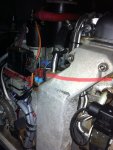
View attachment 124080
Fisher panda .Above the red line you burn your fingers , below the line see the water injection to the LHS it’s hand warm .
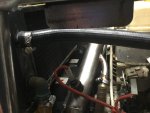
View attachment 124081
Mase Yanmar engine + S steel .Note the water injection and the temp sensor guard / alarm .
Within 20;cm of the Y after the guard it’s turns to black vetus rubber exhaust pipe .
Yours can be the metal like the OEM extension kits to the sea cock , which ought to be above the WL so you hear the trickle as a back up .
You should wrap the hot side , the gas side of the Y in auto heat wrap insulated bandage as well .
I can’t see any issues or down sides as you will be replicating what’s already done with marine genys except the hot bit the un cooled part of the exhaust is just longer .
Indeed I will go further for those with more than 1/2 brain , it’s arguably better .
This is because if you revisit the Fisher panda image the distance for the water injection is so close to the engine there are many folks , Internet traffic if rusty E valves and even flooded engines as it rolls in waves + wake = water runs into open valves = hydrolock.
Thus the longer ( within reason ) the Y , the water injection is away and lower as well , from the cylinder head the better …..hence what’s not to like ?
yet its already been established I can hide it below deck safely . having a securely mounted generator sounds a lot safer than one sitting above deck on a moving boat in the waterIts why small boats have gas, like ours successfully.
Its why big boats don't have petrol suitcase gennies, but proper installations.
I am not quite sure why you cant exist on a boat without a microwave. Sounds like a huge amount of faff for a 'tv dinner' on a boat.
We have a suitcase gennie. predominantly for emergency power or a quick charge of 240v stuff. We will stick it on the nose or @rse, convenient and safe.
how is this any different

yet its already been established I can hide it below deck safely .
I never said we would be moving, if we were we'd have 75 amps available from the enginehaving a securely mounted generator sounds a lot safer than one sitting above deck on a moving boat in the water

But not one in the history of boats has left the factory with your set up.boats have had generators installed for years and years
See t'other post, your technical naivety is something.the boat already has a petrol engine in the same area , all I am doing is putting another one next to it .
sorry but getting out a genny and pull starting it on a boat is dam more dangerous than pushing a remote to start a generator that is secure and all fuel is away from people .
thanks


