High Gloss Veneered yacht table - what is the best way to coat it - Polyurethane finish - or Lacquer - or epoxy resin finish

PaulTwistAgain

Active Member
Joined
21 Jun 2005
Messages
60
Location
Southampton
Visit site
I have made a new table for my boat and it is walnut veneered with walnut lipped edges, and I am looking to get a very high gloss finish that will bring out the colour of the wood and will be hard wearing, it will mostly be in the cabin, but it will come out to the cockpit for picnics, I am not sure which of the three finishes to use, polyurethane coating, a lacquer, or epoxy resins. I have done some research and looked at lots of websites, should I use a wood grain filler to start with? the epoxy resin I was looking at is the glasscast clear resin, what brands also would you recommend? Thanking you in advance for any advice.
 
I have made a new table for my boat and it is walnut veneered with walnut lipped edges, and I am looking to get a very high gloss finish that will bring out the colour of the wood and will be hard wearing, it will mostly be in the cabin, but it will come out to the cockpit for picnics, I am not sure which of the three finishes to use, polyurethane coating, a lacquer, or epoxy resins. I have done some research and looked at lots of websites, should I use a wood grain filler to start with? the epoxy resin I was looking at is the glasscast clear resin, what brands also would you recommend? Thanking you in advance for any advice.
Not epoxy, its not uv stable, and if you need to patch it in the future will be a pain in the ar$e to sort. Also epoxy will crack when the wood moves due to moisture. Consider using a hvlp gun and spraying polyurethane or lacquer.
I have one of these : Terratek Paint Sprayer, 650W DIY Electric Spray Gun with 3 Spray Patterns, 2 x 800ml Paint Cups, HVLP Hand Held Spray Gun System, Fence Sprayer, Adjustable Valve, Painting, Varnishing, Lacquering: Amazon.co.uk: DIY & Tools works really well
 
Wiped stain to enrich grain and raise it. Sand back ... repeat ... to get a real finish - this needs to be done multiple times till nothing raises up when stained ...
Then traditionally its thinned varnish ... by that for first few coats about 70% thinner .. 30% varnish ... lightly sand each coat ... after a few coats ... start increasing the varnish content till final is all varnish.

The finish is dependent on that loving care in coat / sand / coat etc.

Too often you see a table or surface that has had the full strength varnish coat applied ... it looks exactly that.

Personally I would not use a resin based finish but use traditional oil varnish.
 
I have used 2 pack car lacquer with great success, very durable and UV stable if used on cars, I sprayed some table in a school crafts room must be 10 years ago and they still look great despite the rolling clay/painting etc.
 
I have used 2 pack car lacquer with great success, very durable and UV stable if used on cars, I sprayed some table in a school crafts room must be 10 years ago and they still look great despite the rolling clay/painting etc.

I use a rattle can clear lacquer to seal and waterprotect my RC models (careful to not have exposed foam for it though !)
 
I agree with Stemar as I have been using Le Tonkinoise varnish as it is a traditional oil based varnish. Use the Marine No.1 for the table and apply at leat 8 coats initially. When you need to bring back the shine due to use, then a light rub down and 2 more coats.

Le Tonkinois
 
When you need to bring back the shine due to use, then a light rub down and 2 more coats.
Unless you're really careless, that's likely to be a long time. I did my tiller about 10 years ago and was looking at it a few days ago, wondering if I should give it another dose, and decided not to bother. It isn't as shiny as it used to be, but it's still protected. (It's only out in the rain or sun when we're sailing.)
 
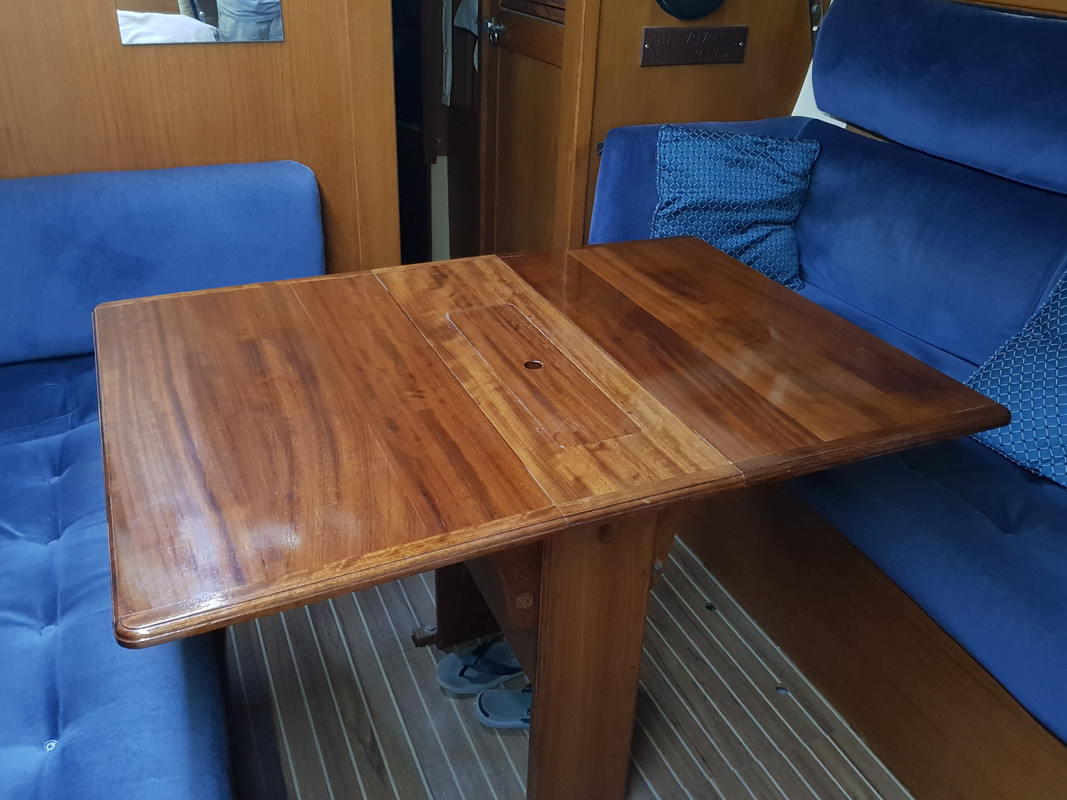
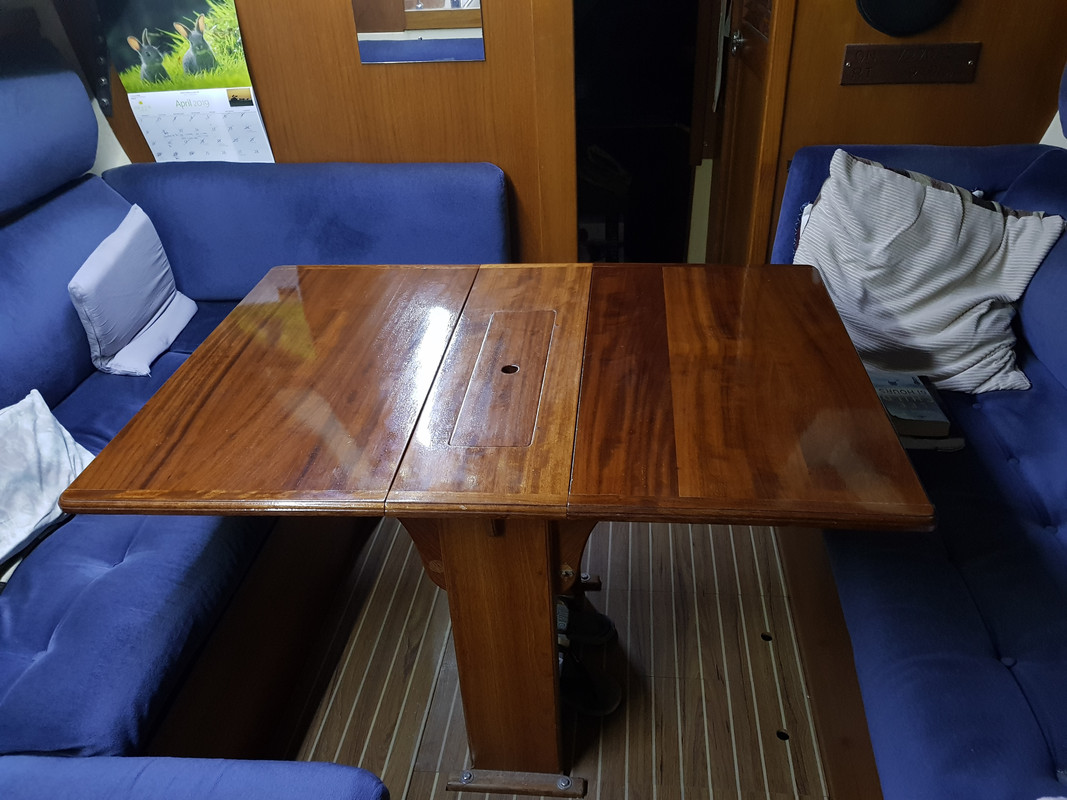
These photos show my table photographed in April 2019. I had a new top made for it in iroko in 1999 and painted it with West epoxy then. There has been a little sun bleaching on the centre section and the gloss is not quite as good as when I first did it. Not bad though for 20 years of considerable use.

 
Thank you for all your replies so much appreciated and as Itcom states the wealth of knowledge on here is very uplifting, I am thinking in coating it as suggested in Le Tonkinoise varnish thank you all.

Paul
 
One thing to watch out for with Le Tonk is that is skins over very quickly, especially when you get down to half a tin. I decant what I think I'm going to need through a tea strainer into a clean jar to keep the lumps out. Any left over just gets poured back into the tin. Once I've finished the job, I put the lid on firmly (percussive maintenance) and store the tin upside down
 
I have made a new table for my boat and it is walnut veneered with walnut lipped edges, and I am looking to get a very high gloss finish that will bring out the colour of the wood and will be hard wearing, it will mostly be in the cabin, but it will come out to the cockpit for picnics, I am not sure which of the three finishes to use, polyurethane coating, a lacquer, or epoxy resins. I have done some research and looked at lots of websites, should I use a wood grain filler to start with? the epoxy resin I was looking at is the glasscast clear resin, what brands also would you recommend? Thanking you in advance for any advice.
We used Bonda varnish on solid teak. Very glossy and 15 years later, still going strong.

The only problem is that it shows all the fingerprints. I use glass cleaner to get rid of them. The table folds up against the mast box when not being used, so takes mistreatment.
 
One thing to watch out for with Le Tonk is that is skins over very quickly, especially when you get down to half a tin. I decant what I think I'm going to need through a tea strainer into a clean jar to keep the lumps out. Any left over just gets poured back into the tin. Once I've finished the job, I put the lid on firmly (percussive maintenance) and store the tin upside down
I always use a split open polythene bag over the top of the varnish and that stops any skinning over.
 
Top