
Stemar
Well-Known Member
Another vote for Rivnuts. I'd use a Helicoil if there's the thickness of metal, like for a stripped bolt in an alloy head, but they're different things for different purposes. It ain't apples oranges, it's apples and bananas


Another vote for Rivnuts. I'd use a Helicoil if there's the thickness of metal, like for a stripped bolt in an alloy head, but they're different things for different purposes. It ain't apples oranges, it's apples and bananas
Care to elaborate what you have found useful?Dont use apples or bananas. I have found them both useless for stripped threads.


does anyone know how much space a helicoil takes in the hole? I mean I heard a helicoil is so thin you almost don’t need to increase the hole size if the original threads have already worn away.
so if I went helicoil I’d have at least the fallback of a rivnut if it doesn’t work. Assuming a rivnut would need a significantly larger hole to work.

Is that a horizontal split at the bottom of the line of holes?
hi, just a thought, it's going to be difficult to do anything with the existing holes and I'm not sure exactly how your cover works. However, if it were my problem I might think about using some flat aluminium bar about 5 or 6 mm thick, equal to the length of the cover, which could be pre-drilled and tapped to suit the hole centres and then attached to the mast with rivets or even countersunk self tappers. The cover would stand off a little further from the mast than before but would that matter?
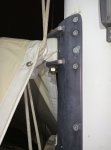
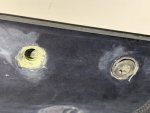
yeah that won’t work. The large plate sits flush against the mast. Mast is 5mm thick.
Here is some photos of it now:
View attachment 101823
View attachment 101824
Both my Beneteaus were/are riveted on. That thread looks bigger than 5mm by the way? I woukd drill some more holes in that wide area and rivet it.
Thanks.... I’ll see if I can find some that officials grip to 5mm. Fair point about only doing the ones that need doing. In fact the top 3 bolts I’ve backed inside the mast with a washer and nut since I can get my hand in there and figure there is nothing more bomb proof than a bolt with the nit on the end. May as well leave them like that.Standard 8mm rivnuts have a grip range up to 4.5mm, though some suppliers quote 5mm. If the mast really is 5mm thick then you need to countersink them a little below the surface to get a good grip. It is worth getting the serrated ones as these seem to grip better. In any event make sure you do not drill the holes in the mast oversize. If it says hole size 11mm, buy a 10.9mm drill and use that, and only open the hole carefully to 11mm if the rivnuts will not push in.
EDIT: This sort of rivnut: Aluminium Countersunk Head Grooved-Serrated Rivnuts-Rivet Nut-Nutserts | eBay
Any holes that still have a good thred, just use it. Only put rivnuts in where threads were stripped.


M8 self-tappersI still reckon self tappers would be easier (#3)

Did anyone ask why are they falling out, is the thread in the alloy actually damaged or worn? It looks pretty good in the photo. May be it just needs Loctite?Some M8 bolts are falling out of my mast where a plate is attached. I need to put in some sort of insert.
Did anyone ask why are they falling out, is the thread in the alloy actually damaged or worn? It looks pretty good in the photo. May be it just needs Loctite?
If they're not bad, LOCTITE PC 3967 Stripped Thread Repair Kit (aka LOCTITE Form-A-Thread) might do without any drilling.
M8 x 1.25 helicoil would require a 8.3mm drill and M10 STI tap, I think. Specifically it's actually 9.7mm but you're not going to hold your drill 0.3 steady on a boat.
If you go that route, there are other products like LOCTITE 2620 (but check for alloy/marine use) to hold it in permanently. Otherwise, what's to stop it pushing right through?