Hamble Yacht Services - DONT USE THEM!

Solent sailer

Well-Known Member
Joined
10 Nov 2006
Messages
333
Location
..
Visit site
Has anyone else had experience with Hamble Yacht Services, we have been shocked by just how bad their work and service has been.

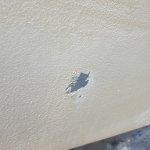
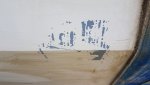
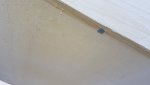
We had the hull stripped right back and primed / antifouled. The original work seemed to have been carried out by untrained and unsupervised “staff” painting around the old anodes rather than removing them, the antifouling was so thin after "2 coats" you could still see primer. Now after the Covid19 lockdown we got back the boat to find large areas of antifouling falling off after 5 months in the water.
After ignoring my emails for weeks, I received and email stating that it was not unreasonable to expect the antifouling to be falling off and perhaps I should abrade the primer before I repaint it! Since then, my emails and phone calls have been ignored.

I would strongly suggest using anyone except Hamble Yacht Services for any work, there communication stops after the final payment and they are not interested in putting right any mistakes caused by poor workmanship and no supervision of their employees.
 
Why would one need to remove the anodes? Not a lot of use putting antifoul paint under them is there?
If the boat is in the water how do you know "large areas of antifouling falling off "

Reasonable questions I think .... but we have no further details other than complaint.

Antifouling coming off ? I literally gave up antifouling my boat last years she was in UK - with a drying berth - the action of in / out of mud etc. basically took the eroding AF off within a short period. Only solution was Hard racing AF - but I didn't want the build up of paint layers and elected to clean hull each end of season ... the difference in workload was actually minimal, because the drying out on berth actually assisted !
 
Why would one need to remove the anodes? Not a lot of use putting antifoul paint under them is there?
If the boat is in the water how do you know "large areas of antifouling falling off "

I agree, why remove anodes for antifouling? As long as care is taken and no anti-foul is left on the anodes the additional work needed to remove and replace the anodes would be totally superfluous.
 
I agree, why remove anodes for antifouling? As long as care is taken and no anti-foul is left on the anodes the additional work needed to remove and replace the anodes would be totally superfluous.
I never remove my anode unless it's used up. I'd rather a company doing my antifouling didn't remove them - too much risk of disturbing the bolts and starting a leak. At least, when I do it, I know if the nuts are being stubborn and can rebed the bolts if necessary.
 
Has anyone else had experience with Hamble Yacht Services, we have been shocked by just how bad their work and service has been.

We had the hull stripped right back and primed / antifouled. The original work seemed to have been carried out by untrained and unsupervised “staff” painting around the old anodes rather than removing them, the antifouling was so thin after "2 coats" you could still see primer. Now after the Covid19 lockdown we got back the boat to find large areas of antifouling falling off after 5 months in the water.
After ignoring my emails for weeks, I received and email stating that it was not unreasonable to expect the antifouling to be falling off and perhaps I should abrade the primer before I repaint it! Since then, my emails and phone calls have been ignored.

I would strongly suggest using anyone except Hamble Yacht Services for any work, there communication stops after the final payment and they are not interested in putting right any mistakes caused by poor workmanship and no supervision of their employees.


Thanks for posting, always good to hear of these things.

I agree with the others about the anode. However anti fouling paint should not be falling off in lumps. I am the shoddiest anti fouler in the universe, never prepare properly and often mix brands in the tin; it always stays stuck on.

I bet it cost you an arm and a leg as well. I would have thought it would have cost them little to look at it and offer a discount or free application next time.

.
 
Thanks for posting, always good to hear of these things.

I agree with the others about the anode. However anti fouling paint should not be falling off in lumps. I am the shoddiest anti fouler in the universe, never prepare properly and often mix brands in the tin; it always stays stuck on.

I bet it cost you an arm and a leg as well. I would have thought it would have cost them little to look at it and offer a discount or free application next time.

.
We have an aluminium hull, the hull was sand blasted and painted with epoxy primer to protect it from corrosion. The anodes were worn out and had damaged the paint underneath them.
We are more concerned about protecting the hull from corrosion than saving a worn out anode.
HYS were paid to repaint the whole hull, I had removed everything I could but couldn't reach the last few (the anodes are only about 60mm x 50mm and 8mm thick when new, after 12 months there wasn't much left.
 
I think the time to complain about how thin was the antifouling might have been immediately after the work was finished when you went to inspect the work for which you were paying. I assume that as the work was so shoddy you took photographs, with your phone. You must have decided, at the time not to complain (why?) and have left it to months later.

How do you know you can still see primer - it might be a first coat of an AF of one colour with a second coat of another colour so that you know how the AF is faring (its not an unusual practice).

If the AF is falling off then the fault may be incompatibility between AF and the first coat of AF and/or AF and primer. You have paid for both the primer and AF - I assume you know what was used. I also assume you checked that what you paid for, quality/brand of AF and primer. This is especially pertinent as the hull is aluminium. There are a limited number of AFs compatible with aluminium, you surely discussed this before the work commenced and checked the correct AFs were used, especially as you say you are concerned about corrosion.


AF is not cheap, the labour is not cheap, the slipping is not cheap - you should have some means of checking what you pay for (visit without warning).

Now it could be the service provided used the cheapest paint, or most expensive paint possible - I really don't understand why people are prepared to pay large sums of money for work to be completed (in this case with service provided they do not know) and do not check what they are paying for.

If the anodes had been removed and then the complete hull painted - err exactly how were the replacement anodes means to work. Surely the best thing to do is leave the old anodes in place (especially as the owner had left them) and then when they were removed it would be simple to attach new anodes.

Are Pagoda trees common now in the UK?

Without documentary evidence of the work about which you are complaining I cannot be. very supportive. Its is too easy to troll an activity, for reasons other than shoddy work, and I'm surprised YBW is allowing undocumented complaint. Your complaint might be totally valid and understate the quality - show us some images, we can then judge and be more, or less, supportive. If you did not take images - why?

Jonathan
 
Last edited:
We have an aluminium hull, the hull was sand blasted and painted with epoxy primer to protect it from corrosion. The anodes were worn out and had damaged the paint underneath them.
We are more concerned about protecting the hull from corrosion than saving a worn out anode.
HYS were paid to repaint the whole hull, I had removed everything I could but couldn't reach the last few (the anodes are only about 60mm x 50mm and 8mm thick when new, after 12 months there wasn't much left.
Clearly a lot of money involved here, so perhaps you need to engage a surveyor to inspect the boat, identify the faults if any then go back to the contractor. All well and good posting on here, but your first post did not indicate that this was not the run of the mill job of applying a coat of antifoul to a GRP boat!

Seems a little unfair to post such a simplistic warning against a long established firm without explaining what has actually gone on, nor what steps you have taken to get a remedy.

There are always two sides to a story and you have not even fully explained yours never mind what the contractor has actually done (or not done).
 
I think the time to complain about how thin was the antifouling might have been immediately after the work was finished when you went to inspect the work for which you were paying. I assume that as the work was so shoddy you took photographs, with your phone. You must have decided, at the time not to complain (why?) and have left it to months later.

How do you know you can still see primer - it might be a first coat of an AF of one colour with a second coat of another colour so that you know how the AF is faring (its not an unusual practice).

If the AF is falling off then the fault may be incompatibility between AF and the first coat of AF and/or AF and primer. You have paid for both the primer and AF - I assume you know what was used. I also assume you checked that what you paid for, quality/brand of AF and primer. This is especially pertinent as the hull is aluminium. There are a limited number of AFs compatible with aluminium, you surely discussed this before the work commenced and checked the correct AFs were used, especially as you say you are concerned about corrosion.


AF is not cheap, the labour is not cheap, the slipping is not cheap - you should have some means of checking what you pay for (visit without warning).

Now it could be the service provided used the cheapest paint, or most expensive paint possible - I really don't understand why people are prepared to pay large sums of money for work to be completed (in this case with service provided they do not know) and do not check what they are paying for.

If the anodes had been removed and then the complete hull painted - err exactly how were the replacement anodes means to work. Surely the best thing to do is leave the old anodes in place (especially as the owner had left them) and then when they were removed it would be simple to attach new anodes.

Are Pagoda trees common now in the UK?

Without documentary evidence of the work about which you are complaining I cannot be. very supportive. Its is too easy to troll an activity, for reasons other than shoddy work, and I'm surprised YBW is allowing undocumented complaint. Your complaint might be totally valid and understate the quality - show us some images, we can then judge and be more, or less, supportive. If you did not take images - why?

Jonathan

It was not my intension to enter into a lengthy discussion on this but some of the issues raised in this response seem to need a reply from me.

If you look at the electrical potential of aluminium and zinc and the protection offered to aluminium by a zinc anode you will quickly realise that the main protection for the hull is the paint and not the anode, our anodes are bolted to the hull with aluminium bolts and testing suggest that this gives a good electrical connection. There is no way I would be happy with an un-painted section of hull to try to improve the connection of the anode. The anodes are only about 60mm x 40mm x 8mm thick and not a substantial lump of zinc as seen on steel hulls.
When I pointed out that the old anodes were still in place after the first coat of epoxy had been applied HYS apologised as they knew they should have taken them off (hence my original concerns on lack of supervision).
As I contracted to have a job done I did not think I should need to supervise or carry out part of the job - removing anode. I am not an expert on painting aluminium yachts so would make a very bad “clerk of the work” anyway.

It was possibly a more complicated job than a regular GRP boat that is why we used a professional boat yard that had experience with aluminium boats and relied on them to carry out the works as specified. In the same way as if you had a new gas boiler fitted at home you would employ a reputable company and not tell them how to do the work, that’s why you employ professionals!
With aluminium we are only allowed to use copper free antifouling (International Trilux), we specified white clearly for both coats, making grey primer quite clearly visible, who used different colours for first and second coats with their antifouling anyway?

We live around 80miles from HYS so popping in to check was not easy, I had arranged to call in on the weekend to finish a couple of jobs and see the finished job. We received an email saying they would be launching early as the job was finished and they had the travel lift available. So I had the option of refusing the launch and paying for extra yard time or assuming that a professional company was acting in good faith and trying to progress the works. I seriously doubt the problems with the antifouling would have been evident at that time anyway as it wouldn’t start failing for some time.

I have no idea what “Pagoda trees” refers to?

My intension was to offer my experience with a company and there service. I first emailed HYS with pictures on the 23 March I received an email on the 20 May stating that as the yacht had been in the water exposed to chemicals for 6-8 months they accepted no responsibility. Correspondence in between these emails was minimal, I think I received 2 emails. I emailing every week or so and made several phone calls (actually speaking to the guy dealing with this twice, he was not available or was going to “call back” every other time).
The works were completed on the 9th October and launched shortly after, I emailed HYS on the 23 March, We were unable to inspect the hull before that as we were not allowed to travel. By my reckoning 9th October to the 23 March is not 6 to 8 months and even if it was the antifouling should not fall off a stationary yacht tied up in a marina - I’m not sure what “chemicals” they were referring to I thought the sea was predominantly salt water?

I have attached some pictures I don’t feel I need to attached the other 20~30 to justify myself. I intended this to be a word of caution to others not to descend in to a vitriolic attack on anyone or any company (although perhaps that is what the meant by chemical damage whilst in the water?) - The hull was not jet washed just wiped with a spunge for these pictures.
 

Attachments

  • 20210323_121424_resized.jpg
    20210323_121424_resized.jpg
    558.3 KB · Views: 227
  • 20210323_132211_resized.jpg
    20210323_132211_resized.jpg
    680.4 KB · Views: 231
  • 20210323_132341_resized.jpg
    20210323_132341_resized.jpg
    632.7 KB · Views: 213
So scenario is somewhat different than imagined. Sounded like failure of a simple job on a grp hull. Now we are told it is an aluminium boat so needed specialist handling. No idea what the contract was or who supplied /used what to do the job. Guess we can't comment as no idea what the facts are.

Why do you think painting an aluminium hull is more complicated than painting a GRP one? It is a specialist job and that is why we employed a specialist to do the job.

Also the painting on the aluminium looked OK (finger crossed!) it’s the antifouling that’s failing and that would be the same on a GRP boat!
 
Clearly a lot of money involved here, so perhaps you need to engage a surveyor to inspect the boat, identify the faults if any then go back to the contractor. All well and good posting on here, but your first post did not indicate that this was not the run of the mill job of applying a coat of antifoul to a GRP boat!

Seems a little unfair to post such a simplistic warning against a long established firm without explaining what has actually gone on, nor what steps you have taken to get a remedy.

There are always two sides to a story and you have not even fully explained yours never mind what the contractor has actually done (or not done).

The painting on the aluminium looked OK (finger crossed!) it’s the antifouling that’s failing and that would be the same on a GRP boat!

There are two sides to any story that should not prevent me telling my side of it.

The antifouling is not a specialised or complicated process and would be the same on any GRP boat so I didn’t feel I needed to complicate the story as it was not material to what I was complaining about - I would not even be complaining if the paint was failing and HYS had been making some effort to communicate and rectify the issue, if they had offered to lift us out and patch the paint up I would not have been on this site discussing it now.
 
If you get any breach in the underwater protection then you will get galvanic corrosion. The OP seems to be reporting loss of antifoul protection. If it were my boat I would use magnesium.
 
Top