Fin aground on a sandbank.... actions?

Just for the kicks the tacks were really to show the survey boat and one of the ships I'm keeping clear, the other ship pretty much passed me at Portishead but I heard him saying to the VTS there was a sailing boat ahead on his bow (out of the channel I must say) so nice to know they were keeping a lookout or at least checking AIS.

 

Attachments

  • 20180905_190008.jpg
    20180905_190008.jpg
    146.4 KB · Views: 0
Bitbaltic, good to hear you're in agreement. I didn't really post where I was heading as I know its a ok thing to do in the right conditions and I didn't want to turn the thread into a "you're sailing over green bits!" doom and gloom thread. More a what happens when the "fhit hits the san" thread so I and others can learn from it. I've not touched bottom yet but I'm in no doubt I will and if it all goes wrong I want to know the best course of action. There's been a couple of posts on fb from penarth rnli about yachts going aground in the Wrach channel, two on one tide! Sailing a fin I want to be clued up and as Zoidberg says PPPPPPP.

Seajet, thank you for the compliment, I've drank that virtual beer many times over since tieing up... but it's no more then anyone else who owns/sails a boat should be thinking about. If you ever want a Bristol Channel mud bash give me a shout, it's not all that bad... apart from a survey boat and a ship I didn't encounter another vessel to worry about!

Yep as you say it’s all about planning, no worries. I’ve not gone aground yet in the BC, as you say it might happen one day but building knowledge inside a strong nav framework as you are doing actually makes it a low risk. I did push it the other day at Dale (20cm under keel 10m away from rocks) as an example but was relaxed about it because I know the bit I was sailing over really wells d the tide was rising ;) as you see more places you will get confident.
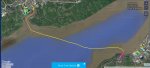
Re the wrach, yachts go aground there for two reasons: occasionally an idiot thinks the channel markers mean nothing; but more frequently yachts cut Close to the last port can before the preferred channel marker when turning into the small boat channel. The mudbank has been building out into the channel there for years, and it’s that that catches them out. Even without local knowledge of that, if you stay equidistant betweentge marks, turn on the transit and follow the pilotage it’s fine. This is what i’m Sure you would do even if you didn’t know about the mudbank because it’s what the pilots say to do. it’s lazy skippers that get caught out in the Wrach.
 
Just thought I would update this after another club member went over the sands in his fin similar to Sundance, took about 1hr45 and left to get over the mud banks just before HW. Makes me feel a bit more happier it's possible.
 

Attachments

  • 20190503_194156.jpg
    20190503_194156.jpg
    447.3 KB · Views: 0
Bring a shovel? I've dived down and dug out an anchor with my bare hands*, so with a shovel you can surely dig out a keel :)

* Someone had dragged into a swim barrier and couldn't pick the anchor up the normal way without hitting it again.

If you are definitely stuck, you can dig a hole under the keel so that the boat settles on an "even keel" and so reduce the risk of downflooding.
 
I know you're talking about running into mud, but sand has also been mentioned.

I can't help but remember some of the commentary during the Cheeky Rafiki case, where it was noted that fin keel yachts should be hauled out and inspected after a grounding - no matter how slight. Personally I wouldn't bother for a grounding into mud, but I'd be concerned if I ran a boat into sand.

.
Crickey! if i did that the boat would spend most of its time on the hard
 
We went aground on sand in the Bahamas, I attached a rope to the main halyard used a dinghy to pull the boat over and off the sand bank.

Masthead line should be at least 3 x mast height.

Establish where the deeper water is by doing a circuit with a sounding pole before pulling. You do have a sounding pole? If not use a boathook or oar.
 
I grounded my last boat, an Intro 22 fin keel approx 5 years ago. Blythe Sands on the thames, falling tide so boat went more and more onto the sandbank as the tide fell. i had a large service boat tow me off, the bow was facing the shore and as the boat was pulled off the boat turned and the rudder snapped off, half in the mud half on the transom still. The RNLI came along and towed us back to my club. Insurance paid for a new rudder to be made, the rest of the boat was unharmed. Hindsight i should of just sat in the leaning yacht and waited for the tide to come back in. I had also tried to tow the yacht off with my tender without success of course striaght after we grounded, it was a very choppy windy day too.
 
One point on going aground that I really want to emphasise; if the tide is rising and you are to windward of the deeper water, well and good; you will come off in half an hour or less.

If the tide is falling or if you are to leeward of the best water you must lay out an anchor. This will involve the dinghy.

DO NOT repeat DO NOT put the anchor in the dinghy.

Hang the anchor off the stern of the dinghy on a short line from the thwart, round the shackle on the anchor, and back to the thwart with a slip knot. When you get to where you want to drop the anchor, pull the slip knot. This works on rigid dinghies, on RIBs and on soft floor inflatables. If you stand up in the dinghy and try to pick the anchor up and throw it over you are (a) going to drift away from the right spot whilst you faff around and (b) you are highly likely to capsize the dinghy and find yourself swimming.
 
DO NOT repeat DO NOT put the anchor in the dinghy.

Hang the anchor off the stern of the dinghy on a short line from the thwart, round the shackle on the anchor, and back to the thwart with a slip knot. When you get to where you want to drop the anchor, pull the slip knot. This works on rigid dinghies, on RIBs and on soft floor inflatables. If you stand up in the dinghy and try to pick the anchor up and throw it over you are (a) going to drift away from the right spot whilst you faff around and (b) you are highly likely to capsize the dinghy and find yourself swimming.

I disagree totally
First i would try to avoid anchoring if possible.
However, it could be risky not to. I would put the anchor & the whole rode in the dinghy so that as I rowed away I gradually laid the rode over the back rather than try to drag it along. Put the anchor in first & feed the rode on the top so it feeds out.This way you are not pulling it through the water.
Dragging an anchor over the back acts as a brake. Dragging the rode through the water is difficult & any tide will drag one off course.
Stick the lot in the dinghy & when you get to the anchor, lob it over the side. No need to stand up just roll it over the stern. To flip it over the back roll off the thwart onto your knees & lift it over the stern. No need to stand up at all.:encouragement:
 
Last edited:
I disagree totally
First i would try to avoid anchoring if possible.
However, it could be risky not to. I would put the anchor & the whole rode in the dinghy so that as I rowed away I gradually laid the rode over the back rather than try to drag it along. Put the anchor in first & feed the rode on the top so it feeds out.This way you are not pulling it through the water.
Dragging an anchor over the back acts as a brake. Dragging the rode through the water is difficult & any tide will drag one off course.
Stick the lot in the dinghy & when you get to the anchor, lob it over the side. No need to stand up just roll it over the stern. To flip it over the back roll off the thwart onto your knees & lift it over the stern. No need to stand up at all.:encouragement:

I agree with you about putting the kedge warp in the dinghy in a capsized coil and rowing it out; that much is obvious, so I didn't bother to mention it.

As to the idea of NOT laying out an anchor, I covered the one case where you would not do so - where you are aground to windward of the best water on a rising tide.

The "drag" of the anchor over the stern has no effect that I have been able to observe.
 
No, lots of chickenwire works much better - according to Terry Pratchett (Hogfather...). Sinks the body and keeps it together while allowing nature's little helpers to do their essential recycling work.

I hope no-one is taking this seriously!

I'm going to file that information away under "might come in handy, one day", and am wondering about Sir Terence's interesting friends...
 
I found having a chubby girlriend sit on the coaming to heel the boat, or as a last resort dangle her in a bosuns' chair did the trick; or Plan A would be have a slim g/f and don't go aground in the first place :)
 
I disagree totally
First i would try to avoid anchoring if possible.
However, it could be risky not to. I would put the anchor & the whole rode in the dinghy so that as I rowed away I gradually laid the rode over the back rather than try to drag it along. Put the anchor in first & feed the rode on the top so it feeds out.This way you are not pulling it through the water.
Dragging an anchor over the back acts as a brake. Dragging the rode through the water is difficult & any tide will drag one off course.
Stick the lot in the dinghy & when you get to the anchor, lob it over the side. No need to stand up just roll it over the stern. To flip it over the back roll off the thwart onto your knees & lift it over the stern. No need to stand up at all.:encouragement:

I agree about the warp. I never said otherwise. As for kneeling down and rolling the anchor out of the boat...try that with a hundredweight Fisherman and an eight foot pram dinghy, up here, in pack ice... Been there, done that thing, got - well not so much the T shirt as the two ganseys and oilskins... If it hadn’t worked I wouldn’t be here

 
Last edited:
I agree about the warp. I never said otherwise. As for kneeling down and rolling the anchor out of the boat...try that with a hundredweight Fisherman and an eight foot pram dinghy, up here, in pack ice... Been there, done that thing, got - well not so much the T shirt as the two ganseys and oilskins... If it hadn’t worked I wouldn’t be here


I think that you & Brent Swain should get together - You will get on fine sitting on a reef together. Mind you I am not sure if he would appreciate all that ice.I can see him telling everyone how his steel boat resisted crushing when stuck for 6 months whilst all the GRP ones sank. & you can tell him about your anchor for getting off.

How many of the forum members will be using a fisherman's anchor of 1cwt ( Thames barge owners need not bother, we know who you are!!)
As for messing around in pram dinghies - well I though most of us had realised how unstable they were years ago.
By the time you had the sort of rode that a 1 cwt anchor would warrant I would expect that the 8 ft pram dinghy would be seriously overloaded.

So let's keep it sensible. A typical anchor in use by the average forum member, would probably be 15-25 KG ( No please do not start another anchor debate we know yours is bigger than mine-- but do you know how to use it?)
I note that you quickly added streaming the rode, but omitted that in the first post. I just felt that it should be highlighted.
I felt that your comment :- " DO NOT repeat DO NOT put the anchor in the dinghy."
is ridiculously over the top
Rowing whilst streaming a rode is hard enough, especially in a cross tide, without trying to drag the anchor through the water. In a rubber dinghy that is like rowing with the outboard down, only harder as the flukes are wider.
If one cannot simple roll a 25 Kg anchor over the back of a dinghy, then one needs to consider if one should be sailing in the first place.
But to each his own. If one wants to go wandering about the artic circle then well done.
But I am sure that you will admit that one can get plenty of practice at running aground much nearer to home, sailing around the Thames estuary & I not so sure that you really need a 1 cwt fishermans there-- tell us -- do you?
 
Top