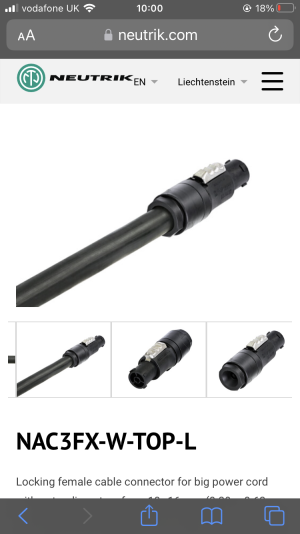
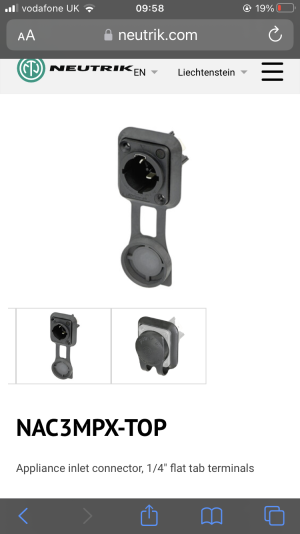
Female socket on boat for mains connection?

Its roundabouts and swings ...

Flush without angle and cable plug sticks out ... easy to knock.

Angled mount with plug vertical ... plug is not so easy knocked - but still sticks out.

My 25 has the vertical mounted .. and sits in corner between winch handle pocket and companionway .. so not so bad ...

Would I do same on the 38 ??? not sure.
 
We had one of these on our last boat. Fine except the covers are rather flimsy, and go brittle with UV. Needed to replace the cover every 3-4 years (which entailed a new socket, but hardly expensive).
Current boat has the inlet connector protected inside a quarter cockpit locker. Almost never connect/disconnect the cable from this, just take cable out of locker and connect to shore socket. Eliminates any corrosion or UV issues with the inlet.
Have exactly the same socket. I have covered the flap with sticky back plastic to counteract UV.
 
We had one of these on our last boat. Fine except the covers are rather flimsy, and go brittle with UV. Needed to replace the cover every 3-4 years (which entailed a new socket, but hardly expensive).
Current boat has the inlet connector protected inside a quarter cockpit locker. Almost never connect/disconnect the cable from this, just take cable out of locker and connect to shore socket. Eliminates any corrosion or UV issues with the inlet.

Also had one of these on my last boat. When the plug is in it's really easy to break the flap.

Switched to a Ratio plug and socket,
fitted the same on my current boat as soon as i bought it.

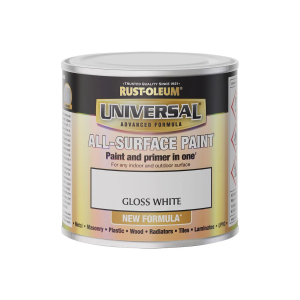
I wondered if painting with this RustOleum paint would protect it from UV
1703248063570.png
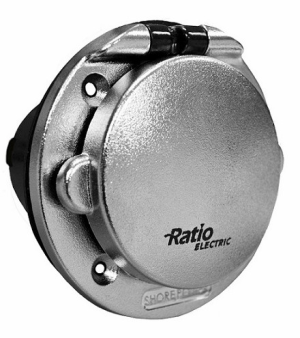
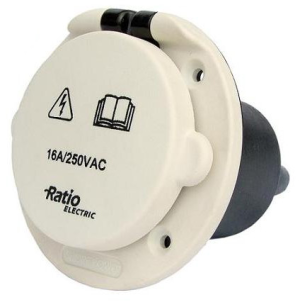
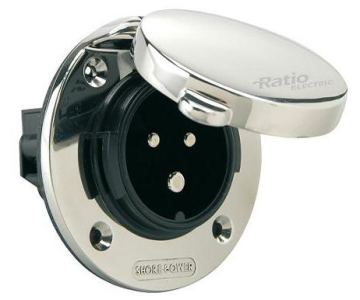
But the Ratio sockets make more sense with a choice of chromium plated polyamide, glass filled Nylon polymer or stainless steel but I believe they need the Ratio plug to fit

1703248300271.png1703248374417.png1703248412777.png
 
I wondered if painting with this RustOleum paint would protect it from UV

But the Ratio sockets make more sense with a choice of chromium plated polyamide, glass filled Nylon polymer or stainless steel but I believe they need the Ratio plug to fit
I'm sure i tried a blue connector at some time in the past, i have a feeling it fitted, but can't be sure. But, even if it did fit, it wouldn't be waterproof. The Ratio inlet is waterproof with or without a connector in it, i've tried spraying one with a jet of water from a hosepipe and it was fine.
 
Also had one of these on my last boat. When the plug is in it's really easy to break the flap.

Switched to a Ratio plug and socket, fitted the same on my current boat as soon as i bought it.


I had a similar issue with my cockpit bilge pump plastic cover and I made a replacement from stainless steel that bolted on using the existing mounting bolts with a hinge at the top so gravity would hold it closed until the pump lever was inserted

Will look for a pic
 
Yes but it clearly needs to be a stronger and UV resistant material.

Laser cut stainless steel with a pressed hinge to connect the two together

Fine ...

Contrary all info I had .. the PLA+ filament sail savers I have on cap shrouds to stop genny scraping spreader ends ... years up there - still working fine condition.

I have various covers for gear when not in use - again in PLA+ .... still good.

There are other filaments - I have them ... but the most environmentally resistant have 'unhealthy vapours' when heated and printing ... needing enclosed extractor hood ...

Anyway ... I can print new as often as I need ...
 
Fine ...

Contrary all info I had .. the PLA+ filament sail savers I have on cap shrouds to stop genny scraping spreader ends ... years up there - still working fine condition.

I have various covers for gear when not in use - again in PLA+ .... still good.

There are other filaments - I have them ... but the most environmentally resistant have 'unhealthy vapours' when heated and printing ... needing enclosed extractor hood ...

Anyway ... I can print new as often as I need ...

I was watching a TV program the other day about the University of Maine 3D printer that printed a boat.

When you can print in metal is when I would be interested
 

What you are talking about is direct metal laser sintering (DMLS),

This is in effect a metal extrusion process mounted on a 3D travious frame

Laser cutting plasma or Oxy Acetylene cutting are all done in a similar way

Again welding being metal additive process using a 3D moving frame is also a similar process

The question is are there any DIY metal 3D printing machines available for personal use if not its not at the same level as what Refueler and other posters do
 
I'm sure i tried a blue connector at some time in the past, i have a feeling it fitted, but can't be sure. But, even if it did fit, it wouldn't be waterproof. The Ratio inlet is waterproof with or without a connector in it, i've tried spraying one with a jet of water from a hosepipe and it was fine.
IP56 according to the specs

Dust protectedIngress of dust is not entirely prevented, but it must not enter in sufficient quantity to interfere with the safe operation of the equipment.
Powerful water jetsWater projected in powerful jets (12.5 mm (0.49 in)) against the enclosure from any direction shall have no harmful effects.
 
I was watching a TV program the other day about the University of Maine 3D printer that printed a boat.

When you can print in metal is when I would be interested
You already can. Reynolds print CroMo dropouts and bottom brackets directly on to their tubing.
 
The simple matter as I see it ... caravanning has created a huge market in such as electrical connection ... this has also provided us the boater with so many items that are easily obtained, economic (as long as careful where you buy !!) and if fitted correctly - safe.

There are many alternatives on the market that appear as good or even better ... but when you arrive at marina .. what are you going to find ? Usually Blue Socket ... why buck the trend ? Its proven itself over years ...
 
The simple matter as I see it ... caravanning has created a huge market in such as electrical connection ... this has also provided us the boater with so many items that are easily obtained, economic (as long as careful where you buy !!) and if fitted correctly - safe.

There are many alternatives on the market that appear as good or even better ... but when you arrive at marina .. what are you going to find ? Usually Blue Socket ... why buck the trend ? Its proven itself over years ...
"Good enough is good enough"

Which is also why I have resisted exhortations to replace my CQR anchor with something else. 😉
 
The simple matter as I see it ... caravanning has created a huge market in such as electrical connection ... this has also provided us the boater with so many items that are easily obtained, economic (as long as careful where you buy !!) and if fitted correctly - safe.

There are many alternatives on the market that appear as good or even better ... but when you arrive at marina .. what are you going to find ? Usually Blue Socket ... why buck the trend ? Its proven itself over years ...

I agree completely. On the other hand, if you are space constrained on the boat side, you could always put Neutrik on one end and commando on the other. That's no different to a Marinco to commando cable.

The Ratio system is quite nice as well, but a lot more bulky.
 
I agree completely. On the other hand, if you are space constrained on the boat side, you could always put Neutrik on one end and commando on the other. That's no different to a Marinco to commando cable.

The Ratio system is quite nice as well, but a lot more bulky.
A lot more bulky than what ?
 
Top