Diesel tank air vent

zoidberg

Well-Known Member
Joined
12 Nov 2016
Messages
7,024
Visit site
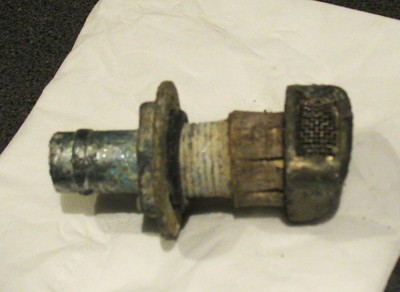
I'm repositioning an existing diesel fuel tank air vent. Originally, this lengthy plstic tube terminated to air via a mesh-screened 'nipple' protruding 3/4 inch from the rear deck - where from time to time it would likely be swamped by solid water.

I could mount it up inside the hollow grp stern coaming, on/crossing the centreline. But, would I be better keeping it all inside the stern locker 'upstand' - or protruding as before, but about 3-4 inches higher?

Thoughts?
 
The trick is to put an inverted U in the pipe before exiting ...

If you can get to the pipe internally - you can add a length to create the U .... no need to replace the whole... and you can still use the existing fitting.
We need a picture.

Was the vent vertical on a deck? I doubt that, as rain would go into the tank.

Was it on the transom? You could use a U, as Refueler suggested, but it must be high enough to prevent impact pressure from driving the water over it, and it must self-drain overboard.

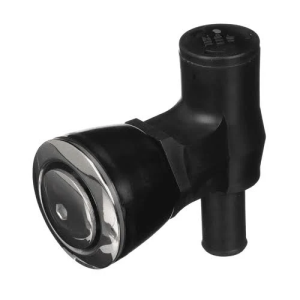
(This type of transom vent has internal baffles to kill the velocity and a built-in U to resist slap. Common on powerboats. $25.)
1770232267860.png

I would NOT terminate it anywhere inboard. Reasons given.
 
The trick is to put an inverted U in the pipe before exiting ...

If you can get to the pipe internally - you can add a length to create the U .... no need to replace the whole... and you can still use the existing fitting.
Yes, that is what I have. The loop goes up to nearly the height of the coach roof , significant higher than the filler, then down to the gauze fitting which is under the side deck, not overboard. Has never leaked any fuel into the boat after 30 years of sailing.
 
Yes, that is what I have. The loop goes up to nearly the height of the coach roof , significant higher than the filler, then down to the gauze fitting which is under the side deck, not overboard. Has never leaked any fuel into the boat after 30 years of sailing.
We had a 10mm tube connected to the bottom of the tank, attached to a bulkhead parallel to the tank (vertically), with a tap at the top, usually left open, and terminated well above the top of the tank. The tube gave the fuel level, marked in 20l intervals, 200l tank.

the filler point, tube, tank and tap were all adjacent to each other and you knew exactly when the tank was full.

Our tank was fibreglass, and moulded to fit three sides round the mast support (centralising weight). The tank was in a locker with no access to the accomodation.

Jonathan
 
We had a 10mm tube connected to the bottom of the tank, attached to a bulkhead parallel to the tank (vertically), with a tap at the top, usually left open, and terminated well above the top of the tank. The tube gave the fuel level, marked in 20l intervals, 200l tank.

the filler point, tube, tank and tap were all adjacent to each other and you knew exactly when the tank was full.

Our tank was fibreglass, and moulded to fit three sides round the mast support (centralising weight). The tank was in a locker with no access to the accomodation.

Jonathan

mmmmm what has that to do with OP's question ?
 
Top