Diesel Bug and the Diesel Dipper

Nito

Well-Known Member
Joined
18 Sep 2020
Messages
183
Visit site
Hello folks,

From way back when I was researching buying a boat I came across the dreaded Diesel Bug topic. At the age of boats we were looking at and the nature of them meaning that removing tanks would be no easy job, I began looking at the options of how to deal with potential bug and came across the Diesel Dipper. MarShip - Diesel Dipper Fuel De-watering

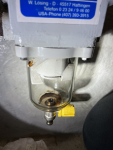
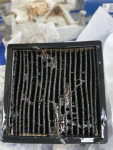
Anyway, fast forward to when we got our boat in May last year, it had previously had the fuel polished a couple of years prior and the primary filters all looked clear and good, despite the lockdowns, We embarked from Poole with a full tank and motored her around the coast leaving us with about a third of a tank. We brimmed it, so the fuel should have been fresh by all accounts. When we got to about half a tank later in the season, we began to have an intermittent drop in revs on one engine. It didn't happed while underway, it was upon throttling back and reapplying that it struck. At that point it just couldn't exceed 1600rpm. Then after throttle down and back up it would randomly pass. This happened a couple of times on the next couple of journeys but it would also not appear at all on other trips. The bowls all looked good. Anyway, a little while later I checked the filters and to my surprise they were covered in thick goo aka the bug. I've never had any water in the bowls and from a distance the bowls were a lovely clear red but up close there was some dark build up right at the bottom.
1646049828048.png

Whatever our problem may turn out to be, I would have to begin the troubleshooting with eradicating fuel quality as a suspect. It definitely wasn't inlet related, turbo spins freely and is clean, and no black smoke. So it's a fuel related issue, be it injectors, pumps, air in pipework, blocked lines, blocked fuel inlet tubes/strainers etc. A diesel dipper was always on the long range radar, because it would future proof the boat and take away the constant fear of picking up contaminated fuel. I have had diesel bug in my pickup truck in the past after picking up contaminated fuel and the whole tank had to be dropped and cleaned out, not a particularly viable option on our boat without removing the engines first.
1646049850259.png

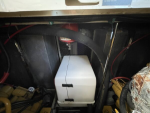
I therefore got on the phone to the Diesel Dipper inventor Peter at Marship sooner than I'd have anticipated. After many emails and conversations he patiently answered all my questions and has been a pleasure to deal with. I went ahead and purchased one. (pic below shows custom fabricated mounting brackets, fuel hose and additional electrical wiring none of which is included with the dipper. There is also an adaptor and dip tube which isn't included but are available from Marship). Peter kindly also supplied the aluminium dip tube which is slash cut by 45 degrees at one end which sits on the tank base and his proprietary valve kit. I also purchased Marine 16 Diesel Bug Treatment and Diesel Injector Cleaner for good measure.
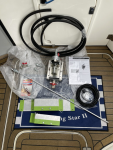
1646049935330.png

Theoretically it's an easy DIY fit, a 3/8 feed hose, 3/8 return hose and a positive and negative wire. Simples. Of course getting a suitable line in and out of the tank will be different for everyone. Marship simplify this by offering retro fit dip tubes where you simply make a hole in the top of your tank. Not a route I wanted to go down. We have two large aluminium tanks, totalling 990L of Diesel. There is a port and stbd one, connected by a large 1" line at their bases to keep the level equal in each and allowing them to be filled by deck fillers on either side. Fortunately for me, although Sunseeker tanks don't have a drain point or sump, these ones did have a pump out point which I discovered has a dip tube that sucks from 10mm off the bottom of the tank. According to Peter the dip tube should go to the bottom of the tank for maximum effect. Again by a stroke of luck, the internal bore of this dip tube is 10mm ID. This therefore allows a 10mm OD tube to fit down it which is the same diameter that Marship use with their dip tube. By using the right adapters I am able to use the compression fittings and valve that comes with the optional dipper 'valve kit'.
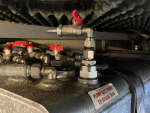
1646049887443.png

For the return, I decide the cleanest option will be to return the filtered diesel into the fuel filler hose. I buy some new hose and have a T piece fabricated in 51mm with a 3/8 barb.

E2EF609D-713F-4D6B-BAFC-D543D9E67C4D-768x1024.jpeg


I enlist my youngest who did a sterling job of getting to the difficult to access filler pipe. Dad was on hand to help him passing tools back and forth and he did me very proud. We managed to remove the old one, which had 1996 stamped on it, and use this to measure the new pipe introducing the T piece into it.

D59DA047-DED8-488C-8866-221386317C08-1024x768.jpeg

On top of the fuel tank is a well camouflaged child! Fortunately he’s able to just get in there but it’s tight.

C60660C0-EC66-4FA6-988B-D3C4CBDF872B-768x1024.jpeg

The assembly is completed. New hose fitted, (the cable tie excess did get snipped!) and we’re all up and running…

Tadaa...Dipper installed on its custom brackets to the bulkhead uprights...
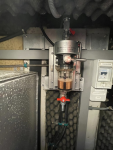
1646055314554.png

and the results below....
23093B53-8A76-4DB1-8513-ADE922A0743A-768x1024.jpeg

I cycle the tank for 4.5 hours in port, at 2 litres per minute flow rate, this will be sufficient to cycle the remaining 500 litres of diesel in the tank at least once. Above shows the gloop that it collected. The best way to describe it is like a thick gravy.

F0A74256-60DB-451E-9F32-23DB3E58E1DE-768x1024.jpeg

Shake it up and watch it slowly slime down the bottle. Gloopy, thick and something that will easily block filters. I presume it could limit flow if it clings around the strainers on the end of the fuel delivery pipe. I’m hoping this is the solution to our problem. Peter tells me that it’s out at sea that it really comes into its own, the movement of diesel sloshing around the tank at sea should unsettle much more. I ran it in port for curiosity and to give it a head start. Another hour running with the engines on too to create some turbulence in the tank and the dipper is running clean for the moment. I look forward to seeing what will happen at sea…this to be updated as it happens. For now, I’d say this is a good start for the dipper, whether it cures the issue or not remains to be seen but with the ongoing issues with diesel these days it will certainly future proof the quality of fuel for many years to come.

AC4AD591-DC0C-4D5A-A7F4-13E4B5395BC5-768x1024.jpeg


I'm looking forward to how much more it will catch at sea. One thing is for sure, I'd rather have this out of the tank than in it!! Fingers crossed it cures our running issue, if not it will mean moving on to the next step! Either way, it's comforting to have some control over the quality of our fuel.
 
Last edited:
An interesting post - I have been considering fitting a diesel dipper so thanks for sharing. We have two tanks but they aren’t linked so I am thinking we would need to install two?
 
Hi Greg,

This picture belongs to Peter of Marship, in early conversations before I mentioned the tanks were joined he did say for two tanks you can either run two dippers or a valve arrangement as per this pic he sent.

Diesel Dipper piped for twin tanks..jpg

He's very approachable and accommodating. I should say that I have no commercial connection and I didn't receive preferential discounts on mine. Just a happy PITA customer. I couldn't find much in the way of any independent reviews online which is what has prompted me to post with detail. It's early days and we'll see how the journey progresses. I've nothing to hide, it either does the job or not, so far, I'm impressed and it has drawn gunk out of the tank just like it said it would. I have no idea if the quantity its drawing out is good, bad or typical for 25 year old tanks. In some ways I hope my tanks aren't too bad, but sufficiently bad to be causing us the current rpm issue!
 
Nice installation and write up.

I'm all in favour of avoiding problems from diesel bug. One of our former yachts had a bad dose of it, so bad that the previous owner kept an old car foot pump (without nozzle) next to the fuel tank. It took me a while to work out why, but then the penny dropped when I realised the hose fitted perfectly on the 90 degree elbow from the tank - which is where the gunge always used to stick.

My one observation though, and it has been said before, is that large motorboats typically have two stage fuel filtration, including a large pre-filter for each engine which can have anything from a 10 to 30 micron filter. Any diesel engine cycles far more fuel through the filters than it consumes every time you use it. Accordingly, your fuel system is already self-polishing to a point. I could be a convert to such a system, but having just looked up the costs, I'd be inclined to manufacture my own.
 
Nice installation and write up.

I'm all in favour of avoiding problems from diesel bug. One of our former yachts had a bad dose of it, so bad that the previous owner kept an old car foot pump (without nozzle) next to the fuel tank. It took me a while to work out why, but then the penny dropped when I realised the hose fitted perfectly on the 90 degree elbow from the tank - which is where the gunge always used to stick.

My one observation though, and it has been said before, is that large motorboats typically have two stage fuel filtration, including a large pre-filter for each engine which can have anything from a 10 to 30 micron filter. Any diesel engine cycles far more fuel through the filters than it consumes every time you use it. Accordingly, your fuel system is already self-polishing to a point. I could be a convert to such a system, but having just looked up the costs, I'd be inclined to manufacture my own.
All sailboats I have seen also have two stage filtration. A large Racor or similiar and then the engine manufactures fuel filter on the engine.

Don't mobos often have three stage filtration?
 
Nice set up, reassuring to see nice cherry diesel coming from the bottom of the tanks , Sailing Cadoha did a nice video on the dipper
.
Loving the fact that Princess fit sumps with accessible drain cocks to their fuel tanks ?
 
Nice installation and write up.

I'm all in favour of avoiding problems from diesel bug. One of our former yachts had a bad dose of it, so bad that the previous owner kept an old car foot pump (without nozzle) next to the fuel tank. It took me a while to work out why, but then the penny dropped when I realised the hose fitted perfectly on the 90 degree elbow from the tank - which is where the gunge always used to stick.

My one observation though, and it has been said before, is that large motorboats typically have two stage fuel filtration, including a large pre-filter for each engine which can have anything from a 10 to 30 micron filter. Any diesel engine cycles far more fuel through the filters than it consumes every time you use it. Accordingly, your fuel system is already self-polishing to a point. I could be a convert to such a system, but having just looked up the costs, I'd be inclined to manufacture my own.

Thank you, yes this system has primary Separ filters/separators with 30 micron filters and large 10 micron filters at each engine. As you say, the fuel is being polished already. The fuel feed lines are apparently generally about 20mm off the tank floor. As a result all the crud in the bottom 20mm zone will just be floating about and potentially able to clog whatever strainer or gauze is on the bottom of the feed pipes (if any).

The dipper isn't to filter the fuel, it only has a 60 micron filter although there is also a 10mm polishing add on available but as you said, then engines are already carrying out this function, but to remove any water to prevent bug from breeding (this water would typically be at the base of the tank) and also all the gunk that coats the walls of the tank, hence the pickup is at the bottom of the tank. The dipper has pulled more gunk out of the tank in 4 hours of filtering than the separs ever have. I am expecting the sea trial to dislodge and mobilise far more.

I don't believe we have much in the way of water as none has been removed from what I can see. However that said, we used some fuelset in the tank before fitting the Dipper which is counter productive to what the dipper is trying to achieve, so how much of that has been absorbed into the water I can't tell you until we refill with undosed diesel. I need to burn as much of this off as possible. It may be that the gunk as I generically refer to it as is actually asphaltenes rather than bug. We had 200 litres of diesel in the tank when I changed the filters. I dosed that with fuelset. Since then we added 300L of fresh and used Marine 16 DBT and DIC additives.

I did consider making my own, but this is a nice self contained unit with a patented separator, they supply the RNLI and they make a nice bold claim on their website.
"Used with our Fuel Treatment we guarantee to end diesel sludge related problems. A bold Statement indeed, but remove the water and you remove 90% of diesel problems. DieselAid LDB will help prevent other sludge issues and will protect the engine."

If the product does what it says, I'm happy at that price, it's well constructed, made in UK and fully serviceable and I've received a lot of advice so I don't begrudge the price, that's not to say that I didn't have second thoughts of spending that much during the process but all installed it looks like it will last the test of time and it fits in very well on the bulkhead :)
 
We have a small sump with a drain tap/ bung at the bottom of all three tanks .
I just open that now and again and drain off a bit .

If everyone could have tanks with its lowest point cocked - end of problem.
Also the sight glasses start at the lowest point with there own cocks so you can view / eyeball what’s in there as it comes up the glass , if you see what I mean ?

I do dose them at fill up through.

Plus racors with clear bowls which have taps and WIF alarms .

I know there isn’t only one way to skin a cat :).It ain’t for me tell another guy how to skin his own cat .


As far as “ dose “ i alternate between the biocide versions and water dispersant types .
They are not expensive as I buy from agriculture suppliers not marine .A fraction of the cost .
Currently running with a 0.5 L bottle of bug killer cost €30 but does 25000 L.
Agri industry has exactly the same diesel bug issues as boats in terms of storage of fuel and laid up machines festering , and need to be turn key . Just on a larger scale storage tank wise .

Another tip is regularly check / replace the o rings on the fillers with the boat .Aside FWIW should rain water get in the tank drain cock + racors etc should get it .

Having said all this ^^. Forums are littered with “ bug “ issues and poor guys posting pics of crapped up filters or tales of woe re injector pump , injector issues esp CR guys .

Is it all preventable ? Well I think so .
 
, I'd be inclined to manufacture my own.
I've also been thinking about that. £45 ish for a racor clone, a little more for adding washable filter, £20 for a pump and some pipework. Can run totally independant of the engines fuel system.
Sailing Cadoha have a diesel dipper and it's pretty impressive how much crud it initially removed and how clean their fuel is now.
 
Nice set up, reassuring to see nice cherry diesel coming from the bottom of the tanks , Sailing Cadoha did a nice video on the dipper
.
Loving the fact that Princess fit sumps with accessible drain cocks to their fuel tanks ?

Thank you for that video, I hadn't seen that before, great find/resource ?
 
Having said all this ^^. Forums are littered with “ bug “ issues and poor guys posting pics of crapped up filters or tales of woe re injector pump , injector issues esp CR guys .

Is it all preventable ? Well I think so .

Our local Marine service guys reckon 90% of their breakdowns/call outs are fuel related!! They also recommend Marine 16 DBT and DFC.
 
My system is as basically stated by Itama .

I have 2 x 1250 litre stainless diesel tanks, each tank has a sump which is out of reach but looking at the drawing I assume to be about 1.5 to 2 litre in size , but there is a stripping line to the sump so you draw off each tank using a Pella vacuum pump as required, unless I have taken suspect fuel we strip the tanks once a year and draw about a litre of so from each sump, so usual debris, some bug dust and about an egg cup full of water. I then have with a very large long filter Racor pre filters 30 micron ( double length filter) and a clear bowls, I have never seen water in the bowls.

I treat at every refuelling with only Grotamar 82 biocide, I personally would never use a treatment that absorbs water into the fuel.

As stated in the video fuel bug is very acidic and will damage tanks, and engines. I saw a 6year old European motor boat with Aluminium tanks and the corrosion at the bottom of the tank had corroded a pin hole through a weld. Both tanks were replaced.

I also replace the neoprene "O" ring on each fuel tank filler cap and water cap each year with new. Inspect the old one and pull it you will see they start to perish.

Ignore water in tanks, biocide treatments and good filtration at your cost.
 
Very interesting, thankyou - from someone who's expecting delivery of our a diesel dipper today !! We'll be going for a single dipper installation to clean two tanks ( which are independent)
 
I'm with you @Bandit on water absorbing additives. I used what the boat came with which was a mistake imho, too much water and it becomes saturated and it won't do the injectors any good, which are already struggling with the low sulphur diesel we now have.

Before fitting the dipper I was cleaning up the thread for the fittings in the pump out point of the tank. As I was hoovering around it I stuck the hoover in the hole and lo and behold it sucked a load of diesel up (the sunseeker pump out dip tube stops 10mm off the bottom of the tank because I measured it).

1646297008654.png

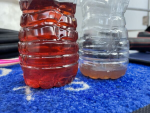
I immediately turned off the hoover and this diesel was still in the hoover tube which I had upturned to keep it in there. I put it into a bottle and you can see by the colour of this diesel on the right that it looks fairly saturated...the bottle on the left is from the filter bowl. Since that hoovering incident, I haven't seen any more diesel that looks like that coming from the dipper, only the dark sludge in the pics in earlier posts and clear red diesel. I have 500L in there at the moment. 300 litres was fresh, 200L is from about June last year and was treated with fuel set in September when I started having the rpm issue. I then added 300L of fresh which I dosed with Marine16 diesel bug treatment and diesel injector cleaner so it's all a bit of a mish mash in there, especially as it will have all been mixed up. Once I get through these tank contents I should be able to manage my fuel much more effectively.

1646295706007.png


My system is as basically stated by Itama .

I have 2 x 1250 litre stainless diesel tanks, each tank has a sump which is out of reach but looking at the drawing I assume to be about 1.5 to 2 litre in size , but there is a stripping line to the sump so you draw off each tank using a Pella vacuum pump as required, unless I have taken suspect fuel we strip the tanks once a year and draw about a litre of so from each sump, so usual debris, some bug dust and about an egg cup full of water. I then have with a very large long filter Racor pre filters 30 micron ( double length filter) and a clear bowls, I have never seen water in the bowls.

I treat at every refuelling with only Grotamar 82 biocide, I personally would never use a treatment that absorbs water into the fuel.

As stated in the video fuel bug is very acidic and will damage tanks, and engines. I saw a 6year old European motor boat with Aluminium tanks and the corrosion at the bottom of the tank had corroded a pin hole through a weld. Both tanks were replaced.

I also replace the neoprene "O" ring on each fuel tank filler cap and water cap each year with new. Inspect the old one and pull it you will see they start to perish.

Ignore water in tanks, biocide treatments and good filtration at your cost.

Sounds like good fuel management. Every tank should have a drain really or some system in place, maybe it wasn't much of a factor 25 years ago, but with Biodiesel and low sulphur diesel there seem to be more problems now than ever before. I'll report back after I've gone to sea and shaken the tank contents about a bit which should yield more. I don't know if what I am seeing is bug, asphaltenes, microbial sediment, or indeed if general sludge is a combination of all of the above... the one thing I haven't seen yet is any water, but then the fuelset I put in might have thwarted that to a large extent. Going forwards I will only be using the dipper and Marine 16 Diesel Fuel Complete.

1646295993302.png

1646296600025.png

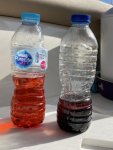
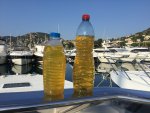
The stuff collecting in the dipper is like the bottle on the right. I only get a little bit each time before clear red comes out. But I have been decanting the red out or stopping as soon as clean comes through and collecting it all in the same bottle so what I have in that contaminated bottle (on the right in pic below) is a culmination of contaminated draw off, which represents the total cycling of all 500 litres in the tank with the boat sitting static on its mooring. Bottle on the left is what is coming from the dipper now.

1646297177287.png

Checking on my filters again, they look fairly good for the moment, I have only been to sea once since changing them last time and there was a bit of gunk around the centrifuge and tiny bit in the bowl so I've cleaned it out again...

1646297422490.png

1646297402449.png

I hope I have caught my issues in time. At the moment it is running clear form the drain, we'll see what a little shake up will yield. My slave tank has no pump out point and my problem seems to occur after banking to port, I guess this causes a rush to the slave tank on the port side which draws a load of gunk out of it as it travels back to the main tank on stbd. I hope the dipper will clean the tanks all up because I can't get into them to physically clean them in any way.
 
Last edited:
Very interesting, thankyou - from someone who's expecting delivery of our a diesel dipper today !! We'll be going for a single dipper installation to clean two tanks ( which are independent)

Good luck Simon, enjoy! It will be interesting to see how you get on and what your tanks yield! Are you installing yourself or getting someone to do it for you?
 
The water dispersant vs antimicrobial debate .
I wouldn’t hang your hat on this and choose one only .This is because assuming no obviously leaks from rainwater into the tank then the only not inconsiderable route is condensation from the inside .Ie damp air in the N EU or humid air in the Med .
Its the actual water interface that’s needed like most life forms no water no life .So doing a bit to exclude water might be all that’s needed .
With water say from condensation then the microbials will proliferate.
That’s when the antimicrobials come in .But why not make the atmosphere inside incompatible to microbial life to begin with ?
Thing is like all microbial‘s resistance can build up .This is renders the antimicrobial less effective .
Thats why it’s better to change and switch from one brand to another if you solely are going down the antimicrobial route .

At the end of the day you have to trust the racors to centrifuge off any water …..which you can see anyhow .

On topic I forgot once I filled up my extra long range tank of 600 L .
It remained full un used for 3 1/2 seasons .It was dosed up with Starbrite marine diesel additive .That’s mainly a dispersant type btw .
Any how here is the drain off .
4BE80D39-053E-42BF-B10C-7995189B2D64.jpeg
3/1/2 yr old fuel left accidentally forgot dosed with Starbrite .Left on is the immediately the first litre or so .As you can see a little cloudy .RHS is the next litre = looks ok .

Basically I forgot and found 600L .I used it .
Tentatively just cocked in into one motor then after a while realised it all seemed ok burned it off with both .
3 1/2 years old !
 
Last edited:
Good luck Simon, enjoy! It will be interesting to see how you get on and what your tanks yield! Are you installing yourself or getting someone to do it for you?
I'll be getting our engineer to do it. It looks like access to 1 of the tanks to install the draw off tube is going to be a difficult job. Will let you know how we get on
 
The water dispersant vs antimicrobial debate .
I wouldn’t hang your hat on this and choose one only .This is because assuming no obviously leaks from rainwater into the tank then the only not inconsiderable route is condensation from the inside .Ie damp air in the N EU or humid air in the Med .
Its the actual water interface that’s needed like most life forms no water no life .So doing a bit to exclude water might be all that’s needed .
With water say from condensation then the microbials will proliferate.
That’s when the antimicrobials come in .But why not make the atmosphere inside incompatible to microbial life to begin with ?
Thing is like all microbial‘s resistance can build up .This is renders the antimicrobial less effective .
Thats why it’s better to change and switch from one brand to another if you solely are going down the antimicrobial route .

At the end of the day you have to trust the racors to centrifuge off any water …..which you can see anyhow .

On topic I forgot once I filled up my extra long range tank of 600 L .
It remained full un used for 3 1/2 seasons .It was dosed up with Starbrite marine diesel additive .That’s mainly a dispersant type btw .
Any how here is the drain off .
View attachment 131220
3/1/2 yr old fuel left accidentally forgot dosed with Starbrite .Left on is the immediately the first litre or so .As you can see a little cloudy .RHS is the next litre = looks ok .

Basically I forgot and found 600L .I used it .
Tentatively just cocked in into one motor then after a while realised it all seemed ok burned it off with both .
3 1/2 years old !

Thank you for posting that pic. I think I came across that in another post when I was looking at dosing with the fuelset. As you said earlier, many ways to skin a cat and that has certainly worked for you and your scenario. Your bottle on the left looks like my first draw off with the hoover in it's cloudiness. At the end of the day, I guess whatever route you go something is better than nothing but it seems having a plan that works for you for fuel management is the way to go.

For us, the dipper will be the way to create an inhospitable environment for the bug and using a dispersant would directly hinder this method of fuel management so for us it's a no go. I guess it also depends on how long the fuel will be stored for. I don't know how resistant the microbes would be to the antimicrobial route if the tank is being refreshed a couple of times or more a year?

Weather forecast looking pants for the weekend so I may be foiled again on taking it out to sea to try!
 
You might find this interesting, this chap removes the top of his fuel tank and after emptying it, scrapes the gunge off the bottom. I found it interesting to see how much was there.

 
Top