DownWest
Well-Known Member
Maybe in your gaff..Tucked down the back of the sofa..

Maybe in your gaff..Tucked down the back of the sofa..
With all due respect, I'll confess my ordure of the day is a lot more problematic that some baby's best efforts, but where I live they usually just end up spread all over the pavement.As someone said what happens to baby nappies (Is that what you call them in the UK?) which are full of poo?
One of what things?...
And I still can't work out how the ladies can be directional enough to use one of these things.
Standing Urinals for Women Female Urination Device, Women Standing PeeOne of what things?


West Marine ( let's keep this boaty..) sell one of those, bit cheaper too.

Also used by ladies in Antarctica, where facilities are often male oriented - e.g. pee tubes in aircraft.West Marine ( let's keep this boaty..) sell one of those, bit cheaper too.
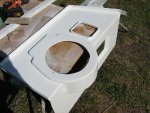
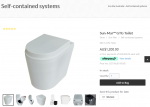
I agree with you. We built a really crude unit, using a a separator, for a 3000nm trip earlier this year. It worked really well. But it was crude! How elegant is your construction? I’m looking for ideas.I built my own separator loo from a kit by the Swedish company Separett who also do ready made loos. Mine has a 12v computer cooling fan as an extractor fan. I live aboard full time, what I have now replaced a 12v electric fresh water flushing via a macerator into a large holding tank toilet that to me was a nightmare. I now have a large tool locker where the holding tank was and a non-smelling toilet that nothing can go wrong with and makes it easy for me to not pollute. To each his own...

I agree with you. We built a really crude unit, using a a separator, for a 3000nm trip earlier this year. It worked really well. But it was crude! How elegant is your construction? I’m looking for ideas.

I'm not in favour of putting excrement in plastic bags for disposal, it's increasing the amount of plastic waste which is not desirable. Most of this type of waste is ultimately disposed of to the sea after suitable treatment so why not dispose of yatch waste similarly? Subject to some controls - bathing beaches, water depth etc.And by extension therefore, so should binning nappies and dog waste... If binned responsibly, adequately bagged/wrapped and placed in a regularly emptied bin with a lid, it surely poses little risk. And it can of course also be taken home (perhaps only once or twice a season) and allowed to continue composting (not '2 bucketing'!) as intended!
What can arguably be more disgusting in practice is the mess left by some less-than-careful individuals after emptying of a chemical toilet cassette into a standard toilet!
If I understand this right, you build a toilet where excrement is stored in one container and urine in another. In use you have to make sure that excrement and urine get diverted to each container. The urine container gets full of urine and the excrement container has to have peat or coconut husks manually applied. Once full, one has to carry a bottle of piss and box if shit through their boat, to the shore and disposed of to the satisfaction of public health regulations.
Compared to current holding tank systems this is a backward step for convenience, hygiene and public health. I am not convinced that composting toilets are good idea on a boat.
Dumping solid waste virtually anywhere in the US coastal waters is illegal and the fines huge. So, it is a holding tank and pumping out, or some type of composting CW.
Replaced it with a Jabsco and issue resolved.

I find that whenever I pump my holding tank out into the sea (obviously well away from the coast, beaches, nature reserves, etc), there is nothing solid left in it. I has all decomposed.Dumping solid waste virtually anywhere in the US coastal waters is illegal and the fines huge. So, it is a holding tank and pumping out, or some type of composting CW
The usual thing with the urine, is to put a bit of sugar in it, then overboard. This needs to be done often, whilst the solids only every few weeks.
Or anywhere.If I understand this right, you build a toilet where excrement is stored in one container and urine in another. In use you have to make sure that excrement and urine get diverted to each container. The urine container gets full of urine and the excrement container has to have peat or coconut husks manually applied. Once full, one has to carry a bottle of piss and box if shit through their boat, to the shore and disposed of to the satisfaction of public health regulations.
Compared to current holding tank systems this is a backward step for convenience, hygiene and public health. I am not convinced that composting toilets are good idea on a boat.


c. Pissing in a marina is probably a case of public indecency. Find a tree, or better yet, don't be too lazy to walk to a facility.
Just out of interest, where does the output from a waterside "facility" get discharged?