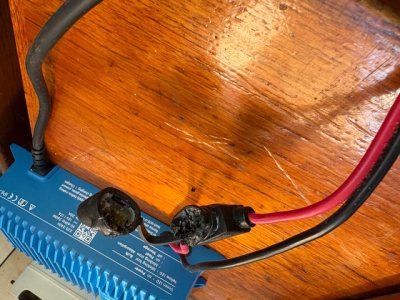
Check your fuses!

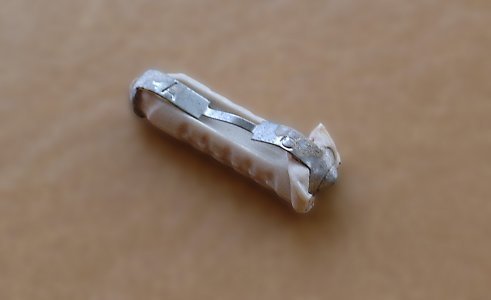
You’re right Paul, in my experience when a fuse is never cleaned, corrosion builds up on the connections causing high resistance and heat. The old plastic “Continental” fuses where a bugger for this as the plastic body would melt.
Posts numbers six and seven suggest the fuse heated and post seven gives a possible reason.

I found this news shocking (no pun intended) and would like to know if anyone can confirm post seven is the answer or could there be other causes?

It really looks like a nasty incident that all sailors would like to avoid.
 
If a fuse doesn’t blow...but melts the housing...suggest to me that it needs replacing by a lower amp fuse
Or a higher amp fuse.

Fuses by design get hot when they are used at near their rated capacity. A fuse which is too small may heat up inordinately even when there is no fault in the circuit.

The fuse should be rated to protect the wiring and junctions, and the whole lot of them should have plenty of reserve capacity compared to the load. If the fuse is sized correctly for the circuit but the load is near the capacity of the circuit, then inordinate heating of the fuse would be a natural consequence. Good practice would call for the whole circuit to be upgraded. Don't, for example, run an 18A load on a 20A circuit with a 20A fuse.

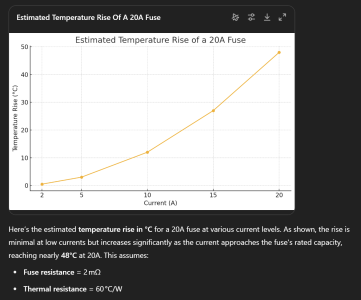
Screenshot 2025-05-20 004743.png
ChatGPT. Note that this assumes the fuse is in open air. If it's enclosed like in the OP, it will get even much hotter.
 
Last edited:
Top