cheaper large instrument displays - mast mount

3 problems with these off the shelf jobs...

1) The plastic is not that clear even when new.
2) There will be a gap between the display and the lid which will cause reflections.
3) There is a molding mark right in the middle. You can see it in the pictures.

I have tried them before and they don't really work.
 
3 problems with these off the shelf jobs...

1) The plastic is not that clear even when new.
2) There will be a gap between the display and the lid which will cause reflections.
3) There is a molding mark right in the middle. You can see it in the pictures.

I have tried them before and they don't really work.

Thanks Angus. You've answered one of the questions that was in my mind, would the display work through a plastic window.

One further query then, if a gap between the LCD and the 'window' is a problem, and the display in the parts list has a metal surround, which creates a gap - how do we get rid of the gap? or do we need to use exotic materials for the 'window'?
 
4. They are really ugly.

So buy a non-ugly off-the-shelf box, mill an aperture in lid, glue in a polycarbonate window?

Another question for the electronics crowd. I bought the RS display board so I had something to handle when thinking about packaging. If you apply power to it is there some in-built self test pattern available to try the display behind window material? Such as shorting two pins together during power-up, bit like spitting out a test sheet on a printer.
 
So buy a non-ugly off-the-shelf box, mill an aperture in lid, glue in a polycarbonate window?

Another question for the electronics crowd. I bought the RS display board so I had something to handle when thinking about packaging. If you apply power to it is there some in-built self test pattern available to try the display behind window material? Such as shorting two pins together during power-up, bit like spitting out a test sheet on a printer.

Not that is documented. It needs contrast controlling anyway for anything to show.
 
Couple of questions,

How big is the display?
Do you need more than 1 display?
If the screen was sealed around the edge would it be waterproof?
How strong is the screen?

What do Nasa do,could you feed your input into one of their LCD displays? ie pick up some cheap no working clipper displays.

Sorry for the simple questions but there must be an easy way to do it out there.
 
On the display enclosure front, I discovered there are some quite solid/ elegant polycarbonate transparent boxes used in retail display - water clear cubes ets. With some thought I think there is scope for using something like that? My own TFT display is going on the cockpit bulkhead -to replace on old 100mm square unit. I think I will try to rout out a "faceplate" from 8mm polycarbonate. It's nothing to do with this project as such,but there is some overlap in construction as it's quite small (5" diagonal touch screen). Have a search on Ebay? As pointed out - most of the boxes with clear fronts - looking much like fancy junction boxes are rather ugly, which is why I looked elsewhere for display quality clarity.

Graeme
 
Just a suggestion from someone totally ignorant of modern electronics (I read Practical Electronics when I was a boy - more than 40 years ago!)

How about simply potting the whole assembly in this stuff (or something similar)? http://www.ontracks.co.uk/index.php?page=product&prodID=89461&gclid=COy79NqKz7UCFc3HtAod9wQAUg

The stuff is absolutely crystal clear, as evidenced by the silk flowers you can buy in places like John Lewis; they appear to be planted in "water", but it is actually this very clear plastic.

You could then paint the bits that you didn't want to be transparent, leaving a window as appropriate.

It should be totally shock-proof - an advantage for a mast-mounted instrument.

Snag would be that unless you deliberately made access points for programming etc, it would not be modifiable after potting.
 
A return to the project

Housing.jpg

Dear All

Sorry about my absence.

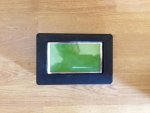
I have made a rough display case out of an ABS box with perspex silicon-ed in the front.

I am bringing myself back up to speed on where I was before, I see that in the last few months the Mini Display has taken off, and what a cracking instrument it is.

I have not built the SeaTalk interface yet, but I have all the bits and that is my next task.

All the best

Tom
 
View attachment 32894

Dear All

Sorry about my absence.

I have made a rough display case out of an ABS box with perspex silicon-ed in the front.

I am bringing myself back up to speed on where I was before, I see that in the last few months the Mini Display has taken off, and what a cracking instrument it is.

I have not built the SeaTalk interface yet, but I have all the bits and that is my next task.

All the best

Tom

Any more details info?
 
Any more details info?

Yes the SeaTalk interface is now working.
I have removed the SIL connector from the LCD and soldered in 24 wires.
I have created a complete schematic so that when i take it all out of the breadboard i know how to put it back together.
Next step soldering it all to strip board. Gulp
 
I have created a complete schematic so that when i take it all out of the breadboard i know how to put it back together. Next step soldering it all to strip board. Gulp

Stripboard/Veroboard is the spawn of the devil.

Why not install DesignSpark PCB and create a proper PCB layout? If you do it Single Sided, I could even make if for you if there is no immediate hurry - I tend to make boards in batches.

http://www.designspark.com/eng/page/designspark-pcb-home-page
 
I have installed DesignSpark PCB and created a scematic. (it wasnt very pretty)
Then just for fun i asked the program to create a PCB layout, it was not happy. I had to create the discovery board as a new component and have not created an equivalent PCB part.
So at the moment i am about to start the stripboard version, even if it is the devils work
 
Stripboard/Veroboard is the spawn of the devil.

Why not install DesignSpark PCB and create a proper PCB layout? If you do it Single Sided, I could even make if for you if there is no immediate hurry - I tend to make boards in batches.

http://www.designspark.com/eng/page/designspark-pcb-home-page

Hi Nigel,

I've made dozens of single-sided PCBs in the past (as in, long ago past) using the RS system of rub on symbols.

Having created the layout in Designspark, I take it a clear plastic film is loaded into a printer - is this correct? Any special printer/inks required?

Thanks,
Paul
 
Hi Nigel,

I've made dozens of single-sided PCBs in the past (as in, long ago past) using the RS system of rub on symbols.

Having created the layout in Designspark, I take it a clear plastic film is loaded into a printer - is this correct? Any special printer/inks required?

Rather than faffing with films, nasty chemicals and lots of drilling, I find emailing the files to ITead Studio in China, waiting 15 days, and having 10 professionally produced boards plop on your doorstep a lot easier.
 
Top
