Buoy identification - for the experts

A reason I am unaware of the use of the mark in my OP is that they are not used in Australian waters and there is no need to learn mark usage in other locations, unless you are going blue water.

So those who told me to read up on buoys, without answering the question, were arrogant, supercilious and of little value.

These are the accepted marks used in one State of Australia

https://dit.sa.gov.au/__data/assets...-Buoys,-marks,-beacons,-signals-and-signs.pdf

the other States marks are identical.

As I mentioned I don't recall their being used in Hong Kong either, partially re-confimed by another reputable sailor who lived and worked in the marine industry in HK.

I did leave HK in 2097 - and they may be used now.

Some of us ask genuine questions requesting help we don't need to be belittled, read some of the first replies.

Just because something is commonplace in the UK does not mean it is commonplace everywhere.

And in answer to another question: Examination for a skippers licence is perfunctory, answer a few questions using a tick box form. Licences are relatively easy to obtain. The testing was similar in HK. The worry is that the Oz licence allows me to skipper a yacht upto 100' - though the owner of the yacht, say Wild Oats, might have different views.

I'm glad that the thread quickly engendered a more sensible discussion.

Jonathan
 
What is surprising me is that sailors on here are unable to identify basic navigation marks.
Not everyone lives in the UK or Europe, nor N Am.

Strangely the world does not rotate round and be isolated to 'Europe nor N Am' - there are other parts.

The marks are not used in Australia and I suspect many other locations so we have no need to know of 'rules' used in other bits of geography. Australian waters are quite large and many of us have no need to 'go foreign'. In fact having to know all the rules of other bits of geography seems a bit of a complete waste of time.

Now if you prefer that YBW is restricted in use for specific bits of geography - approach the Mods. In the meantime save your self righteous criticism for something more relevant - and check before you admonish.

As far as I can make out - as long as you treat such marks as 'port channel markers' (which was my interpretation), you can do no wrong - as far as I can make out usage of the option, pass either side, is an option and not mandatory.

Jonathan
 
Some of us ask genuine questions requesting help we don't need to be belittled,

This.

I like to think that this is on the whole a supportive forum, where one can ask questions. Unfortunately, there are always some arrogant judgemental types ready to sneer. The fact that some of them claim to be sailing instructors, I find somewhat shocking. Few of us would want to be taught by someone who would belittle a student for asking questions.
 
This.

I like to think that this is on the whole a supportive forum, where one can ask questions. Unfortunately, there are always some arrogant judgemental types ready to sneer. The fact that some of them claim to be sailing instructors, I find somewhat shocking. Few of us would want to be taught by someone who would belittle a student for asking questions.
I bow to greater patience and a superior word smith.

One tends to become thick skinned with age, those of us - of the age - think it maturity.

But when the first few posts were made in answer to my post it did make me think - if I was a newbie I'd be scared to ask questions if the the answers were so self righteous and arrogant. Some of the earlier posts were perfect - they explained in simple English what the buoys were. Others who obviously knew decided it was an opportunity to notch up a few 'kills'.

I was embarrassed for YBW.

Jonathan
 
Few of us would want to be taught by someone who would belittle a student for asking questions.
(y)(y)(y)
On the rare occasions I trained people, one of the first things I'd say was, "The only stupid question is the one you don't ask, because you remain ignorant."

I've seen those buoys, but I had to think about it because they aren't common. Because of this thread - the useful answers, not the mocking ones, a good few who've never come across them have learned something that might just possible save them from embarrassment or worse in the future. It would be a real shame if people were put off asking.
 
I bow to greater patience and a superior word smith.

One tends to become thick skinned with age, those of us - of the age - think it maturity.

But when the first few posts were made in answer to my post it did make me think - if I was a newbie I'd be scared to ask questions if the the answers were so self righteous and arrogant. Some of the earlier posts were perfect - they explained in simple English what the buoys were. Others who obviously knew decided it was an opportunity to notch up a few 'kills'.

I was embarrassed for YBW.

Jonathan
A (good?) few I believe, like me passed their driving test many years ago, would fail miserably today possibly due to not knowing the new road signs....
maintain a good sense of humor and ignore.....
 
A (good?) few I believe, like me passed their driving test many years ago, would fail miserably today possibly due to not knowing the new road signs....
maintain a good sense of humor and ignore.....
I tried that but the magistrate threatened to charge me with contempt of court.
 
A (good?) few I believe, like me passed their driving test many years ago, would fail miserably today possibly due to not knowing the new road signs....

Being I did my driving test in the UK we did not have these signs in the Highway code book

images


images


1704022415473.jpeg
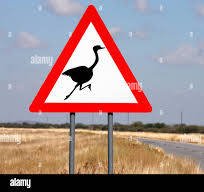
stock-photo-australian-warning-road-signs-from-australia-highways-wildlife-animals-emu-echidna-tasmanian-2333191711.jpg
 
Last edited:
As far as I can make out - as long as you treat such marks as 'port channel markers' (which was my interpretation), you can do no wrong - as far as I can make out usage of the option, pass either side, is an option and not mandatory.

Jonathan
Not quite, as red green may indicate possible channel divergence to port. However as you so rightly say, you will never meet one in your home and nearby waters so will never need to recognise it.

There are no doubt many signs and symbols and their usages that will get a few of us scratching our heads for a bit, even without the local crosses on rock or withies

My one was lights on a dredger that seemed as I approach to look like lights on a fishing boat plus multiple deck lights. It was only as I get closer I realised it was not crossing my path running down the 4kt channel tide but firmly in place in my way with a glare hid further red light
 
I had an issue one night coming down a narrow channel there was when a tug going in reverse coming towards me in the offersit direction
 
Not everyone lives in the UK or Europe, nor N Am.

Strangely the world does not rotate round and be isolated to 'Europe nor N Am' - there are other parts.

The marks are not used in Australia and I suspect many other locations so we have no need to know of 'rules' used in other bits of geography. Australian waters are quite large and many of us have no need to 'go foreign'. In fact having to know all the rules of other bits of geography seems a bit of a complete waste of time.

Now if you prefer that YBW is restricted in use for specific bits of geography - approach the Mods. In the meantime save your self righteous criticism for something more relevant - and check before you admonish.

As far as I can make out - as long as you treat such marks as 'port channel markers' (which was my interpretation), you can do no wrong - as far as I can make out usage of the option, pass either side, is an option and not mandatory.

Jonathan
There is a whole...world .....of difference between helping newcomers to understand navigating leisure vessels and the so called experienced sailors who post on here who suddenly discover there is a gap in their knowledge and argue about it. Up to them. But don't moan if you don't know as much as you think you do. I tell myself that every day.
 
A reason I am unaware of the use of the mark in my OP is that they are not used in Australian waters and there is no need to learn mark usage in other locations, unless you are going blue water.

So those who told me to read up on buoys, without answering the question, were arrogant, supercilious and of little value.

These are the accepted marks used in one State of Australia

https://dit.sa.gov.au/__data/assets...-Buoys,-marks,-beacons,-signals-and-signs.pdf

the other States marks are identical.

As I mentioned I don't recall their being used in Hong Kong either, partially re-confimed by another reputable sailor who lived and worked in the marine industry in HK.

I did leave HK in 2097 - and they may be used now.

Some of us ask genuine questions requesting help we don't need to be belittled, read some of the first replies.

Just because something is commonplace in the UK does not mean it is commonplace everywhere.

And in answer to another question: Examination for a skippers licence is perfunctory, answer a few questions using a tick box form. Licences are relatively easy to obtain. The testing was similar in HK. The worry is that the Oz licence allows me to skipper a yacht upto 100' - though the owner of the yacht, say Wild Oats, might have different views.

I'm glad that the thread quickly engendered a more sensible discussion.

Jonathan
Here's a point to ponder. Navigation marks globally conform to the International standard, divided into two regions. International. So wherever you skipper your yacht, you are obliged to conform to those standards. Whether you like it or not. And, yes I've sailed yachts in both regions. Even Australia. And guess what. Harbours mark their waterways with the correct marks. So it's the skippers responsibility to understand this very basic foundation stone of navigation. Wherever you are. Put the hat on, take all that comes with it.
 
Scandinavia is not the world.
Some creative usage out there for sure - as in post 73 where they appear to be used as a basic traffic separation scheme to keep traffic on the correct side of a channel.
With the coming of IALA their primary purpose was to replace middle ground marks.
Chile to the Isle of Wight seems widespread to me.......

I'm sure that the bridges of world girdling ships keep their copy of 5011 somewhere handy......
 
It's one thing to have learnt them once but quite another to recall all of them.

One of my winter tasks is to make an A4 laminate copy of the Colregs night time lights for handy reference. I might just add a buoys one. No good ignoring or guessing and my memory is not perfect, especially when sleep deprived.
 
I have some quick reference laminated cards that covers all the navigation symbols buoys ,lights and lots of useful
information

I also have a chart of wind speed with reference to the effects /wave types etc.

There is a VHF radio call /emergency procedure together with my boat mane in UN phnicit format so that anyone can call for help if I am incapacitated

The quick reference chart also helps me to remember buoys , lights chart symbols I may have forgotten
 
It's one thing to have learnt them once but quite another to recall all of them.

One of my winter tasks is to make an A4 laminate copy of the Colregs night time lights for handy reference. I might just add a buoys one. No good ignoring or guessing and my memory is not perfect, especially when sleep deprived.
I use an app on my phone for that - always with me so fastest way to lookup anything I need quickly.

I have Boating Reference on Android phone, but had for years so no idea if there is a better one now.
Topically I just had a look, and under buoyage it has both IALA A and B plus versions special markers - but doesn’t list the preferred channel buoy that started this thread. (Though personally not over worried, having never noticed seeing any in fairly extensive cruising.)
 

Other threads that may be of interest

Top