Bow propeller only works one side

VandKoala

Active Member
Joined
10 Jul 2023
Messages
60
Visit site
Hi, last weekend our old 5kw bow prop started only working to one side (of course while blowing 20knots from the “wrong” side) :)
To starboard - only trickling sound and almost no trust. To port gives ok trust. You can hear the difference in the video.

Where do I start looking?

Thanks!
 
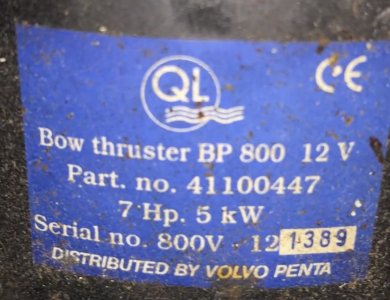
It would help considerably if you could identify the make, and if you can the model number of the bow thruster.
It's really hard to see in the video, but it looks like it could be a Lewmar TT, and that was made in a range of sizes.

However, most bow thrusters are fairly straightforward.
A remote control.
A relay or it could be a solid state switch (MOSFET), but you say it's old so it's probably a relay
A contactor
And a motor.

The motor is running in one direction, so it's unlikely to be the motor.
The remote control is probably working, since the system is attempting to run in both direction.
The ticking noise sound like the contactor bouncing making (on) then breaking (off). That's probably because it not getting enough power to hold it in the on position.
There will be two relays, which convert the control signal which will probably be 100's of mAmps, into some thing that can drive the contactor about 30 amps 'ish. When the contactor switches on it will draw the full motor current, which could be up 500amps to drive the motor.
I'd start by looking at the wiring around the relays, both incoming from the control, and output to the contactor.

All the above is just a best guess!

Lewmar also publish a trouble shooting guide.
 

Attachments

That link didn't work. try this. I'm using Google Chrome on a PC, I'm not sure if the link will work from other platforms.
chrome-extension://efaidnbmnnnibpcajpcglclefindmkaj/https://www.comstedt.se/files/manual/591101.pdf

The trouble shooting guide is in section 4.

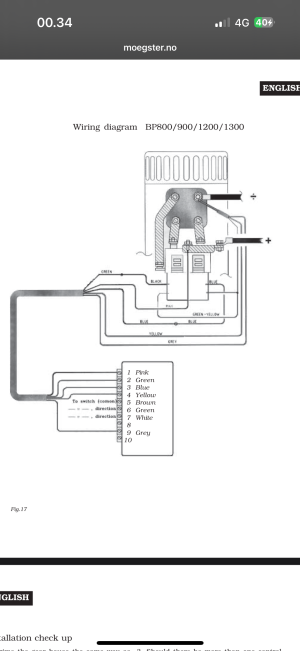
The link above doesn't contain the trouble shooting guide I have, but it does include good wiring diagrams.

All the links to the original trouble shooting guide I have now return an error 404, it looks like it's been removed from the Lewmar website.

I have the original trouble shooting guide as a .pdf

If anyone wants a copy PM me an email address and I'll email it to you.
 
Last edited:
It would help considerably if you could identify the make, and if you can the model number of the bow thruster.
It's really hard to see in the video, but it looks like it could be a Lewmar TT, and that was made in a range of sizes.

However, most bow thrusters are fairly straightforward.
A remote control.
A relay or it could be a solid state switch (MOSFET), but you say it's old so it's probably a relay
A contactor
And a motor.

The motor is running in one direction, so it's unlikely to be the motor.
The remote control is probably working, since the system is attempting to run in both direction.
The ticking noise sound like the contactor bouncing making (on) then breaking (off). That's probably because it not getting enough power to hold it in the on position.
There will be two relays, which convert the control signal which will probably be 100's of mAmps, into some thing that can drive the contactor about 30 amps 'ish. When the contactor switches on it will draw the full motor current, which could be up 500amps to drive the motor.
I'd start by looking at the wiring around the relays, both incoming from the control, and output to the contactor.

All the above is just a best guess!

Lewmar also publish a trouble shooting guide.
Hi Ian,
That is already helpful as it gives me a starting point.
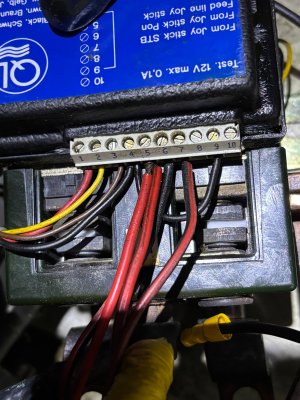
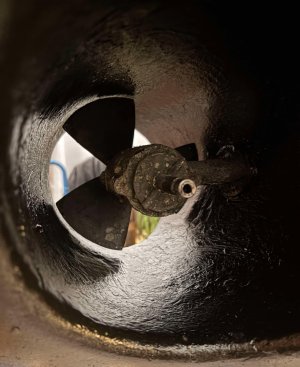
IMG_6103.jpegIMG_6104.jpegIMG_6101.jpeg

I will deep dive into the wiring first. As you said - both remote and buttons in the cockpit work. It feels like “it does not got enough amps” when it tries to spin..
 
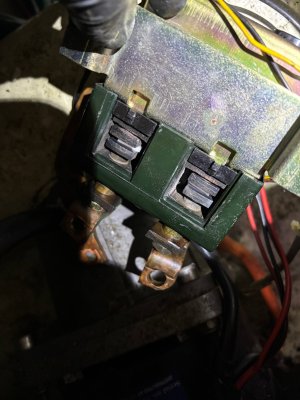
I'd be very suspicious of the screw terminals in the last photo, and start by making sure that they are clean and free from corrosion.
There's a useful thread on this forum here:
Bow Thruster Control Circuitry
I haven't read iit all but from a quick scan it provides some links which may still work.
There's discussion about a PCB which introduces a delay, which stops you switching between port and starboard thrust, whilst the motor is still spinning, to prevent damage to the motor.
This is different from the Lewmar version, where the delay circuit is in the cockpit controller.
I've struggled with my Lewmar unit over the 13 years I've owned the boat, but it turns out that the DC motor is made in Mexico and is fairly standard, used in warehousing machinery, and the contactor is also a standard forklift part, available from fork lift spares companies and substantially less than Lewmar charge, and ex stock.
My experience is that the motors are or less bullet proof, the contactors are OK, but they can rust up. If that happens they can be stripped down and rebuilt. I've had that done in the past, but the guy who did that has since retired.
On the Lewmar unit the MOSFET switching package is unreliable, but I think that you can by an upgrade to a variable speed drive.
But you could equally replace that package with two relays, but you'd loose the time delay function.
 
Just an update. I found this contactor/switch with double sided contacts being the problem. The contact plates are used/burnt a bit? and do not make a good contact, create quite impressive sparks.
I tried filing them down a but. That made the port side work better and starboard won’t work at all now.

att.uUtpJO7SnmWC8QnWf7wFMjwi_zbJ4LIbxtfBwlYD8aI.jpegatt.Op2TwlBmtkg7R4zPQp1XYibRIbmHNN7m8k-p027XiBw.jpeg

Going now to look for a replacement, otherwise to find out a different control circuit
 
Just an update. I found this contactor/switch with double sided contacts being the problem. The contact plates are used/burnt a bit? and do not make a good contact, create quite impressive sparks.
I tried filing them down a but. That made the port side work better and starboard won’t work at all now.

View attachment 194391View attachment 194392

Going now to look for a replacement, otherwise to find out a different control circuit
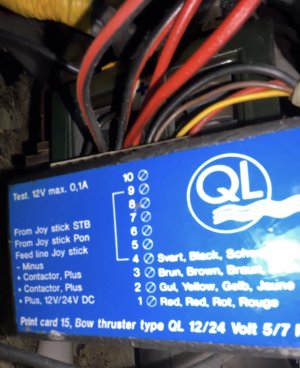
Picture two, wire 5 looks corroded but it could be a poor photo. Not really bad green corrosion but not the black kind.

Certainly not tinned wire anyway.

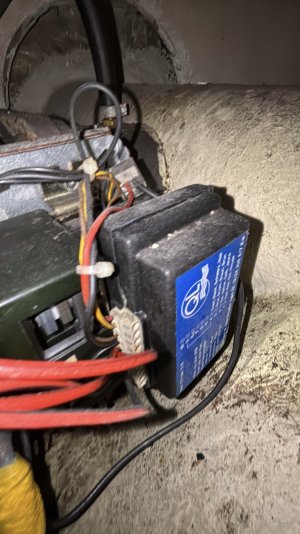
Picture one, are those four MOSFETS in the box?
 
Picture two, wire 5 looks corroded but it could be a poor photo. Not really bad green corrosion but not the black kind.

Certainly not tinned wire anyway.

Picture one, are those four MOSFETS in the box?
It might be a bit coroded but the issue is the relay. It is the same relay in pic one and two, from two sides.
There are those double-sided contact plates in the relay that are sparking and burning as I try to use the thruster.
For bow it seems that replacement relay is 1000USD 😱
 
It might be a bit coroded but the issue is the relay. It is the same relay in pic one and two, from two sides.
There are those double-sided contact plates in the relay that are sparking and burning as I try to use the thruster.
For bow it seems that replacement relay is 1000USD 😱
That would explain the clicking noises someone mentioned then.

At least you have located the problem. Now you just need to find a relay that is not such a silly price.
 
If someone needs a new solenoid in Europe, there is a company in Germany supplying them: Volvo Penta QL Relais Solenoid 41100649 41100244 von Electronic Müller price about 220 eur June 2025. In stock.

Apparently Volvo QL thrusters BP800, BP900, SP900 use the same one.

It comes from company called Albright and the part number is DC182-490.
QL OEM part numbers:


DC182 motor reversing D.C. contactor - Albright
Just a thought not wishing to get you chasing your tail ...but..

Years ago I could buy repair kits for contractors, maybe worth investigating.

Are you absolutely sure that there is not a mechanical restriction of the propeller causing it to stall in one direction?

You mention big sparks...normally contacor contacts have 'big' sparks when opening, not when closing. Big sparks on closing (start) would indicate poor surface connection when high current demand, but it's more common to see big sparks when switching off and the contacts drawing an arc as they separate...
So if you have big sparks it would indicate high current is passing, if so then the motor is stalled if not rotating..

Just a thought, so to check free movement in both directions of the propeller to ensure you don't have some sort of restriction...maybe necessary to go for a swim if in water.....caution.. don't put your hand/fingers in the duct...
 
Just a thought not wishing to get you chasing your tail ...but..

Years ago I could buy repair kits for contractors, maybe worth investigating.

Are you absolutely sure that there is not a mechanical restriction of the propeller causing it to stall in one direction?

You mention big sparks...normally contacor contacts have 'big' sparks when opening, not when closing. Big sparks on closing (start) would indicate poor surface connection when high current demand, but it's more common to see big sparks when switching off and the contacts drawing an arc as they separate...
So if you have big sparks it would indicate high current is passing, if so then the motor is stalled if not rotating..

Just a thought, so to check free movement in both directions of the propeller to ensure you don't have some sort of restriction...maybe necessary to go for a swim if in water.....caution.. don't put your hand/fingers in the duct...
I will check it just to be sure. There are two props there, I guess one for each side. But they spin together to opposite sides, so I doubt it a bit.
Found a picture from last winter with one of the props off:
IMG_6128.jpeg
But I will go get the wetsuit and check. Will report later. Thanks.
 
Just a thought not wishing to get you chasing your tail ...but..

Years ago I could buy repair kits for contractors, maybe worth investigating.

Are you absolutely sure that there is not a mechanical restriction of the propeller causing it to stall in one direction?

You mention big sparks...normally contacor contacts have 'big' sparks when opening, not when closing. Big sparks on closing (start) would indicate poor surface connection when high current demand, but it's more common to see big sparks when switching off and the contacts drawing an arc as they separate...
So if you have big sparks it would indicate high current is passing, if so then the motor is stalled if not rotating..

Just a thought, so to check free movement in both directions of the propeller to ensure you don't have some sort of restriction...maybe necessary to go for a swim if in water.....caution.. don't put your hand/fingers in the duct...
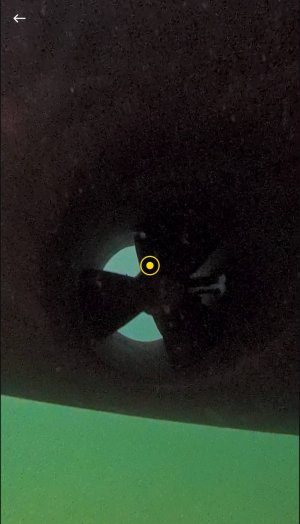
It looks not blocked there:

att.ls5lWwSSQZ5DdkUTktue1sX090xDgK9YSsRObGQmUXo.jpeg
 
Just an update. I found this contactor/switch with double sided contacts being the problem. The contact plates are used/burnt a bit? and do not make a good contact, create quite impressive sparks.
I tried filing them down a but. That made the port side work better and starboard won’t work at all now.

View attachment 194391View attachment 194392

Going now to look for a replacement, otherwise to find out a different control circuit
The reversing relay on my old QL450 bowthruster, that I no longer have, had a label on it " Albright reversing relay DC88-259" and looked a lot like this Pardon our interruption...
 
Something else is wrong. Probably some field winding shorted or similar.

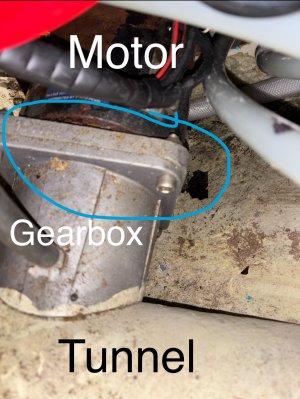
I can remove the motor from the gearbox while boat on water, right? I mean without sinkinkg… thanks.
 

Attachments

  • IMG_6275.jpeg
    IMG_6275.jpeg
    1.7 MB · Views: 7
Because it does not anymore. And I if I try to run it, it shorts the battery.
I took it out now.

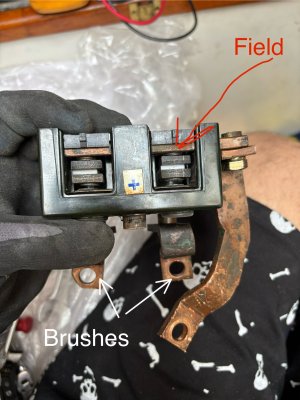
There are 4 contacts on the motor, 1. Negative. 2. Brush. 3. Brush. 4. Field.
IMG_6281.jpeg

IMG_6277.png

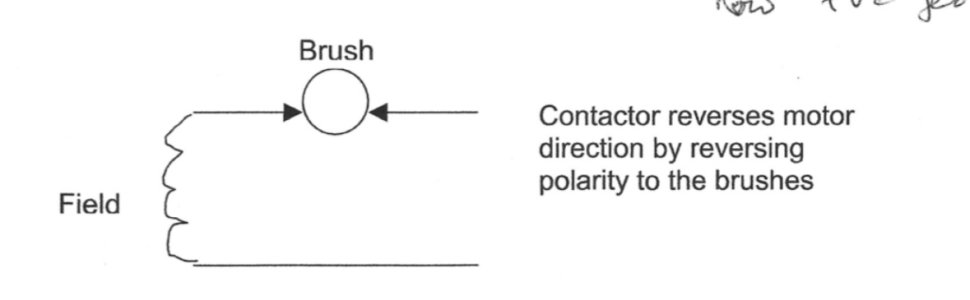
As I understand field is connected to negative inside:
IMG_6280.jpeg

att.ei4NQL6ZadRYZK_fTEzNBN069b_s5WnXhDbpRecusPI.jpeg

So I connect it as follows:
battery negative to negative
Battery positive one of the brushes
Other brush to the field.

The result is almost shorted battery.

There is 0,6ohm between brushes, 1.3ohm between field and negative. No continuity between brushes and field or brushes and negative/ground.

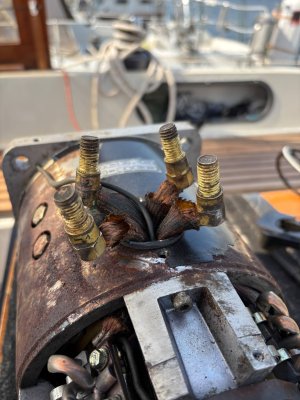
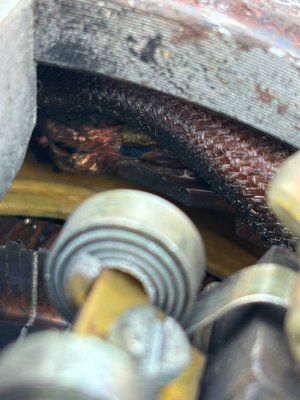
I am a bit lost here. Some insulation inside looks suspicious:
att.zSfQT07kAdCZyasj93Z3nrOpTixQIvfK8rm0F1l4Lhs.jpeg
The brushes look fine, smooth, moving and all touching the armature.

Anyone has ideas?
 
Top