D
Deleted User YDKXO
Guest
Praps I'm reading too much into that comment but is Match 2's hull going to be substantially different to Match 1 in terms of the framing?It’s gonna be nice and stiff

Praps I'm reading too much into that comment but is Match 2's hull going to be substantially different to Match 1 in terms of the framing?It’s gonna be nice and stiff


Praps I'm reading too much into that comment but is Match 2's hull going to be substantially different to Match 1 in terms of the framing?
Its great to see this detail, John, and something most of us would never experience without this type of thread.
The work that goes into such a complex vessel is incredible. Do you have a feel for the number of hours that will go into the build? You have referenced a customisation hours budget.
Just for interest it would be nice to understand the % of cost, time, materials, and bought-in parts? If this is confidential then no worries, just a techie mind wandering a bit

Care to expand further on that? You've obviously been on other boats and felt the difference. I don't like it myself when you're driving a boat in a lumpy sea and it feels like the furniture is going to break up around you. Its not something you're likely to find out on a pre purchase seatrial either unless you're fortunate enough to pick a rough dayMatch1's hull felt unbreakable and nothing creaked (bulkheads or furniture) in big seas which is not true of many other boats built for the leisure market

*Excludes my time, so add another 10 hours
Care to expand further on that? You've obviously been on other boats and felt the difference. I don't like it myself when you're driving a boat in a lumpy sea and it feels like the furniture is going to break up around you. Its not something you're likely to find out on a pre purchase seatrial either unless you're fortunate enough to pick a rough day


John , is the metal framework under the aft deck fitted to increase strength / reduce grp layup or to provide hard points to mount equipment etc ?
This aluminium box section is to create stiffness and strength Andy. It's the aft deck, where the thing needs to be designed to have say 15 adults milling around, yet all the moving parts still need to work. Especially the passerelle, patio doors and 2 transom doors, which would fail to work if there were say 10mm flexing
Then the designers have the constraints of 2 deck hatch openings (emergency exits from crew space and e/room, needed for classification etc) plus they want headroom in the aft cabin/utility. You can make the thing stiff enough with GRP deck beams formed over foam cores if you have 8 or 10 inches of thickness to play with (ie height to lose/waste) as with the hull frames, but they want to consume less height than that. The aluminium box gives them the same stiffness with less mm of beam height, so maintaining crew cabin headroom
Hours: as a ball bark estimate, you can say there are 80 guys actually working in production on s78 line and 9 boats/year, and then add design office people, Fairline Ipswich people, and you get to something of the order of 10 man years per boat which is say 20,000 hours*. That is Fairline time - there are zillions of unfathomable hours at OEM suppliers level
The customisation budget for match2 was 4000 hours (a big chunk of that is design rather than build, obviously, and thank heavens for SolidEdge/Solidworks without which this project wouldn't be possible or I'd be very broke) and customisation time was 2500 on Match. Since Match1 Fairline have done a few really nice boats with clever customisations and around 1800 hours per boat. The LIBS 2013 boat, 3 ahead of mine on the line, owned by a very nice guy with huge sea-going knowledge and experience, will be a very nice boat
I really don't know the split of bought in materials/labour cost/etc. I do actually have that data from the 2005 MBO but I have forgotten what it said and I have that (filed away) in a confidential capacity anyway. Plus, we are 7 years on. So your guess would be as good as mine (or rather better, with your industry background). As far as I know they make a profit though!
*Excludes my time, so add another 10 hours
 , but helps to balance the books?
I haven't done any quick sums so cannot comment on your 2nd para, but the conclusion seems right that bought in material costs are high. Each engine is well into 6 figures, obviouslyJohn, many thanks for this. I guess your hourly rate is a little different from Fairline's
So quick sums, means that the bought in parts are more costly than the time and material, assuming the facility o/head goes into the hourly rate.
Tempting to compare with the auto sector, but impossible really, given the much higher investment costs in the auto sector, offset by the volumes in marine. I'm surprised that F/L do 9 78's a year. This must be 50% of their revenues? No wonder that they have lost interest in small and mid-size boats.
)


Will they do something similar for the f/b overhang above it?This aluminium box section is to create stiffness and strength Andy. It's the aft deck...

As I recall, you previously told that you never use a kedge anchor (neither do I, fwiw).They've put in a 1/3rd-2/3rds divider so I can keep my kedge anchor tidy.
Yup I almost never use it so a better description would indeed be "spare or emgency hook". Actually, an even better description would be "a box tick for commercial coding"As I recall, you previously told that you never use a kedge anchor (neither do I, fwiw).
So, I guess that what you actually mean is a spare/emergency hook?
I'm asking because for a "real" kedge use, a bow locker doesn't sound as a very convenient placement...
Will they do something similar for the f/b overhang above it?
I'm talking of what can be seen in this previous pic:

jfm, erlier on in this thread i noticed that you are going for B&O for Audio.
i am a bit of a high-end nut and would certainly recommend you check out Naim Audio. They have the naimnet line with hidden Servers amps etc.
should be a simple Installation and much better sounding than B&O.
pricewise about the same if not even less. just a thought.
alternatively you should also look at Linn. surely you are Aware of both companies.
personally i am opting for bose (which in fact is low/mid-fi at best) however, probably the best Setup when the Party gets going with its multiple zones etc. and easy to install with the Subs stashed away and the satellites out.
i will have a bose vt35 surround Setup in main Saloon connected to 2x sa-3 amps powering 2x accoustimass 5 Setups in the Cockpit linked to an sa-3 amp powering a pair of 251 Speakers on the bow.
lower dinette and master cabin will each have a bose lifestyle 235 2.1 setup
- but it's a very personal choice. I'm actually not fussed about having the very best sound. I want just a quite good sound, but a fantastic user interface. Now, historically you'd never think of B+O making a user friendly interface - quite the opposite in fact - but their BeoSound5 is the exception. It's a beautiful bit of kit and I can't think of an interface that works as well or looks as sexy. The TV is all a bit integrated to this, hence the spec includes a B+O TV, which also has nice sexy features including a cool BluRay drawer and the ability to program the names of your channels (so it displays "Navigation Screens" on its display when I call up the Garmins to show on the TV. And i like the gas lantern speakers. I dunno how it compares soundwise with others but the B+O 7.1 home cinema experience on Match1 felt fab to (non audiophile) me with full sourroundy sound and a sofa shaking subwoofer. So I'm happy with it, but I can fully believe that Naim/Linn and others sound better to an audiophile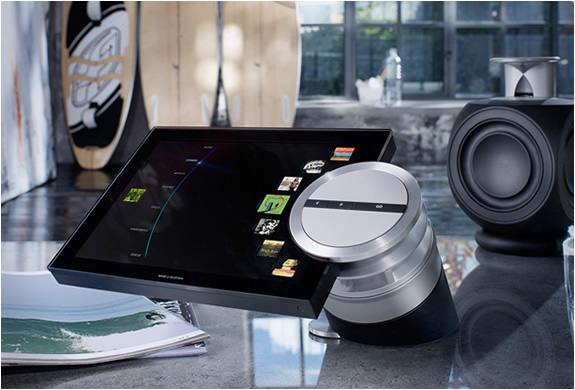
AFAIK they are both limber holes and for running pipes. Main job is limber/drainage holes becuase the bilge pumps (both ends of e/room) are on the centreline. But fairline run a few pipes through them too, especially the aft holes - the seacocks for watermaker intake and hydraulics cooling are under the hinged lid under the Cat mat in pic below, so you can get to them I suppose, and the hoses run through these holes. Definitely not exhuast or ventilationHi JFM,
I'm loving this thread, another addictive educational epic! Thanks for sharing your experience with us.
What are the large holes for at the foward and aft ends of each engine bearer? Drainage? Service cables? Exhaust? Ventilation?


