Are modern boats up to it?

Oh really, what a generalisation, but what I have come to expect! What boat did you say you have?
Stu

I have a Victoria 26, which is built something like this:

Brick-Outhouse.jpg


However, my reference was to the previous poster's well established problems with his boat, which is indeed two sheets of plastic with foam rather inadequately glued in between. Such modern constructions methods are excellent if done well, but much less tolerant of quality lapses on the production line than more traditional (when did GRP become traditional?) ones.
 
A wise man once said that you can have any two of the following.

Good performance
Comfortable interior
Low cost

Every single aspect of every boat is a compromise.

Where you draw the line between speed and comfort, windward performance and ditch crawling, interior space and cockpit working space, price and standard of fit etc is very much a personal choice.

Telling someone their choice is wrong, is a bit like telling a bloke his wife is ugly. You may think so, but it's neither your place to say so - or of any relevance.

Excellent, some very wise words.
 
A wise man once said that you can have any two of the following.

Good performance
Comfortable interior
Low cost

Every single aspect of every boat is a compromise.

Where you draw the line between speed and comfort, windward performance and ditch crawling, interior space and cockpit working space, price and standard of fit etc is very much a personal choice.

Telling someone their choice is wrong, is a bit like telling a bloke his wife is ugly. You may think so, but it's neither your place to say so - or of any relevance.

Most sensible post on the whole bloody thread :D
 
I really think sailing has changed immensely the past forty years.
Remember the Sestrel hand bearing compass, the Seafarer Echo Sounder, The Sestrel Moore Compass, primitive pumps, basic foul weather gear, bearings by DF, Hand Leads ?, etc.,

In that era I think perhaps production boats were designed and built for sailors, meaning individuals and groups of individuals who would take cold and wet and discomfort and basics in their stride.

Nowadays it all looks very different, with all the gizmos and mod cons available, probably...a very different type of aspirant occupies the market for sailing yachts.

Caught up in this tide of new aspirants inevitably there are lots of posers.
I think this may go some way to explain why builders produce the boats they do nowadays.

The other consideration is building to a price, yet incorporating what marina hoggers are percieved to want, hence a change in design not only of basics embracing hulls, decks, transoms and gear, but most importantly interiors nowadays are completely different.
 
I really think sailing has changed immensely the past forty years.
Remember the Sestrel hand bearing compass, the Seafarer Echo Sounder, The Sestrel Moore Compass, primitive pumps, basic foul weather gear, bearings by DF, Hand Leads ?, etc.,

In that era I think perhaps production boats were designed and built for sailors, meaning individuals and groups of individuals who would take cold and wet and discomfort and basics in their stride.

I think you are quite right. I'd also suggest that, by and large, people who bought yachts forty or thirty years ago expected to use them to go sailing, anchoring overnight and spending the occasional day - generally to escape foul weather - in harbour. Nowadays I suspect that most boat owners expect to spend most of their time afloat in marinas, with occasional short hops to other marinas in good conditions.

That's not necessarily a bad thing, but it drastically changes the design parameters of the boats they buy.
 
I think you are quite right. I'd also suggest that, by and large, people who bought yachts forty or thirty years ago expected to use them to go sailing, anchoring overnight and spending the occasional day - generally to escape foul weather - in harbour. Nowadays I suspect that most boat owners expect to spend most of their time afloat in marinas, with occasional short hops to other marinas in good conditions.

That's not necessarily a bad thing, but it drastically changes the design parameters of the boats they buy.

I agree, mainly; remember that in those days we had the twin horrors of RDF AND Vesta curries, both of which would probably be against the Geneva Convention now.

Possibly as a result of the latter, cooking on board rather than paying silly money ashore seems a dying art, in every sense.
 
You all speak good sense and I think you are right (apart from the vestas which i liked).
I have never looked but how many old harbours of those times have now been developed by Marina companies. the UK will soon be one big marina and you will have little choice than to go in one and be ripped off some more.
With these marinas everywhere it does give a lot more people the chance to sail and keep boats in relative saftey and in turn I suppose it also allows the designers a bit more freedom in their designs.
 
Even some of the old boats weren't necessarily designed to last that long (eg some of the classic racing yachts of the early 20th century), yet they are still going strong.

The standard of modern boats only comes into question if a designer takes the opinion that this boat is going to be a marina potato and spec's it accordingly. Fine for the first owner for that is what he might want. Not so good for the next owner who wants to cross oceans. I would imagine professional pride would prevent this state of affairs becoming reality.
 
It's just plainly not true... It's just less comfortable, and for us, planning blue water cruising that was an important factor... But we'll miss the huge cabins and cockpit when in harbour or at anchor I'm sure.

Have you been blue-water cruising before? You are likely to spend 25% or less of your time at sea and maybe 1% in heavy weather conditions. The times when a traditional boat will be more comfortable will be few and far between. If you go to the tropics a 'cosy' interior will be pretty miserable. If you are planning high-latitude adventures I would concur with your choice but for most people an AWB, or better still a cat, would be the most comfortable.
 
Last edited:
I really think sailing has changed immensely the past forty years.
...
Nowadays it all looks very different, with all the gizmos and mod cons available, probably...a very different type of aspirant occupies the market for sailing yachts.

Caught up in this tide of new aspirants inevitably there are lots of posers.

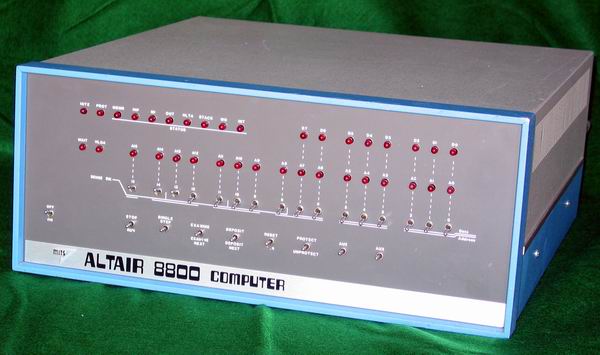
A bit like computing.

Then.

altair8800.jpg


Now.

1004ipad_hometimes-420-90.jpg
 
A bit like computing.

Then.

altair8800.jpg


Now.

1004ipad_hometimes-420-90.jpg

A bit like computing, yes, but only a bit.

In computing design and production:~

improvement in design and functionality to meet specific purposes and to broaden and speed up a growing menu of tasks and capabilities.

In yacht design and production:~

Improvement in design and production to meet less stringent purposes and to narrow and slow down a shrinking menu of tasks and capabilities.
 
I think you are quite right. I'd also suggest that, by and large, people who bought yachts forty or thirty years ago expected to use them to go sailing, anchoring overnight and spending the occasional day - generally to escape foul weather - in harbour. Nowadays I suspect that most boat owners expect to spend most of their time afloat in marinas, with occasional short hops to other marinas in good conditions.

That's not necessarily a bad thing, but it drastically changes the design parameters of the boats they buy.

Yes, and as a result, from a marketing point of view, designers and builders are orientated towards fulfilling what is percieved the market wants.

Then what happens is evolvement in a particular direction to satisfy this percieved demand and over time, the former parameters concieved to fulfil a percieved different requirement are overtaken, making today's product completely different.

As this process is ongoing, through the current perspective yesterdays parameters may currently appear irrelevant.

Then one day someone wakes up from the dream and concludes yesterdays designs were more robust etc., then there is a stampede to replicate.But by then, the barrier is prohibitive cost. :D
 
Interesting thread. I have no particular beef about modern boats as seaworthiness has far more to do with being prepared, reliability and experience.

One advantage of the modern boat I believe is that it is easier to refit. My MAB requires contortion, grinding and force just to dismantle a locker door. A neighbour at the Marina bought a neglected AWB, ex charter, abandoned to its fate and fixed it up with not a lot of hassle. A nice looking Bav 30(4) footer boat it is.

Then there is my aft cabin: everything has been bonded to everything. Lots of spacers and fillers bonded in to straighten up her graceful shear. A complete dismantling job just to remove the windows and a total pain to reassemble. A lot of replacement as the cutting job was quite destructive. It was not all my fault either!
 
I suppose if we all designed our own boat I wonder how far away from the modern boats or the older boats we would be. Designers have to try to appeal to a mass market.
Would we still have a sugar scoop, would the bows be swept up and back more or would we go for the plumb bow. Wide or narrow. what rig, keel, length, engine? Metal, wood, GRP, ferro?
I am pretty sure we would all come up with something different or would we?
It would be an interesting collaboration thread I suppose to discuss the various parts and why we would have them.
 
Addressing another aspect of the OP i.e. why do some boats 'never go out'?

In some cases pressure of commitments, in others lost interest. Maybe it's 'maybe Ill be able to get down to the boat more this year so I won't sell it'.

It may be however that the days the other boat goes out don't coincide with the days the observer happens to be there. We had a fairly good season last year with about 6 weeks cruising but for the remaining 75% of the season the boat sat on its mooring looking unloved.
 
Interesting thread. I have no particular beef about modern boats as seaworthiness has far more to do with being prepared, reliability and experience.

One advantage of the modern boat I believe is that it is easier to refit. My MAB requires contortion, grinding and force just to dismantle a locker door. A neighbour at the Marina bought a neglected AWB, ex charter, abandoned to its fate and fixed it up with not a lot of hassle. A nice looking Bav 30(4) footer boat it is.

Then there is my aft cabin: everything has been bonded to everything. Lots of spacers and fillers bonded in to straighten up her graceful shear. A complete dismantling job just to remove the windows and a total pain to reassemble. A lot of replacement as the cutting job was quite destructive. It was not all my fault either!

You make some very good points.

The biggest nuisance with older production boats, and particularly if the yard has long gone out of business and the crop of suppliers who specifically fabricated for them as well, is finding replicate parts and fittings.
 
Addressing another aspect of the OP i.e. why do some boats 'never go out'?

In some cases pressure of commitments, in others lost interest. Maybe it's 'maybe Ill be able to get down to the boat more this year so I won't sell it'.

It may be however that the days the other boat goes out don't coincide with the days the observer happens to be there. We had a fairly good season last year with about 6 weeks cruising but for the remaining 75% of the season the boat sat on its mooring looking unloved.

Here in the Med there a possible additional reason.

Many owners of boats based here are not residents.

It therefore means they have to travel very long distances to get to them.

Once aboard the owners prefer to spend time on board in harbour.

The climate here also is condusive to this preference.

So there are many that don't leave harbour, are treated as temporary liveaboards and social venues in the sunshine, of the "Do come aboard and have a gin" variety.:D
 
Top