Ais vs marpa

Guys, from one old salt to others, the message is DONT rely on MARPA or AIS to avoid collisions, RADAR is just a another pair of eyes and for practical purposes it doesn't to rely on any other system to perform this function - so you can rely on it. The EBL is the best method method determining a possible collision situation as it too does not rely on any other system but in general is far more accurate at long distances than a hand bearing compass.

The problems with GPS derived systems stem from the fact that the GPS has no idea where the ships head is pointing. AIS systems In my experience are prone to supplying incorrect data regarding the actual position of the target NOW so although you have lots of supplementary info like name, mmsi; the rest like course speed and position may be somewhat out of date and hence in the fog I would not rely on it in any way.
 
North Up. Once you become familiar with radar, you'll find this to be a great orientation.

I'm not very familiar with radar (done the RYA half-day course, but not yet used it much) but north-up seems like the natural orientation to me! It keeps the bearings steady, and as long as there's a ship's head line on the screen it's still easy to intuitively know what's to the left and what's to the right. I think of head-up as the basic fall-back format you get if you don't have a fast heading sensor available, not something you'd select if you had a choice.

As you know, COG and SOG can vary hugely from boat heading and speed through the water depending on tide and wind effect, and this is at the heart of the problem. Using the former makes your radar ground stabilised whilst using the latter makes it sea stabilised. And it's this that has been recognised as a cause of radar assisted collisions.

I'm willing to believe this is true, because a lot of people who know their stuff say so. But I still don't understand why it is true, and your post doesn't elaborate on that.

Cruiser2B explained (thanks) why you need sea-stabilised to determine the target's aspect. But that seems a relatively minor point in terms of collision avoidance - it may have an effect on rules in good vis, but if it's restricted visibility, or you assume the ship can't see you (or you're one of those people who insist that "fibreglass gives way to steel" and throws the rules out of the window) then you're just trying to ensure that the two points stay a reasonable distance apart. And I can't see why there's anything wrong with measuring how the points are moving across the ground in order to achieve that - it only matters how they're moving, not which way they're facing.

In restricted vis, use your radar to see if there's a constant bearing and range.

So are you suggesting that the best way for me to judge collision risk in poor vis is to plonk an EBL on a target (on a north-up, relative motion display) and see whether the target is running down the line? And that this is likely to be better than MARPA?

If so, that's welcome news - the MARPA on my C70 seems complicated and fiddly, and if it doesn't provide much benefit then I'll ignore it.

Pete
 
Hi prv,

Almost spot on. The best way to use radar is Relative Motion (gives the same pic as if you were looking out of the cockpit); North up to give th same 'viewing' as the chart plotter; but True vectors to see the ship's aspect top know what avoiding action to take re rule 19. Rule 19 is explained in my post at the bottom of the page here: http://www.playdeau.com/radar-assisted-collisions-and-marpa/

I come back to the best way of using radar, which is to set it up for Relative Motion, using the EBL to track if a target is on a collision course and its range is decreasing. The correct avoiding action is only known if you know its aspect relative to you, which can be taken from its True Vector if available, or by plotting on the screen itself (this is the subject of another briefing iof you want).

I'd not use MARPA, but the above. MARPA (in my opinion) is potentially inaccurate, slow, and can lead to false information. Using the simple EBL and a decreasing range is perfect! But just make sure you know rule 19.

Happy cruising on weapons (as my sons call it!)
 
True vectors to see the ship's aspect top know what avoiding action to take re rule 19. Rule 19 is explained in my post at the bottom of the page here: http://www.playdeau.com/radar-assisted-collisions-and-marpa/

I read that, but I can't see a great deal about aspect. Your diagram sets out the four quadrants a target may be in, and which way you should turn in that case, but which way they're facing is not mentioned. The only partial exception is that if you're overtaking (for which you do need to know the aspect) then you may also turn to port as well as to starboard, but for me at four or five knots that seems like a somewhat theoretical possibility :)

The correct avoiding action is only known if you know its aspect relative to you, which can be taken from its True Vector if available, or by plotting on the screen itself (this is the subject of another briefing iof you want).

I've glossed over previous mentions of True Vector, as I don't know if my radar has it. But can you describe what it actually is?

Plotting on the screen (or rather, transposed onto paper plotting sheets) we did lots of on the RYA course. I've forgotten the details, but I have my notes (and the Superyacht book you mentioned upthread) and I'm sure it would quickly come back.

I have thought of cutting out a piece of transparent plastic the size of the screen on my C70 - I could hold it in place to quickly mark a new target position and then put it back on the table to draw the other lines. Unlike the big glass screen the deck officers use on Stavros, you can't really write on the plotter using a chinagraph.

Happy cruising on weapons (as my sons call it!)

Nice name :D

Pete
 
The EBL is the best method method determining a possible collision situation as it too does not rely on any other system but in general is far more accurate at long distances than a hand bearing compass.

I question this statement. At distance, visual bearing change can be very slow and the HBC doesn't show range, but its accuracy will always be superior to radar accuracy.
 
I'd not use MARPA, but the above. MARPA (in my opinion) is potentially inaccurate, slow, and can lead to false information. Using the simple EBL and a decreasing range is perfect! But just make sure you know rule 19.

I agree with everything that Piers has said on this subject, other than this. I'd use the MARPA - it can track numerous contacts, while your EBL limits you to 1 (or 2 if so equipped). For any target of particular concern, you can drop your EBL onto that target's relative vector, and use it as Piers described to "smooth" out the variability of the MARPA plot. Alternately, you can keep a plotting sheet near the radar, and manually plot the range and bearings of important contacts to the paper.
 

Attachments

  • fig5-9.jpg
    fig5-9.jpg
    72.6 KB · Views: 0
I agree with everything that Piers has said on this subject, other than this. I'd use the MARPA - it can track numerous contacts, while your EBL limits you to 1 (or 2 if so equipped). For any target of particular concern, you can drop your EBL onto that target's relative vector, and use it as Piers described to "smooth" out the variability of the MARPA plot. Alternately, you can keep a plotting sheet near the radar, and manually plot the range and bearings of important contacts to the paper.

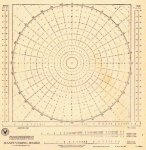
yes, and by far the easiest way to plot multiple targets course and speed accurately is the yeoman plotter.
 
PRV

"I have thought of cutting out a piece of transparent plastic the size of the screen on my C70 - I could hold it in place to quickly mark a new target position and then put it back on the table to draw the other lines. Unlike the big glass screen the deck officers use on Stavros, you can't really write on the plotter using a chinagraph."


I also have a C70. I never use MARPA due to its inaccuracies, but would not be without AIS. The C70 allows you to use 2 different VRM/EBLs. Up to two targets' positions can be marked. If you use a Douglas protractor, the square one, then a few minutes later you can hold the protractor against the screen with the east/west line going through the point marked by the EBL/VRM and also the present position of the target. Move it along this line until the north/south line on the protractor is going through your position at the centre of the screen. The centre of the protractor is then the position of the CPA.

3 or more targets will need to be plotted on paper, for which purpose the protractor is already in your hand.

This is very useful in a situation such as a TSS, when you can get a group of ships all going in the same direction but at different speeds. It can very quickly show you which is the critical vessel (the one with the closest CPA) which is the one that needs most attention to avoid.
 
Last edited:
I read that, but I can't see a great deal about aspect. Your diagram sets out the four quadrants a target may be in, and which way you should turn in that case, but which way they're facing is not mentioned. The only partial exception is that if you're overtaking (for which you do need to know the aspect) then you may also turn to port as well as to starboard, but for me at four or five knots that seems like a somewhat theoretical possibility :)

Correct. As you say, knowing the target's aspect is necessary if you think you are overtaking it. A good way to determine this (without making a plot) is to display the target's true vector. So, if the target is ahead of your beam and you are overtaking it, a turn to port is acceptable.

I've glossed over previous mentions of True Vector, as I don't know if my radar has it. But can you describe what it actually is? Pete

A True Vector shows the true heading and speed of the target. As above, a target's aspect is necessary to know in restricted vis to determine if you are overtaking it. For anything else, a true vector can be very misleading.

Does this help?

Piers
 
RADAR.

I appologise in advance for boring anyone.

I’m not familiar with MARPA. Small boat RADARs I have used were more basic. I do have some knowledge of RADAR and ARPA
Automatic Radar Plotting Aid.

Some of what has been said on this thread I agree with some not so much. I see there is some apparent misunderstanding of some of the basic terms and principles so I thought I might try and explain some of them. it might help.

The following terms are getting mixed up. They are four different things.

stabilised
Un-stabilised,
Sea Stabilised
Ground stabilised.


It is easiest to explain by starting with the basics of RADAR as it started.

Most if not all the significant developments in RADAR technology were developed in the 1930 and WW2.
Today we have the advantage of modern electronics and computer technology which have improved the method of processing and displaying the RADAR information making it available to be used on small vessels like yachts.

RADAR or Radio Direction And Range.was developed in the 1930’s to detect air craft approaching Britain. And formed a critical part of Britain’s air defence in 1940
The earliest RADAR just measured distance of a target which is all RADAR actually does The RADAR sends out a very high power radio signal which is reflected from a target and was displayed on a cathode ray tube. Quite simply the time taken to complete the round trip to the target and back was twice the distance to the target.
With a number of RADAR stations around the coast reporting the distance of targets to lovely young ladies who plotted it all on a great big map and you have a scene from the Battle of Britain.

The next big development was cent-metric RADAR. A bit later in the war. This enabled small parabolic scanners to focus the signal into a beam sort of like a flash light.
Initially the scanners were rotated manually and when pointing at a target the distance was determined by the distance of the blip from the CRT and the direction from the direction of the scanner.

On land this was simple. And quickly automated by referencing both the scanner and the display to north.
Every thing displayed is true since the radar is in a fixed location.

To use a RADAR set on a ship or aircraft it’s a bit more complicated. You cant just referenced both the scanner and the display CRT to north.
To get around this the SCANER and CRT are referenced and synchronised with the heading.

This is still essentially what a RADAR set does today

One of the problems with this basic RADAR set was and is the ship or aircraft is often unable to steer a straight course while the scanner rotates..
This causes targets to appear on the screen at a consistent range from scan to scan as the scanner rotates the only change in range being due to the target or vessels actual movement.
Unfortunately as the ships head changes from 1 scan to the next the target gets spread out and blurred by appearing to Have changed its bearing.

This basic radar display is known as an un-stabilised display or Un stabilised RADAR.
The next development was to reference the RADAR to a gyro compass. This was achieved in WW2 by referencing the scanner and ships head to the gyro the radar picture was Gyro Stabilised. Reducing this tendency of a target to appear at different bearings with successive scan due to the ships head changing.

This is referred to a stabilised RADAR
It is s considerable improvement on a basic RADAR.
Today it can also be achieved by stabilising on a transmitting magnetic or a flux gate compass.

Shortly after the development of a stabilised display it was possible to stabilise the Display to North as well as heading and the north up display became commonly used.

This enabled a common for of RADAR to have a Choice of display between head up and North up.
Due to being on a moving ship it is only capable of displaying relative motion.

Shortly after this the next development in radar display technology was to include speed input to the radar ether by a manual input or from an input from an electronic log this enabled. True motion to be displayed

If the speed through the water is used in conjunction with compass input the RADAR was referred to as water track or sea stabilised.

If the compass input was used along with speed over the ground The RADAR was referred to as ground stabilised.

Although this is commonly referred to as ground stabilised
To be truly ground stabilised the true course and speed made good over the ground should be used.

As a general rule sea or water stabilised is recommended for collision avoidance.

Ground stabilised can be an advantage under some circumstances for navigation.

There is no one correct way to set up and use a RADAR there is personal preference and different uses under different circumstances.
If you understand the differences you can make an informed decision about which to use and when.

Just a few years ago a small boat RADAR would invariably have been a head up only un-stabilised radar. Modern electronics and computer technology have enable many of these features to become available on small RADAR sets and are common on many yachts not just big ships as they would have been in the past.

In order to fully explain why it is better to use a sea stabilised radar for collision avoidance I would have to explain RADAR plotting

The simple explanation is

In relative motion every thing appears to move while you stay still.
If you apply you course and speed to your relative observations you can determine the true motion of other vessels around you.
If you recall your chart work and current and set and drift problems. You may notice this is only part of the way towards true motion.

You don’t need to complete the rest because both your vessel and the target vessels are both in the same water and the set and drift will cancel out and can be ignored.

If your RADAR is ground stabilised you are applying the set and drift to your vessel only the set and drift create an error in the displayed true motion of other vessels because it is not cancelled out.

This does not mean you cannot or should not use a small vessel RADAR which has been stabilised on a GPS input to get true course and speed over the ground for collision avoidance.

By being stabilised it will be much better and more accurate than an un-stabilised RADAR.
True motion information displayed will have an error which will increase with the amount of set and drift experienced.
Collision avoidance decisions just need to be made with the knowledge an error may exist.

Relative motion will still be the same relative motion and not suffer this problem.

I personally like to use relative motion as my primary means of determining risk of collision and occasionally check the true motion display. I use a GPS ground stabilised true motion when it is the only true motion I have available to me.
I know others who use the true motion primarily.

There are advantages and disadvantages of each.

If using only relative motion it is very difficult to determine a change of course and or speed by another vessel. For close range and small vessels and multiple targets over reliance on relative motion has caused radar assisted collisions.

True motion will show a change in course and or speed much more readily than relative motion.

Hopefully this long winded explanation will be of some help clarifying the information available to you and help you how to decide how you like to use your RADAR.
 
I question this statement. At distance, visual bearing change can be very slow and the HBC doesn't show range, but its accuracy will always be superior to radar accuracy.

fine, but what if for various reasons you cannot see the target with a eyeball. A target flying down a EBL will have all your attention. As piers has more than adequately explained you may not know the targets actual position but if it stays on an EBL you know you will hit it - so one or other you has to change course.

target plotting with a Yeoman enables you to plot the speed, position and course of many targets but as Piers has said for various reasons these positions may be a bit suspect but with a RADAR you can evaluate a complex situation at 10 or more miles range so its not a huge issue.
 
Well, yes, I can infer that from the name :)

It's not clear to me what "true" means in this context. Heading and speed relative to what?

Pete

Hi prv,

Been out a while hence the late reply. A True Vector is the vector you'd see if the display was set to True Motion. A Relative Vector is the vector you'd see if the display was set to Relative Motion. However, on some sets (and against IMO advice to avoid confusion) you can have True Vectors showing on a display set to Relative Motion which is useful for showing a target's aspect but should only be used temporarily to avoid confusion.
 
fine, but what if for various reasons you cannot see the target with a eyeball. A target flying down a EBL will have all your attention. As piers has more than adequately explained you may not know the targets actual position but if it stays on an EBL you know you will hit it - so one or other you has to change course.

target plotting with a Yeoman enables you to plot the speed, position and course of many targets but as Piers has said for various reasons these positions may be a bit suspect but with a RADAR you can evaluate a complex situation at 10 or more miles range so its not a huge issue.

I think Piers implied using "flying" EBLs to track relative plot of any contact, not just those closing to the centre of the screen (ie. you). The EBL, as with any radar-derived information is subject to the vagaries of sea-state, yaw, etc. The benefit of the EBL over MARPA plots, is that the MARPA will update the calculated Co/Sp of all contacts every few seconds based on your instantaneous 'ownship' data - if you've yawed a couple degrees off your course and sped up a bit going downswell, all those target vectors are going to change direction and confuse you. Using the EBL allows you to use your good human judgment to average the relative track of a contact. Most MARPA systems should have the facility to allow you to manually input your own Co and Sp. If you do that and are scrupulous with keeping it up-to-date then you will find the MARPA plots are significantly more reliable.

If a contact is visible, then you should verify with compass bearings - it truly is a method that is independent of outside data and is ultimately as accurate as its user.
 
I think Piers implied using "flying" EBLs to track relative plot of any contact, not just those closing to the centre of the screen (ie. you). The EBL, as with any radar-derived information is subject to the vagaries of sea-state, yaw, etc. The benefit of the EBL over MARPA plots, is that the MARPA will update the calculated Co/Sp of all contacts every few seconds based on your instantaneous 'ownship' data - if you've yawed a couple degrees off your course and sped up a bit going downswell, all those target vectors are going to change direction and confuse you. Using the EBL allows you to use your good human judgment to average the relative track of a contact. Most MARPA systems should have the facility to allow you to manually input your own Co and Sp. If you do that and are scrupulous with keeping it up-to-date then you will find the MARPA plots are significantly more reliable.

If a contact is visible, then you should verify with compass bearings - it truly is a method that is independent of outside data and is ultimately as accurate as its user.

It's interesting how this post shows there's so much to learn about radar and its use. As I've often said, radar's not a get out of jail free card - 'I've got radar so I'll be OK if I meet fog...', and although I've used radar for many years (since 1970!) I'm still cautious and somewhat on edge in fog.

The way I use Play d'eau's sea-stabilised radar is to have it set to Relative Motion, Relative vectors, trails on, with brilliance, gain, sea clutter and rain clutter adjusted and in that order.

In restricted vis, if I see a trail that might be pointing ay me, I put the EBL on it. As it closes, I change scale, re-adjust the settings, and start plotting the target's aspect (using true vectors and/or a simple plot), so by 2 miles or so I can take the correct rule 19 avoiding action if I have to.

Two things never cease to amaze me. The gannets in the Channel Island which radar seems to pick up easily! Makes you wonder what they eat. They move so fast on the screen and always appear to make directly for me.

The other thing that takes me by surprise, is boats that just aren't picked up. Although it's only a very few, one is enough (as the Condor tragically found out a couple of years ago). I've had one small open fishing boat and two small yachts that simply hadn't registered on the radar.

And at this stage, please don't get me on radar reflectors. Suffice it to say the only ones I've ever picked up in any of the tests we've done, are the active reflectors. Without an active reflector, I'm told the main reflecting surface from a yacht, is the hole it makes in the water.

Happy mastering of 'weapons'!
 
Guys, from one old salt to others, the message is DONT rely on MARPA or AIS to avoid collisions, RADAR is just a another pair of eyes and for practical purposes it doesn't to rely on any other system to perform this function - so you can rely on it. The EBL is the best method method determining a possible collision situation as it too does not rely on any other system but in general is far more accurate at long distances than a hand bearing compass.

The problems with GPS derived systems stem from the fact that the GPS has no idea where the ships head is pointing. AIS systems In my experience are prone to supplying incorrect data regarding the actual position of the target NOW so although you have lots of supplementary info like name, mmsi; the rest like course speed and position may be somewhat out of date and hence in the fog I would not rely on it in any way.

^^ This^^
AIS, is not, has never been and was never conceived as, an aid to navigation. It was pushed through the IMO by the Yanks post 9/11 as they were demanding a system to identify the ships they could see approaching the US coast on radar. It was only ever brought in, in a watered down version where by the systems would be man operable as opposed to the US preferred sealed unit. This is why it is not uncommon to see supertankers underway by sail (or other operator mistakes in info updates) according to their AIS data. At best it can be used to get the name of the vessel you can see visually so as you can gain their attention on VHF. I was at sea on Merchant ships when the systems started coming aboard and right from the off there has been massive issues with people using them for collision avoidance then finding the oncoming vessel is not where they thought. In fact I know many deep sea skippers who think it has had a serious detriment to safety at sea.
The only way to keep a safe watch at sea is with your eyes. Radar can help but it can be affected by rain and fog to give false targets or none at all. For small leisure boats and yachts AIS can give the benefit of putting your vessel name on the bridge of a large vessel but be warned they may only have an AIS machine which gives out a list of vessels as opposed to displaying them on a chart. It is unlikely that a watchkeeping officer will be keeping an eye on the AIS. He may not even see a small vessel on radar unless you show a big enough target with reflectors etc. In reduced visibility keep as far away as possible from everything. If your going down a channel make sure you call in to the appropriate authority at every way point as this will allow every other vessel listening to mark your position. But please do not use AIS as a substitute for watchkeeping.
 
Most MARPA systems should have the facility to allow you to manually input your own Co and Sp. If you do that and are scrupulous with keeping it up-to-date then you will find the MARPA plots are significantly more reliable.

Not at all reliable! I have seen MARPA display buoys (those things that are fixed to the sea bed and some of them light up at night) at 45 knots and fishing boats at 70, it is not a viable system on small boats, especially in a sea way. Q. How do you know when its giving a false reading? A, when you can see the target with eyeballs. Conclusion: so what use is it?

EBL use EBL it works.

and AIS is just a placebo. it makes you feel safe when there is a great possibility your not.
 
Top