Advice needed on blistering hull treatment

Hugy

New Member
Joined
5 May 2020
Messages
3
Visit site
Hi all,

Wanted to ask your advice on how to proceed the bottom job of my boat.
It is a 1986 Jeanneau Sun Legende 41.

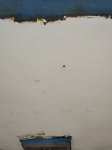
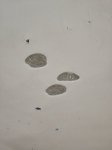
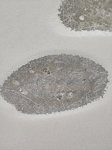
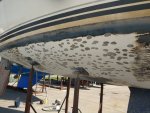
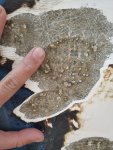
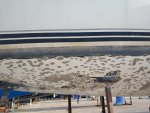
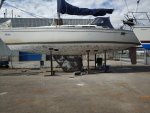
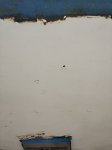
We just hauled out the boat and there are numerous blister spots on the hull. They are numerous and cover the whole hull (except the rudder). Allmost all of them are very small, between 5-10mm. We have been scraping the hull the past 2 days to remove most of the bottom paint. After sanding multiple spots with the RO with 40grit all of the damage seems to be in the chopped mat layer. None (so far) have been into the woven mat.

My reasoning is that after 34 years in the water probably everything that can happen to the hull has already happened. The blisters thus seem numerous but of small and shallow nature.

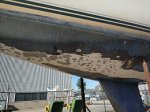
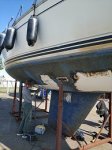
See the attached pictures.

I'm now thinking of multiple options.
1. grinding out all the visible blisters, drying them out and fairing.
2. getting the gelcoat peeled, grinding the spots out, drying and fairing
3. leaving as is and only fixing the worst spots as the spots are very shallow and small.

We were planning on using copper coat, maybe with a barrier coat. What is your advice on this with the state of this hull?

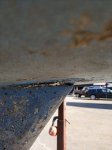
There also is a gap at the front of the keel, is this normally covered with sikaflex or something else. Or is this keel gap too large and should we investigate further?

We are not looking for a perfect finish for racing. We just want a sound hull for the coming 10 years of cruising.

Looking forward to any advice on how to proceed.
Attached Thumbnails
 

Attachments

  • IMG_20200504_165245.jpg
    IMG_20200504_165245.jpg
    17.1 KB · Views: 66
  • IMG_20200505_170705.jpg
    IMG_20200505_170705.jpg
    5.7 KB · Views: 68
  • IMG_20200505_170714.jpg
    IMG_20200505_170714.jpg
    4.4 KB · Views: 69
  • IMG_20200505_170721.jpg
    IMG_20200505_170721.jpg
    12.1 KB · Views: 72
  • IMG_20200505_170739.jpg
    IMG_20200505_170739.jpg
    38.5 KB · Views: 73
  • IMG_20200505_171549.jpg
    IMG_20200505_171549.jpg
    11.7 KB · Views: 73
when I had my 1979 boat sand blasted to get rid off years of antifoul, guess what: a few blisters.
three options:
full peel and replace of gel coat at 6K plus 6 weeks mid season
fill and epoxy with gel shield but you need the hull dry. 1.5K
fill, fair and prime 600 done by local yard painter.

For a boat now 40 years old, the full treatment would have been about 25% of the value of the boat for a problem you didn't know you had and cant see when the boat is in the water.

There is no right answer and each owner will have different opinions but choose what is proportionate to the value of the boat which is not always the most expensive, I chose the third option, no regrets!
 
I certainly wouldn't bother with a full peel. If you've got the time, do 1, if not, do 3 and go sailing. You can then do 1 during a winter lift out.

While "osmosis" can be a severe structural issue, it very rarely is and, if it is, you'll know. A few shallow blisters like that are an excuse for sharp boatyards to take a small fortune off naive yotties and an excuse to pay less for smart buyers.
 
Before Coppercoating the hull must be completely dry as measured by a meter. It sounds counter-intuitive but you need to hose the hull down frequently to remove any acidic products of osmosis. It can then be fully dried out.
 
I don't know what the professionals do, but this is what I do.
The first time I had to do a treatment for osmosis was in 1981 when I found osmosis along the waterline on a 1973 Nauticat 33 I had bought.
Although I had a survey the surveyor did not spot it. Although to be fair the hull had just been treated and repainted by a boatyard in 1980, and in those days although 2 Pack Isocyanate paint was available to car body shops (like wot I had) they had not started marketing 2 pack paint for the painting of boats.
Having been using 2 pack since ICI first brought it out (called 2K) we (my paint sprayers and myself) were spraying a car a day, usuually a colour change.
And I would hand paint some areas like the door openings etc.
So it seemed logical to me to repair the osmosis with 2 pack.
The paint which the hull had been painted in was a single pack boat paint made by a well known boat paint manufacturer and quite honestly they would have been better painting it with Woolworths best for all the good it did at keeping moisture away from the blistered areas.
Anyway after hand painting the hull with 2 pack the blisters did not return during the 3 years I had the boat.
Leaping forward, the last boat I treated for osmosis was 3 years ago, The boat had been professionally treated 5 years before with Gelshield and then antifoul.
I had the antifoul blasted off and by hand removed the gek shield from around where the blisters were, and yes they had moisture inside them
I gouged out the blisters, used a hand heat gun for a quick dry and filled the holes with below the waterline filler.
Then rather than going to a boatyard for paint I went to a car body paint supplier and was buying Lechler 2 Pack Paint. On other boats I have hand painted I found that many boat hulls are British Standard Colours or matched car colours, a white hull was Ford Diamond White, The grey bilges of some boats were Perkins Tractor Grey, and my last hull was British Racing Green.
Anyway I gave my boat 7 coats of Lechler 2 Pack paint all done with a roller.
And that is what I would do if I had your boat.
Good luck.
 
Hugy welcome to the forum.

I would fill and fair as described by others.

When I bought Concerto there were small air bubbles in the gel coat, not osmosis like you have, and the surveyor recommended only 3 coats of Gel Shield not 5 as it can trap moisture in the hull and is very difficult to remove. His advice was never to coppercoat on a hull with any blistering as they will occur again in a different place and makes remdial work a lot more difficult. I have had to do some remedial filling bevery time I lift out. So stay with antifouling.

As you have only just come out of the water, the hull would need extensive washing and drying, possibly heat pads. This is going to take months. As you have already mentioned you are not too worried about the finish as it usually cannot be seen and with your cruising plans, you should get sailing as soon as possible.
 
My thoughts are grind out, quickly steam clean and then dry and fill/sand blisters, and don't epoxy or coppercoat.

I've owned a boat that had more blisters than that when I bought it. Out of the water a week, AF scraped off back to gelcoat, all blisters ground out and filled, two coats of two-pack paint on the bottom (this was in early 1980s and that was then a surveyor's recommendation) then re-antifouled and back in the water year-round for 12 years except for a day or two a year out to re-antifoul. When we sold her there were a very few more new blisters.

If doing it again I'd omit the two-pack paint, which is now never recommended, and steam clean the blister holes before drying and filling.

There are reports of epoxy coatings on hulls with high moisture content - as yours probably has - failing, and some of epoxying making further blistering worse. Usually OK (but expensive) if done on a really dry hull after a gelpeel and drying.
 
Don't coppercoat or epoxy a wet hull, you just trap the moisture inside.

The "right" answer is to have it peeled, dried, and then some new laminate applied and then epoxy and copercoat.

The "cheap" answer is to grind out the blisters and fill them, then just antifoul the boat and go sailing.
 
Thank you all for the advice and the warm welcome on this forum!

We are currently in the process of grinding out all the spots. The spots are almost never a blister but show as cracks in the gelcoat. Can it be that these were blisters that have already popped a long time ago when the boat was in the water? There are a lot of them though. Especially on the stern side of the hull. I have the feeling getting the chopped mat peeled would have been a better option with a lot less fairing afterwards.

I'm now planning on washing them and steam cleaning them often the coming weeks. We have perfect dry weather here in the Netherlands the coming weeks with 20 degrees and a moisture level in the low 30's every day. After drying them for the next few weeks I want to brush them with epoxy and then fair them when the epoxy turns tacky with epoxy filler. After that there will be a lot of sanding and fairing to have the hull not resemble a golf ball anymore.

I'm still not sure on coating it with a barriercoat or not. Some people seem to advice to do it while others say it shouldn't be done :unsure:.

Attached are some pictures of the progress the last 2 days.
 

Attachments

  • 6a5a834c-4a19-45b0-9114-27ef58f76deb.jpg
    6a5a834c-4a19-45b0-9114-27ef58f76deb.jpg
    214.3 KB · Views: 35
  • 69292c19-96f7-4afc-82f8-db517cf7f380.jpg
    69292c19-96f7-4afc-82f8-db517cf7f380.jpg
    264.5 KB · Views: 38
  • dfb9b3b5-c9c8-4957-8fd0-0e728097a69d.jpg
    dfb9b3b5-c9c8-4957-8fd0-0e728097a69d.jpg
    186.7 KB · Views: 34
Another update,

Have almost ground out all the blemishes in the gelcoat. I would say about 95% of them are cracks in the gelcoat with some small voids underneath in the chopped mat. Most of them do not contain osmotic fluid. Some contain clear fluid and very few contain the darker and smelly osmotic fluid.

Yard workers call me crazy for grinding out all the blisters and not getting the bottom peeled.

I'm now planning on rinsing out the laminate the comming 2 weeks with a high pressure washer and a steam cleaner. Then coating them with epoxy before filling with epoxy fairing.

I still have not decided about coating with a barrier/epoxy coat afterwards. Just as in the comments here some advice to do it while others say to not do it...

Any insights are appreciated!
 

Attachments

  • 336aec06-f1b0-433f-bfc0-8aa175d3ac2a.jpg
    336aec06-f1b0-433f-bfc0-8aa175d3ac2a.jpg
    299.3 KB · Views: 13
  • IMG_20200505_170705.jpg
    IMG_20200505_170705.jpg
    5.7 KB · Views: 14
I do not think you are mad not to get it peeled. Fairing up your hull will be a lot qicker. I would advise against apply a full epoxy coatb to the hull. Any moisture still within the hull will need an escape route and epoxy will trap it and cause more blisters (and worse) than some that may still occur.
 
Yard workers call me crazy for grinding out all the blisters and not getting the bottom peeled paying them a small fortune for unnecessary work.
Fixed that for you.

I think you're doing it right. It was conventional wisdom for years that your boat will be destroyed if you don't get it peeled professionally, then people started to question it and found that, in 99% of cases, a few blisters aren't a ticket to a boatyard owner's early retirement, just a minor issue that can be dealt with with local treatment as and when convenient. There are exceptions, but you'll know if you have one - blisters the size of dinner plates!
 
So far no boat is reported as having sunk from osmosis, though they may have seeped

I boat a boat where seller had stripped it and found it too much for untrained crew. I merely had it dried out and epoxied.

I considered buying a boat with blister earlier and only rejected it due to ageing engine, furling gear and equipment. Probably should have gone with that one in hindsight as re gel coating coppercoat the one I did buy proved £5k and engine failed after 5 years and that cost £5k
 
Top