3D Printer ideas

I have the DIY 3D Printer that was sold by Hobby King for model hobbyists. Cheap and cheerful. Accepts PLA and other filaments ..
Obviously my other hobby being RC Models - is the reason I bought it ... to sit alongside my Laser Cutter.
Bed is larger than competitors at 210 x 210mm and up to 200mm vertical.


The first thing that strikes you - is the time to print. You load up a simple item and then see it will take 3 hrs to print !!

Early in this thread a lot was mentioned about structural strength and that is the weak link in 3D printing. You can alter the settings to improve etc. but at end of day - it will not be as strong as a properly moulded object.

An alternative to 3D printing is 'Pop Bottle' moulding ....

Take the object you want to copy ... make a plaster cast of it. Now 'oil' the surface of the mould and create a reverse plaster cast of it with a stick inserted to be able to hold it.


Now once hardened ... you use the stick to mount it in a vice ... take a pop'bottle and hot air gun.

Basically you pass the bottle over the mould, then apply heat to shrink and form the bottle over it. Done carefully - the plastic actually contracts and strengthens as it does. It will take on all the contours / ridges etc.

We make model cockpit canopies / motor covers etc. this way.

The beauty of it of course - is that you have a cast for repeats !!
 
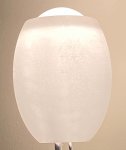
I needed some new lampshades for the original cabin lights.
Odd size, no longer available, but wanted something until we get around to replacing the light fittings (some way down the list)

A4C819C1-5706-4CCF-B3B6-55F3DE9EDD32.jpg

not the actual light fitting, but you get the idea

01CF2787-D36B-407A-90D2-B71BF1B70619.jpeg
 
Last edited:
Just for interest, I've just bought my first 3D printer - a very basic one, a CReality CR-100. It only handles PLA, and has a tiny build volume (10x10x8 cm), but it will do to explore the capabilities of the technology, and to gain experience in using 3D design software. After printing a couple of "canned" projects, it is currently printing my very first design - a new holder for the spools of filament, as the one supplied only works with CReality's own spools, which have a much larger hole in the middle than the FlashForge ones that I bought.

I'm using OpenScad, which might not be the first choice for non-programmers, but which seems to be pretty widely used. It has a lot of parametric libraries for things like screw threads and gear wheels.

I have an Ultimaker. In the beginning i found it hard to get the print to stick to the bed or get the print off the bed when it was stuck too well. All a lot better with a flexible plate from BuildTak When combined with their mat all a lot better. I have experimented also with PEI sheet which seems even better. Certainly I no longer use glue stick or hairspray!

For CAD modelling I would recomment 123d Design which is free. I own Fusion but it is too sophisticated for me.

It is also worth looking on Thingiverse to see if someone else has modelled what it is you want to make. You can download and adapt for free

If you need help, happy to advise

TudorSailor
 
Interesting about the sticking to the bed ... I too had problems with this ...

Lots of advice online ... PVA glue ... Prit Sticks ..... various ... but in the end I 'nicked' Wifes hairspray and that works a treat.

I have thought about heated bed ... but really for my work ? Not worth it.

As to designing ... I've tried but what I do now is find a similar item online ... then import to Meshmixer and make my modifications to it.
 
I was asked about this a while back but have been ridiculously busy!

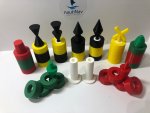
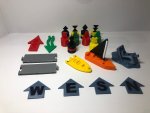
This is part of my farm which we use to manufacture "stuff" - mainly nav training aids such as a couple of the pics below.
3D print is a learning curve which can be sometimes frustrating, I've just had to rebuild my farm server after the SD card corrupted - happy times!

IMG_6899.jpg IMG_6480.jpg IMG_6665.jpg IMG_6751.jpg
 
I have an Ultimaker. In the beginning i found it hard to get the print to stick to the bed or get the print off the bed when it was stuck too well. All a lot better with a flexible plate from BuildTak When combined with their mat all a lot better. I have experimented also with PEI sheet which seems even better. Certainly I no longer use glue stick or hairspray!

For CAD modelling I would recomment 123d Design which is free. I own Fusion but it is too sophisticated for me.

It is also worth looking on Thingiverse to see if someone else has modelled what it is you want to make. You can download and adapt for free

If you need help, happy to advise

TudorSailor

The CR-100 uses a magnetic plate as the bed; so far I haven't had any problems with adhesion to the bed - the removable bed is slightly flexible, making removal of the print easy. I've found thingiverse, and printed something from it just to prove that it works! I'm currently creating a replacement spool holder to fit the spools of filament I'm using, as the one supplied has too large a diameter. OpenSCAD seems well suited to that type of application, and having programming expertise, it's a natural way for me to work. But if course, a drawing oriented package will be better for some kinds of project.

I'm thinking of using a digital elevation model of Antarctica to create a mould for a paperweight, if I can figure out how to do it!
 
The CR-100 uses a magnetic plate as the bed; so far I haven't had any problems with adhesion to the bed - the removable bed is slightly flexible, making removal of the print easy. I've found thingiverse, and printed something from it just to prove that it works! I'm currently creating a replacement spool holder to fit the spools of filament I'm using, as the one supplied has too large a diameter. OpenSCAD seems well suited to that type of application, and having programming expertise, it's a natural way for me to work. But if course, a drawing oriented package will be better for some kinds of project.

I'm thinking of using a digital elevation model of Antarctica to create a mould for a paperweight, if I can figure out how to do it!

There are various spool holders for CR100 on thingiverse..........eg https://www.thingiverse.com/thing:3658354

If you convert the Antartica model to a printable format, you could print the model and simply put something heavy in the inside?

TudorSailor
 
.. I'm thinking of using a digital elevation model of Antarctica to create a mould for a paperweight, if I can figure out how to do it!

- at the most basic, if you have the coastline in vector format, then something like Tinkercad will extrude an .svg file as a profile.
- if you have the 3D coordinates then you can create an STL file from the point cloud using Vsfm, or similar
- [as I'm no doubt you're aware] you can download a Cryotops dataset (from Cryosat) in netcdf format, which can then be rendered and output to a STL file suitable for printing [the compressed file is over 12GB and extracts to 28GB .. it no doubt probably requires a few hoops to be jumped through before it can be printed, but seems feasible despite the number crunching involved .. I might just be tempted to try it as a holiday project]


re. other bits of the thread:

I've had a Creality CR10S for a few years and use it regularly for all sorts of stuff - cases for Raspberry Pis and accessories, toilet seat fittings, knife and pot handles, connectors for fencing swords, shotgun sights, standoffs for electric fence, N gauge railway bits, baseboards for arduinos, humane mouse traps, plant labels, cable clips, dishwasher wheels, key fobs, phone holders, bits for venetian blinds, go pro holders, ribs for burlesque fans, wind generator boss, pill boxes, freezer drawer parts, copy of a plaster bust that I created using photogrammetry .. and so on.

My background is initially as a sculptor, so working in 3D is second nature, but having also worked in industrial CAD/CAM for a good few years I'm also comfortable with the technology.
 
- at the most basic, if you have the coastline in vector format, then something like Tinkercad will extrude an .svg file as a profile.
- if you have the 3D coordinates then you can create an STL file from the point cloud using Vsfm, or similar
- [as I'm no doubt you're aware] you can download a Cryotops dataset (from Cryosat) in netcdf format, which can then be rendered and output to a STL file suitable for printing [the compressed file is over 12GB and extracts to 28GB .. it no doubt probably requires a few hoops to be jumped through before it can be printed, but seems feasible despite the number crunching involved .. I might just be tempted to try it as a holiday project]


re. other bits of the thread:

I've had a Creality CR10S for a few years and use it regularly for all sorts of stuff - cases for Raspberry Pis and accessories, toilet seat fittings, knife and pot handles, connectors for fencing swords, shotgun sights, standoffs for electric fence, N gauge railway bits, baseboards for arduinos, humane mouse traps, plant labels, cable clips, dishwasher wheels, key fobs, phone holders, bits for venetian blinds, go pro holders, ribs for burlesque fans, wind generator boss, pill boxes, freezer drawer parts, copy of a plaster bust that I created using photogrammetry .. and so on.

My background is initially as a sculptor, so working in 3D is second nature, but having also worked in industrial CAD/CAM for a good few years I'm also comfortable with the technology.

As I managed the premier map database for Antarctica for 18 years (www.add.scar.org), I think I can find the relevant data :D Personally I don't like NetCDF format - while it is widely used within a fairly narrow community, it is very difficult to integrate into less specific software (I worked with a VERY wide range of scientists). You usually end up doing a complex data transformation to get it into a format you can actually use!

For what I want, a high-resolution dataset is not necessary. Antarctica is about 6000 km across; assuming my printer has a resolution of 0.1mm, I can at most use 1000 x 1000 samples; that works out at a ground resolution of 6 km. The maximum elevation in Antarctica is just under 5000 m, so for a paperweight with a vertical relief of (say) 1cm. a vertical resolution of 50m is ample (and in the areas with high relief, probably better than the best available - Cryosat etc. only work well in areas with fairly low slopes). There are plenty of easily accessible DEMs at 5km resolution (I've created a few!). The main problem is that Antarctica is quite "spiky" - while the majority is a very smooth dome of ice, there are mountain ranges that, at a useful vertical scale, tend to produce rather spiky effects.

Thanks for the suggestions about handling point clouds. I think there are also routes going via grayscale image formats, and I think that OpenSCAD also has tools for handling point clouds.
 
Seems that we have quite a few regular users of 3D printers in this thread. What is interesting is the different ways that we design and print

Would there be any interest in making a marine 3D print evening or day at the Cruising Association in London? We could each talk about how we use the technology and maybe have printers going too. We could make it open the the public and not just CA members.

Maybe it might be the 2020 Marine 3D Seminar!

Any thoughts??
 
There are various spool holders for CR100 on thingiverse..........eg https://www.thingiverse.com/thing:3658354

If you convert the Antartica model to a printable format, you could print the model and simply put something heavy in the inside?

TudorSailor

Thanks - I found the stuff on Thingiverse, and used one of them as the basis for my design. However, the designs provided are for the same diameter of spool holder at different lengths and offsets, and the way the design has been put together means that you can't easily have a narrower spool holder, which is what I require (the central hole on the spools I've got is only about 20mm across). At the moment my code is quite messy - I really need to modularise it a bit to make it easier to debug.
 
Thanks - I found the stuff on Thingiverse, and used one of them as the basis for my design. However, the designs provided are for the same diameter of spool holder at different lengths and offsets, and the way the design has been put together means that you can't easily have a narrower spool holder, which is what I require (the central hole on the spools I've got is only about 20mm across). At the moment my code is quite messy - I really need to modularise it a bit to make it easier to debug.

What I would do with 123D is take the spool holder that is too fat, chop off the fat bit so as to keep the big thread. Then make a new rod with a radius of 8 but an end lip of 10 so that your spool just goes on but does not fall off. Then combine the rod onto the base. It will then look a bit like this. So I have kept the thread that goes into the other part of the spool holder

I have saved it as an stl if it helps

Spool holder.JPG

Tudorsailor
 
Last edited:
Thanks - I found the stuff on Thingiverse, and used one of them as the basis for my design. However, the designs provided are for the same diameter of spool holder at different lengths and offsets, and the way the design has been put together means that you can't easily have a narrower spool holder, which is what I require (the central hole on the spools I've got is only about 20mm across). At the moment my code is quite messy - I really need to modularise it a bit to make it easier to debug.

My SW ... Repetier Host ... I can scale the parts in any dimension needed. All I have to watch is that I keep wall thickness sufficient when scaling down.

Because I use mine for RC models ... most prints are not at the size Thingiverse / other online sites have. So I download and scale ...

Here's a pilot figure I scaled UP for a pal of mine ... he was building a Fokker Triplane :


Here it is all painted and in cockpit for flight :

 
The main problem is that Antarctica is quite "spiky" - while the majority is a very smooth dome of ice, there are mountain ranges that, at a useful vertical scale, tend to produce rather spiky effects.

Thanks for the suggestions about handling point clouds. I think there are also routes going via grayscale image formats, and I think that OpenSCAD also has tools for handling point clouds.

I’ve done a bit with greyscale from images over the years, the files tend to be very data heavy, especially with something with such a feature rich profile as a map. The spiky nature of Antarctica will get even more spiky, so you’ll probably need some high end software on a powerful workstation to sort it out. Reducing the file size to something usable on a desktop printer might also be a bit of a challenge.

This was printed on an SLA machine in a grey resin and lit from behind

114EED89-45BB-47F3-ACF5-FAB15C8359E8.jpeg
 
Last edited:
.. I think there are also routes going via grayscale image formats, and I think that OpenSCAD also has tools for handling point clouds.

I was curious and had a dig around - here's a working solution:

- obtain a GeoTIFF DEM data file (I used this: http://www.cpom.ucl.ac.uk/csopr/icesheets2/dems.html?ais_subject=dem&user_type=normal )
- install QGIS (qgis.org)
- enable the DEMto3D plugin
- drag and drop the TIFF
- Raster -> DEMto3D
- set a few parameters (extent, print size, base height, exagerration of the terrain )
- export the STL

I rendered a small chunk (though I haven't tried to print it), the viewpoint is approx 75°S, 170°E

a1.png

a2.png


The hills look like barnacles, but I suspect the jaggy bits will all but disappear at the scale you would be printing.

[Edit: The cliffs are wrong; the file datum was something like -400 and I reset it to 0]
 
Last edited:
After the weekend from hell, rebuilding Octaprint twice - blowing another SD card and quite frankly losing the plot (again) - decided to have a look at Repetier Server Pro.

It's quite the tool for the farm, centralised data storage and impressive queue monitoring - so far worth the £50.

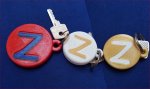
Daughter forced me to purchase some "glittery" blue PLA to make boat key key names..
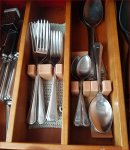
Also now trying out some marble style PLA, making plate and dish holders specifically to fit the cupboards on the Bavaria, plus some nice cutlery draw trays too.
 
Seems that we have quite a few regular users of 3D printers in this thread. What is interesting is the different ways that we design and print

Would there be any interest in making a marine 3D print evening or day at the Cruising Association in London? We could each talk about how we use the technology and maybe have printers going too. We could make it open the the public and not just CA members.

Maybe it might be the 2020 Marine 3D Seminar!

Any thoughts??

I'd bring some stuff. To be fair I'm almost a semi-industrial user but the focus is marine so spot on message :)
People love playing with the buoys and models - could be an interesting talking point.
 
After the weekend from hell, rebuilding Octaprint twice - blowing another SD card and quite frankly losing the plot (again) - decided to have a look at Repetier Server Pro.

It's quite the tool for the farm, centralised data storage and impressive queue monitoring - so far worth the £50.

Daughter forced me to purchase some "glittery" blue PLA to make boat key key names..
Also now trying out some marble style PLA, making plate and dish holders specifically to fit the cupboards on the Bavaria, plus some nice cutlery draw trays too.

When you make key ring holders make sure that they float when they have the weight of the key as well!

Keyrings.JPG These show off two filament printing!


Cutlery dividers.JPG These cutlery organisers are made from woody PLA

TS
 
Top