
Halo
Well-Known Member
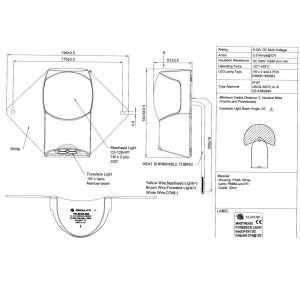
I am replacing my combined steaming and deck light with a led one. There are three wires. Yellow,Brown and white. I assume one of them is a common negative. Any one know which one?



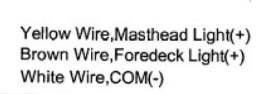
The Osculati one is : Yellow wire is the masthead light (steaming Light), the brown wire is the foredeck light, and the white wire is the negative.I am replacing my combined steaming and deck light with a led one. There are three wires. Yellow,Brown and white. I assume one of them is a common negative. Any one know which one?

Annoyingly, they come with no instructions.Surprised there was no wiring instruction/diagram if it is a new LED?

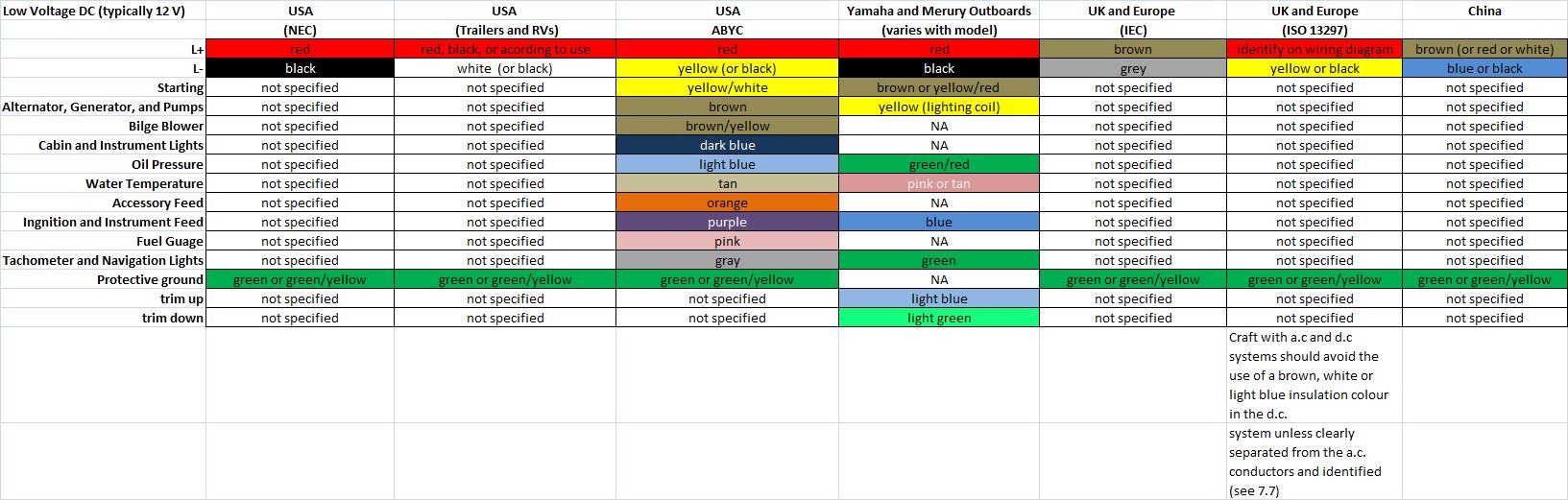

Interesting color choice. EU/IEC 12 V L- is gray. US trailer wiring uses white for 12 L- ground, which is also weird.

These colours do not comply with the Iso standard.Here you go
Iso does not comply with ISO, therefore the reply has no place on this forum (These colours do not comply with the Iso standard.
This lamp , therefore, has no place on this forum.
.
 with flowers).
I installed one of these.
The decklight is very bright but whenever it is turned on the receive on my VHF is completely blocked by interference. Might be worth checking if you have the same problem.
I don't use cheap and nasty vhf coax and don't have a join anywhere between the mast head and the radios. I have tried ferrite rings with no significant impact on reception.
Thanks. I shall check next time I'm on the boat. My VHF is installed with what looks to be a very high spec circa 10mm diameter cable so it will be interesting to see if this makes any differenceI installed one of these.
The decklight is very bright but whenever it is turned on the receive on my VHF is completely blocked by interference. Might be worth checking if you have the same problem.
I don't use cheap and nasty vhf coax and don't have a join anywhere between the mast head and the radios. I have tried ferrite rings with no significant impact on reception.
Good point but tsb240 said it was the deck light that gave the problem. Probably meets the standard but skimped on the second functionThe USCG lists nav lights, and to get a listing, they must be tested for VHF interference. A steaming light would be included. This is not part of the ISO standard? Non-USCG list lights are not permitted on US boats (although it happens a lot ... then the VHF does not work).

Marine LEDs are supposed to include circuitry to eliminate this, which is why cheap non-marine 12volt LEDs are not recommended for marine use even though they would work. I'm surprised an Osculati LED would cause interference, possibly worth getting a replacement if it's new enough?I installed one of these.
The decklight is very bright but whenever it is turned on the receive on my VHF is completely blocked by interference. Might be worth checking if you have the same problem.
I don't use cheap and nasty vhf coax and don't have a join anywhere between the mast head and the radios. I have tried ferrite rings with no significant impact on reception.
