Winch Grease

I think it is worth noting that springs should be replaced at any sign of weakness and probably every 5 years or so. A spring failure is dangerous and it can also damamge a winch, since the load goes on one pall. Likewise palls should be replaced at any sign of wear and probably every 5 years. If they get loose in their pockets they can shift and jam, which causes serious damamge to the winch, sometimes ruining it.

Certainly at 10 years they should all be replaced, even with light use. They're cheap. Probably far more important than perfect cleaning.
 
Brake fluid is a glycol ether (there are several formulations) and can be rough on some paints and adhesives, but I think phenolic is pretty safe. But I would NOT heat it, since it does not get an A compatibility rating. It is not compatible with all elastomers (rubber), just those used in brakes.

Chemical compatibility charts are easy to find on-line.
Interested in what "But I would NOT heat it, since it does not get an A compatibility rating" might mean, particularly "compatability rating" with what?

Btrakes can get pretty hot in service, though of course they have different materials in them to winches (which I havn't boiled) or carburettors, (which I have.)

Winches dont look especially difficult to clean, though, and there probably wouldn't normally be any need for extreme measures like boiling, or for special solvents.
 
I still have a brush as part of some Lewmar kit that we were given at a regatta by their rep. Although I never used a lot of grease, the way he showed us how to brush it on made it clear how little is actually needed. I have used paraffin to degrease, but then washed the messy paraffin off with meths before greasing.
 
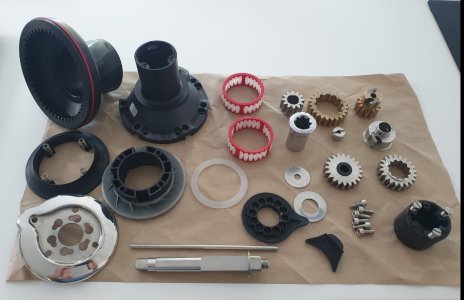
When we first serviced our genoa winches on our new to us boat this is what we found….. (Malo 43 with Andersen 54 winches)


Snapped pawl spring, over greased. Both winches the same.
 
When I serviced the winches on my new to me boat they looked like they'd been serviced with bitumen mixed with sand - a judicious scrub in a tub of diesel, some new delrin bushes, new springs, a dab of oil and a smear of grease and they're good as new.

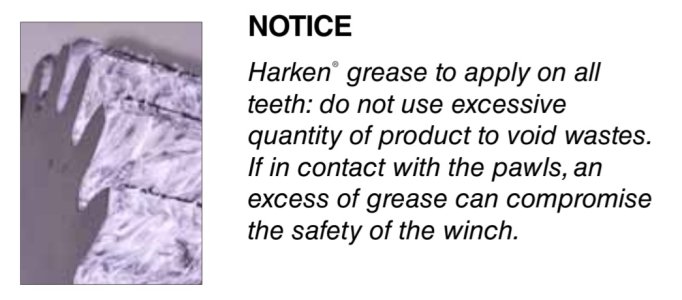
I do like grease where the pawl lands, I hate the hard click otherwise
 
When I serviced the winches on my new to me boat they looked like they'd been serviced with bitumen mixed with sand - a judicious scrub in a tub of diesel, some new delrin bushes, new springs, a dab of oil and a smear of grease and they're good as new.

I do like grease where the pawl lands, I hate the hard click otherwise
That is generally considered bad practice, and only light machine oil used. If a bit of thickened grease stops the pawls from working it could be disastrous, with either someone losing fingers or if hoisted up the mast even worse, ignoring the obligatory back-up.
 
That is generally considered bad practice, and only light machine oil used. If a bit of thickened grease stops the pawls from working it could be disastrous, with either someone losing fingers or if hoisted up the mast even worse, ignoring the obligatory back-up.
I understand, but I have a small boat with subsequent light loads, I service them regularly, and nothing critical is dependant on them. I'll take my chances.
 
That is generally considered bad practice, and only light machine oil used. If a bit of thickened grease stops the pawls from working it could be disastrous, with either someone losing fingers or if hoisted up the mast even worse, ignoring the obligatory back-up.
Whats "the obligatory back-up.", so I know when I'm ignoring it.?

Cleating-off the end of the line?
 
Last edited:
Just to reiterate what somebody mentioned earlier and what Lewmar say, the grease they supply is very high pressure grease. This, they say, is why it is so expensive.
Kind of hard to believe this is a higher pressure application than many automotive ones, say in steering or drive shaft use.

It'll tend to involve low temperatures and require good water resistance, though, which might justify the use of a dedicated product
 
Last edited:
Whats "the obligatory back-up.", so I know when I'm ignoring it.?

Cleating-off the end of the line?
I think he's thinking of the way you use a second halyard as a safety line when going up the mast. That one can be fixed but the one you're winched up on can't.

(Some people have webbing ladders that can be hoist up the mainsail track. That means both lines, ladder and safety, can be cleated off and makes it possible to go up on your own)

I think it's grease in the pivoting part of the pawl and the spring which is bad... so a thin film on the part the pawls click against (as suggested above) may not be much of a risk so long as the winches are maintained regularly, but I don't think I'd try it.
 
Top