Why do people lift boats for the winter?

Oh and by the way, osmosis is supposed to be accelerated by warm water, so we should all leave our boats in during the winter and haul them out for the summer...surely that makes sense...or am I missing something:confused:
 
If you take the cost of a winter package for a big cat at about a grand per winter, we were about 9k better off from leaving it in the water!

My thoughts exactly. I pay and insure for 12 months in, lifting and storing would cost around £1K PA. The boat has been in for 10 years so that is, so far, £10K towards Osmosis and hull refurbishment, plus I don't reckon to sell for at least another 10 years.
Being on a river with half fresh and half salt water immersion, I don't A/F either. I dry out a couple of times a year to scrub and check the anode, which was replaced this year after more than 10 years service, which must also be down to a low level of stray (electrical) current on the river.
 
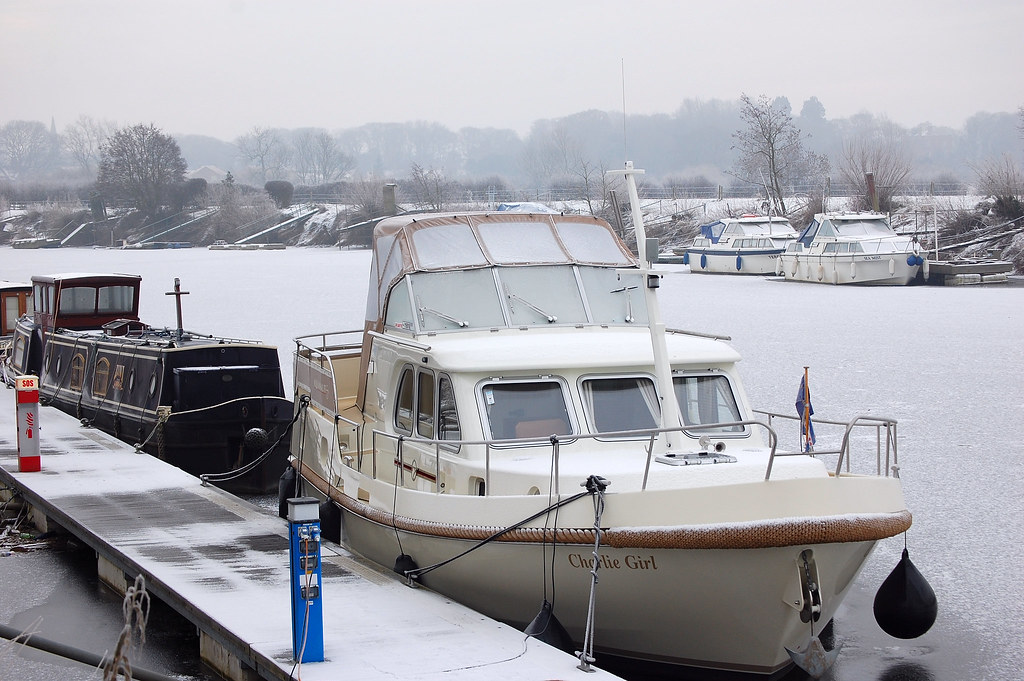
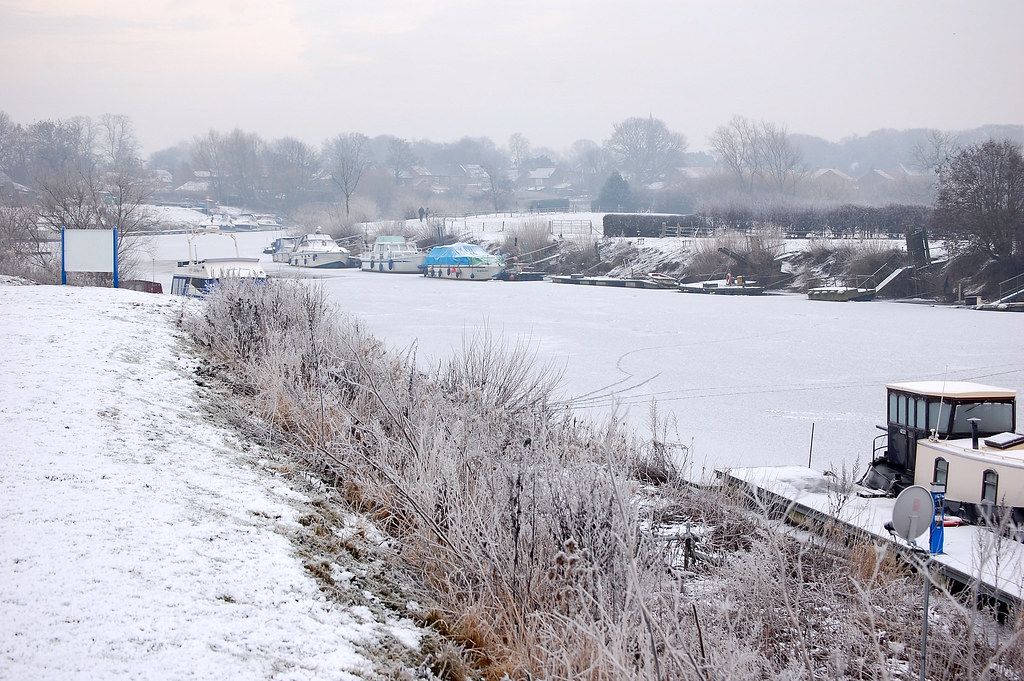
In a word: ice.

Even without broken lumps, picture your pride and joy sitting ice-bound when the wind gets up.

(I'm on the Dutch inland waterways, BTW).

WindyOut
 
Oh and by the way, osmosis is supposed to be accelerated by warm water, so we should all leave our boats in during the winter and haul them out for the summer...surely that makes sense...or am I missing something:confused:
I agree that osmosis may be accelerated by warm water. It is one factor that could have influenced my own case as the boat was afloat in a marina situated well into a shallow Italian lagoon where the summer water temperature is consistently well up into the upper 20s.

But then, winter in northern Italy can be extreme; last winter the air temperature reached -19ºC and there was ice around the boats.

My point is, that if water absorption is the root cause of osmosis in susceptible hulls (and clearly some are worse than others), by lifting out during periods of non-use it reduces exposure and perhaps allows some drying effect on the residual moisture. An additional benefit would be less fouling, which is increasingly becoming a major problem with a noticeable climate change effect where I am.

I don't practice what I preach because it would cost me dear to do so, otherwise there is no question that I would lift out in November and back in April after antifouling, which is now absolutely necessary every year instead of every two years up to five years ago.
 
I agree that osmosis may be accelerated by warm water. It is one factor that could have influenced my own case as the boat was afloat in a marina situated well into a shallow Italian lagoon where the summer water temperature is consistently well up into the upper 20s.

But then, winter in northern Italy can be extreme; last winter the air temperature reached -19ºC and there was ice around the boats.

My point is, that if water absorption is the root cause of osmosis in susceptible hulls (and clearly some are worse than others), by lifting out during periods of non-use it reduces exposure and perhaps allows some drying effect on the residual moisture. An additional benefit would be less fouling, which is increasingly becoming a major problem with a noticeable climate change effect where I am.

I don't practice what I preach because it would cost me dear to do so, otherwise there is no question that I would lift out in November and back in April after antifouling, which is now absolutely necessary every year instead of every two years up to five years ago.


Very sensible advice and no one can refute that.
 
My 2p worth. First boat and first insurance quote....which said she has to out of the water from 1st Nov to 1st March. I have a swinging mooring and really don't want to go to her in current weather if she was afloat. Also, noticed the marina had removed the moorings for checking aswell!!!

Find it a bit easier to work on her ashore aswell. Doesn't seem jam packed on the hard either and quite sheltered aswell. I have never really got my head around the big "O" problem and drying out equation.
 
This question has bugged me for a while - Why do people lift boats for the winter?.<Snip>
- OK let me try to explain with this little scenario........

Start with a cage containing five monkeys. Inside the cage, hang a banana on a string and place a set of stairs under it. Before long, a monkey will go to the stairs and start to climb towards the banana.

As soon as he touches the stairs, spray all of the other monkeys with cold water. After a while, another monkey makes an attempt with the same result, all the other monkeys are sprayed with cold water.

Pretty soon, when another monkey tries to climb the stairs, the other monkeys will try to prevent it. Now, put away the cold water. Remove one monkey from the cage and replace it with a new one. The new monkey sees the banana and wants to climb the stairs. To his surprise and horror, all of the other monkeys attack him. After another attempt and attack, he knows that if he tries to climb the stairs, he will be assaulted.

Next, remove another of the original five monkeys and replace it with a new one. The newcomer goes to the stairs and is attacked. The previous newcomer takes part in the punishment with enthusiasm!

Likewise, replace a third original monkey with a new one, then a fourth, then the fifth. Every time the newest monkey takes to the stairs, he is attacked. Most of the monkeys that are beating him have no idea why they were not permitted to climb the stairs or why they are participating in the beating of the newest monkey.

After replacing all the original monkeys, none of the remaining monkeys have ever been sprayed with cold water. Nevertheless, no monkey ever again approaches the stairs to try for the banana.

Why not?

Because as far as they know that's the way it's always been done.

Likewise for the custom of liftiing boats out for the winter because "that's the way it's always been done" ;) :D :rolleyes:
 
mm, well at some point someone will hang the monkey, as they did in Hartlepool and everyone will carry on. As far as I can make out, lifting out is just another way for marina's and other places to make money, you can check everything and repair most things just by drying out somewere, then back afloat.
myself, only lift out when required, dry out once every year and stay afloat.
 
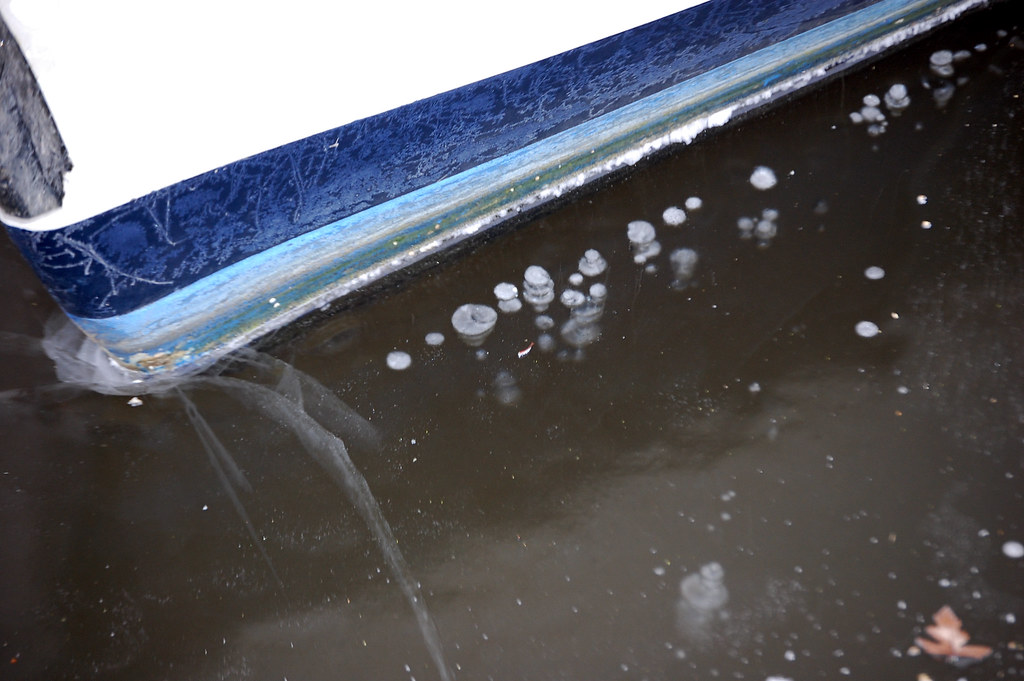
I rather suspect that these poor sods will wish they had paid to be taken out. That ice is 5 or 6 inches thick and when it breaks up into large rafts floating downstream......


5293627062_8393a1343f_b.jpg


5293656784_d55755a76d_b.jpg


5292990959_43fd13382c_b.jpg
 
I am wondering that if in this very cold spell we have had, if on the hard and one does have a boat with moisture levels are high etc., will the hull be damaged by freezing?
 
Top