What NASA say about installing their paddle wheel through-hull

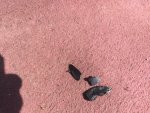
I had one on my old boat that the yard fitted with Sikaflex, and it wasn't glassed in. I came to the boat one day to find 6 inches of water above the cabin sole.
The only thing I can surmise is that the sika had eaten through the fitting.
View attachment 121777

View attachment 121778

If that were my boat I'd be back to the yard asking WTF???
My guess is that that through hull was broken on installation by overtightening. The outer flange was then glued back on using silicone. You can still see it on the broken but mating surfaces.
 
If that were my boat I'd be back to the yard asking WTF???
My guess is that that through hull was broken on installation by overtightening. The outer flange was then glued back on using silicone. You can still see it on the broken but mating surfaces.

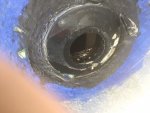
Without going into a lot of details, I know it wasn't overtightened. It was hand tightened. It wasn't broken, it was crumbling,

IMG_2291.jpeg
IMG_2289.jpeg
 
Paul R, pvb
Not out of context, nor wrongly quoted. It is recognising that certain sealants may contain solvents and that those solvents can damage plastic parts.

But only Nasa fittings have a problem. Every other transducer can be fitted with whatever sealant you want, and it won't disintegrate.
 
Without going into a lot of details, I know it wasn't overtightened. It was hand tightened. It wasn't broken, it was crumbling,

View attachment 121789
View attachment 121790

That's exactly what happens to the plastic flow reducers in Worcester Bosch combi boilers. They crumble into fragments in a way you wouldn't believe unless you saw one and they are only exposed to water. Plastics are nowhere near as straightforward as we think they should be.
I'm not looking forward to checking mine (again) tomorrow, but it was done exactly as per NASA instructions. I wouldn't have dared not to where a hole in the hull is concerned.
 
.
OK, after a bit more research I can confirm that CT1 is solvent-free.

It is probably the very best stuff to stick NASA cheeseplastic through-hulls in with.

The below is from Toolstation:

• Excellent colour retention and UV resistant
• Over paintable
• Works in wet or dry conditions, even under water
• Can be used in all salt water environments
• Unique flexibility and does not shrink
Solvent free
• Interior and exterior use

CT1 sealant and adhesive provides unique adhesion on virtually any material in most applications, without the need for additional fixings. CT1 is the ultimate solution for sealing and bonding.

• Environmentally compliant
• Excellent resistance to chemicals
• Moderate resistance to fungal and bacteria growth
• Excellent resistance to vibration
• Perfect for marine and boating maintenance, accident and emergency repairs

• Can be painted with most water based products when fully cured
• Instant repair and bonding with fibre glass and carbon fibre materials
• Odourless
• No isocyanates

- W
 
This thread is generating questions as well as answers. I take the point that SOME plastics are affected by solvents and that many sealants contain solvents. But surely resin as used for glass fibre also contains solvent.

I think that the primary reason for the breakages has been missed. I have had several experiences of breakages in flanged tubes with screwed threads in different materials, mild steel. Aluminium and plastic. I have heard that such items are often called nipples. The cause is localized stress caused by the thinning of the tube walls at the root of the thread. This can be exacerbated by the presence of a V shaped root rather than a radius and by the hole being off centre. The tube is put into tension between flange and nut when the nut is tightened. The localized stress can deform the body of the fitting which causes further thinning and increased stress. Hence the advice of Nasa to bond the tube and nut to the hull with fiberglass and resin. I assume that the plastic used for the tube is not reactive with the solvent in the resin.
 
This thread is generating questions as well as answers. I take the point that SOME plastics are affected by solvents and that many sealants contain solvents. But surely resin as used for glass fibre also contains solvent.

I think that the primary reason for the breakages has been missed. I have had several experiences of breakages in flanged tubes with screwed threads in different materials, mild steel. Aluminium and plastic. I have heard that such items are often called nipples. The cause is localized stress caused by the thinning of the tube walls at the root of the thread. This can be exacerbated by the presence of a V shaped root rather than a radius and by the hole being off centre. The tube is put into tension between flange and nut when the nut is tightened. The localized stress can deform the body of the fitting which causes further thinning and increased stress. Hence the advice of Nasa to bond the tube and nut to the hull with fiberglass and resin. I assume that the plastic used for the tube is not reactive with the solvent in the resin.

However, if you look at my second set of photos ( and the comment from Alfie) it is clear that the plastic has disintegrated on the outer part which has had no stress. The parts of the fitting that were in contact with the sealant had become very brittle and could be picked apart by hand. This was after about 3 months.
 
... Hence the advice of Nasa to bond the tube and nut to the hull with fiberglass and resin. I assume that the plastic used for the tube is not reactive with the solvent in the resin.


.. or the auto-repair bodge paste they seem to be suggesting. I have some P40 left, so plan to use that. Does the panel think that will be suitable?
However, if you look at my second set of photos ( and the comment from Alfie) it is clear that the plastic has disintegrated on the outer part which has had no stress. The parts of the fitting that were in contact with the sealant had become very brittle and could be picked apart by hand. This was after about 3 months.

What sealant was used?

- W
 
I had one on my old boat that the yard fitted with Sikaflex, and it wasn't glassed in. I came to the boat one day to find 6 inches of water above the cabin sole.
The only thing I can surmise is that the sika had eaten through the fitting.
View attachment 121777

View attachment 121778

Which Sikaflex? I think most are solvent-free.

Might have been eaten by the antifoul?

- W
 
Which Sikaflex? I think most are solvent-free.

Might have been eaten by the antifoul?

- W
I suspect solvent free refers to the absence of aggressive solvents likely to attack some plastics (e.g. Volatile organic compounds). I think it's just shorthand for that rather than the absence of any solvents at all in the strictest sense. I can almost guarantee that something sold as solvent-free will actually contain a solvent even if it is just water (as in many paints). :D

I haven't looked at CT1 datasheets recently but the reference to Tribrid makes me think that the formulation has changed since I last looked at them.

I remember reading in CT1's current technical blurb that it "does not attack synthetic material" and is sold as a universal adhesive. I didn't see any warnings about specific materials and "synthetic material" covers pretty much everything. Unless NASA fabricate things from compressed Alpaca wool or dried snakeskin. :D:D

I think it is safe to assume that it has a good chance of bonding with the fitting and minimal chance of degrading it.
 
.. or the auto-repair bodge paste they seem to be suggesting. I have some P40 left, so plan to use that. Does the panel think that will be suitable?


What sealant was used?

- W

I believe it was Sikaflex 291i

EDIT:
I've just looked at the Sikaflex data sheet, and it says:
"Sikaflex®-291i must not be used to seal plastics that are prone to stress cracking (e.g. PMMA, PC, etc.)."
So I wonder if that is what the NASA stuff is made from?

Given how cheap the fittings are, I'm tempted to buy one and attach it with Sika to a bit of wood and see what happens
 
Without going into the ins and outs of which sealant or whether the NASA through hull is up to the job, my takeaway from this thread is that when I fit mine, it's going to be fitted with plenty of suitable sealant and Isoponed over. ISTM that the nut shouldn't actually be doing anything apart from holding things together while the goops cure.

It's pretty much what I did on Jissel, and that NASA fitting lasted for years. The only problem I had was an O ring getting tired and allowing a slow leak.
 
Without going into the ins and outs of which sealant or whether the NASA through hull is up to the job, my takeaway from this thread is that when I fit mine, it's going to be fitted with plenty of suitable sealant and Isoponed over. ISTM that the nut shouldn't actually be doing anything apart from holding things together while the goops cure.

It's pretty much what I did on Jissel, and that NASA fitting lasted for years. The only problem I had was an O ring getting tired and allowing a slow leak.

I agree

On my first boat, I had a NASA fitting installed with silicone and glassed in. It was fine.
 
Without going into a lot of details, I know it wasn't overtightened. It was hand tightened. It wasn't broken, it was crumbling,

View attachment 121789
View attachment 121790
Dolabriform, that's a very messy installation I would say. The sealant showing outside the external flange is completely unnecessary and performs no useful function. I am always very frugal with the amount of sealant used and remove any surplus for cosmetic reasons. I know that many folk are of the "slather plenty of Sika on" persuasion but I don't see the point of leaving excess material looking messy.
I think this whole discussion is pointless - if the manufacturer recommends silicone sealant - why try and justify an alternative?
Likewise if they recommend glassing in - why not use mat and resin? It can be done in a few minutes.
Admittedly, the ideal would be for NASA to use a more suitable plastic but accept it for what it is - a popular and cheap item.
 
Dolabriform, that's a very messy installation I would say. The sealant showing outside the external flange is completely unnecessary and performs no useful function. I am always very frugal with the amount of sealant used and remove any surplus for cosmetic reasons. I know that many folk are of the "slather plenty of Sika on" persuasion but I don't see the point of leaving excess material looking messy.
I think this whole discussion is pointless - if the manufacturer recommends silicone sealant - why try and justify an alternative?
Likewise if they recommend glassing in - why not use mat and resin? It can be done in a few minutes.
Admittedly, the ideal would be for NASA to use a more suitable plastic but accept it for what it is - a popular and cheap item.

I 100% agree with you.
This was not an installation I had done, and I was just trying to highlight what can happen if you don't follow the manufacturer's instructions !
 
Dolabriform, that's a very messy installation I would say. The sealant showing outside the external flange is completely unnecessary and performs no useful function. I am always very frugal with the amount of sealant used and remove any surplus for cosmetic reasons. I know that many folk are of the "slather plenty of Sika on" persuasion but I don't see the point of leaving excess material looking messy.
I think this whole discussion is pointless - if the manufacturer recommends silicone sealant - why try and justify an alternative?
Likewise if they recommend glassing in - why not use mat and resin? It can be done in a few minutes.
Admittedly, the ideal would be for NASA to use a more suitable plastic but accept it for what it is - a popular and cheap item.

Good points ...

Regrading untidy exterior .... in a bad case - it could affect water flow - as you want the least disturbed flow past the sensor. At best its 'sloppy' work ... forgive me for being plain.

There's one point that is missed not only by all here - but NASA themselves as well .....

The resin used. Many plastics are eaten by Polyester Resin - Glass Fibre Resin as many term it ... and also common base for car fillers ... its quick setting BUT can be a disaster on many plastics. Usually its the Hardening agent used that does the damage.

For glassing in Epoxy Based is generally regarded as the form to use .....

Someone mentioned 30mm hull and implied that would be good support for the fitting ... my hull is 50mm where the through hull is fitted. Because it was fitted as per Manufacturers inbstructions - Echopilot - which says bedding sealant only ... eventually when trying to extract sensor - the whole twisted despite that 50mm ......

I suggest any suitable safe resin / fibre mix is a good policy to use whether manual says or not.
 
I 100% agree with you.
This was not an installation I had done, and I was just trying to highlight what can happen if you don't follow the manufacturer's instructions !

Not trying to argue or create conflict .... but the cause of the failure is open for debate ... probability says it could be the sealant.

Plastics degrade / fail for many reasons ..... the problem here is to determine the real cause.
 
So is glassing it in with Isopon P40 asking for trouble? NASA appear to be recommending a product like this.

"You can use a proprietary body filler to glass the skin fitting in afterwards."
Is doing it with chopped strand mat and resin better? What is the difference between the hardener in the resin and the hardener in the Isopon?


- W
 
Last edited:
Top