Vaseline or similar on battery connections

It doesn't need to be conductive, put it on after assembly.
I didnt say it needed to be conductive, I said I didnt think it mattered that it was insulative.

But if I did think it mattered that it was insulative, as some people apparently do, I might try copper antiseize.

Battery terminals I put the stuff on before assembly, because I want it to inhibit corrosion, so I dont want untreated voids/surfaces.

Other contacts, usually ditto, but it depends what I'm using, whether its likely to get in my way, and whether I remember.

If I were using something penetrative like veg oil, varnish, WD40 or other spray wax or grease, I would probably spray or brush down after assembly. Theres generally nothing to stop one doing both.

I would also often/usually be rubbing the contacts with aluminium (foil or beercan). Big fan of aluminium as an anticorrosion abrasive, and bits of beercan can often be snipped to fit in to fairly inaccessible contacts.

Have reservations about contact cleaning spray though, having had unobtanium plastic switch assemblies on my ancient car fall apart after using it.
 
Last edited:
There seems to be some misunderstanding of how grease works in a connection. The grease is very, very easily pushed out of the way by clamping pressure and does nothing to increase resistance and battery and household current voltages. Try the lightest tickle of a multimeter probe on a greased surface. No effect, you can't tell the grease is there. The purpose of the grease is to prevent all corrosion, and this is best accomplished if it goes on the connection first, before tightening.

The only exceptions are very high voltage, where most grease is conductive enough to cause leakage (ignition systems--use dielectric grease during assembly) and some very low contact pressure electronic systems (clean contacts with solvent, think USB and I-cables) that have gold contact and don't need protection. Also some very high amp systems, where conductive grease can be used (No-Oxid for example).

As for applying the grease later, there are two problems. first, it is impossible to be sure you did not miss a path. Second, it can easily wash off.

And don't go crazy with the amount. Grease is combustible and can contribute to fire risk, but only if you go rather nuts. Just a thin layer, and wipe off the extra. It isn't helping.

---

If corrosion could be avoided simply by starting with a clean connection, there would never be a high resistance connection. But there are. Mostly they are in damp areas and connections that are not very tight, either by design (push-on), poor assembly, or temperature cycling (probably because of poor design or assembly). In these cases, some of which cannot be avoided, grease helps. Whether your battery falls in that catagory depends. And plenty of us still use flooded LA banks, and will for some time. There are a few problems that neither sealed batteries (equalizing) or lithium (low temperature charging) have fully solved IMO (that said, I use sealed batteries).
 
Not clear what you mean by ''proper coating". The thread linked above has several things mentioned, including Blutak.

The idea of putting vaseline, silicone grease etc on contacts is it inhibits development of the Green Crusties, which definately are an electrical insulator. Latterly I used silicone grease in the UK, but thats hard to find in Taiwan so I reverted to vaseline. Though I have sometimes used vegetable oil, its biodegradability is potentially a problem.

OTOH you can still get non-sealed batteries here, (hopefully thats also still the case in the UK) and IIRC they are slightly cheaper.

I suppose if you wanted something that might be a bit conductive copper antiseize might do, but thats also hard to find in Taiwan.

I would expect an insulating grease on terminals would be displaced under pressure to give metal to metal contact, and that has been my experience.

If it didn't, I'd think it was probably too loose, and, if it was for example a crimped connection, probably a badly crimped connection.
Vaseline is a pretty poor choice for anything electrical - it is a poor insulator, and it has a low melting point, meaning that if there is any heat generated in the terminal due to resistance, the vaseline can melt into the connection, further increasing resistance. It is also only adequate at best as a corrosion inhibitor - in short it's a fairly poor grease for anything on a boat. Dielectric grease (such as silicone) or a corrosion guard compound should be used where electrical terminals are concerned

It has been used plenty, probably because of cost and availability and has some attachment/following due to legacy advice. I fully get that "something is better than nothing" - but given there are a decent range of coatings designed for this purpose, I have no idea why anyone would continue to use vaseline or promote it's use.

Quicksilver Corrosion Guard or Boeshield T9 are two good choices and available at most UK chandleries, other products are available online. I am not sure what is available in Taiwan, but a can of corrosion guard should last years so may be a good choice to arrange to have around.
 
There seems to be some misunderstanding of how grease works in a connection. The grease is very, very easily pushed out of the way by clamping pressure and does nothing to increase resistance and battery and household current voltages. Try the lightest tickle of a multimeter probe on a greased surface. No effect, you can't tell the grease is there. The purpose of the grease is to prevent all corrosion, and this is best accomplished if it goes on the connection first, before tightening.

The only exceptions are very high voltage, where most grease is conductive enough to cause leakage (ignition systems--use dielectric grease during assembly) and some very low contact pressure electronic systems (clean contacts with solvent, think USB and I-cables) that have gold contact and don't need protection. Also some very high amp systems, where conductive grease can be used (No-Oxid for example).

As for applying the grease later, there are two problems. first, it is impossible to be sure you did not miss a path. Second, it can easily wash off.

And don't go crazy with the amount. Grease is combustible and can contribute to fire risk, but only if you go rather nuts. Just a thin layer, and wipe off the extra. It isn't helping.

---

If corrosion could be avoided simply by starting with a clean connection, there would never be a high resistance connection. But there are. Mostly they are in damp areas and connections that are not very tight, either by design (push-on), poor assembly, or temperature cycling (probably because of poor design or assembly). In these cases, some of which cannot be avoided, grease helps. Whether your battery falls in that catagory depends. And plenty of us still use flooded LA banks, and will for some time. There are a few problems that neither sealed batteries (equalizing) or lithium (low temperature charging) have fully solved IMO (that said, I use sealed batteries).
Sorry to get on a soapbox here, but this is incomplete advice and is not quite accurate. Most grease is in fact bad for electrical connections as common greases are an electrical inhibitor. If any is used, it should be a dielectric grease (such as silicone). As not much is needed, a proper grease should be purchased by anyone who has a need (I have ahad a tube of silicone grease and corrosion guard for several years). We wouldn't only have one tool on board and hope that will do every task - why would we think all grease is the same and will work just as well in every different application!

It is also not accurate to compare a multimeter probe with a clamped connection - grease can remain in a clamped connection unless it has a path to evacuate and sufficient pressure - a sealed terminal such as a battery lug should not have grease applied, and it is not reccomended on clamp type battery terminals as the clamping pressure is actually quite low which can allow grease to remain.

A much better option is to make a clean connection, then use a corrosion inhibiting spray afterwards to help seal it - if it's really wet, a better method is a waterproof seal, work to reduce the water ingress, or move the connection away from the area. Boats are not in the realm where conductive compounds are needed.
 
Vaseline is a pretty poor choice for anything electrical - it is a poor insulator, and it has a low melting point, meaning that if there is any heat generated in the terminal due to resistance, the vaseline can melt into the connection, further increasing resistance. It is also only adequate at best as a corrosion inhibitor - in short it's a fairly poor grease for anything on a boat. Dielectric grease (such as silicone) or a corrosion guard compound should be used where electrical terminals are concerned

It has been used plenty, probably because of cost and availability and has some attachment/following due to legacy advice. I fully get that "something is better than nothing" - but given there are a decent range of coatings designed for this purpose, I have no idea why anyone would continue to use vaseline or promote it's use.

Quicksilver Corrosion Guard or Boeshield T9 are two good choices and available at most UK chandleries, other products are available online. I am not sure what is available in Taiwan, but a can of corrosion guard should last years so may be a good choice to arrange to have around.
I already said I reverted to vaseline for anticorrosion contact duty because I couldn't find silicone grease in Taiwan, but if vaseline is "only adequate at best as a corrosion inhibitor" thats pretty much OK, since that is what I was using it for.

I bought a small tube of silicone grease in a motorcycle shop in Rinko, Japan, descibed to me as Brakku Grizu, or sounds to that effect, by the biker yoof san behind the counter.

Smartphone translation of the tube labelling came up with something involving lubricating the neck rings of fishing Cormorants (?). Honest. I kid you not.

They dont make AI like they used to? Or perhaps that's actually what it was for?

Since it was locally unobtanium I reserved it for use as brake grease, though the stated temperature range seemed a bit low, it seemed fairly low viscosity, and I dont believe it had any solids in it. In brake grease use I supplemented it with PTFE tape wrapped around the brake caliper pins, which seemed to work rather well.

For anticorrosion use locally there are also various WD40 spray wax analogues (PuffDino, for example) that seem to work OK.

There are no recognizable branded bearing greases here at all, though I did find some pink 3M stuff that no ones ever heard of but which I now think is probably not fake. A query to 3M eventually produced a reply in Chinese (The Language of Smoke and Mirrors) that I never got around to having translated, since by then the stuff had been in my bearings for months.
 
Last edited:
Well I have been thinking hard about the grease before terminal fixing or grease after terminal fixing dilemma. The answer is
If your boat is west of the Tamar put the grease on first. If you are east of the Tamar put the terminal on first!
 
I haven't put anything on for many years, but when I did I followed some advice from some person or persons unknown to use anhydrous lanolin. I've no idea if this was better or worse.
 
I haven't put anything on for many years, but when I did I followed some advice from some person or persons unknown to use anhydrous lanolin. I've no idea if this was better or worse.
Probably fine, if you can find it, and likely to be relatively rubber-compatible, so perhaps usable on brakes too, though it probably wont be very heat resistant.

In Taiwan I've been driven to use a trace of earwax, which is probably quite similar in composition, and widely available (much less so to the locals, but they never do any maintenance anyway) though in rather small quantities.
 
Sorry to get on a soapbox here, but this is incomplete advice and is not quite accurate. Most grease is in fact bad for electrical connections as common greases are an electrical inhibitor. If any is used, it should be a dielectric grease (such as silicone). As not much is needed, a proper grease should be purchased by anyone who has a need (I have ahad a tube of silicone grease and corrosion guard for several years). We wouldn't only have one tool on board and hope that will do every task - why would we think all grease is the same and will work just as well in every different application!

It is also not accurate to compare a multimeter probe with a clamped connection - grease can remain in a clamped connection unless it has a path to evacuate and sufficient pressure - a sealed terminal such as a battery lug should not have grease applied, and it is not reccomended on clamp type battery terminals as the clamping pressure is actually quite low which can allow grease to remain....
a. Dielectric grease is, in fact formulated to be as non-conductive as possible. I think you have this backwards. There are conductive greases.

b. Trojan and other battery manufacturers DO recommend grease in clamp-type battery terminals. I posted the info. I did not make it up.

Yup, silicone or other synthetic grease is the smart choice. Obviously. I did not suggest Vaseline. In fact, Trojan did! It would not be my choice, but they consider it well-proven.

---

I think we are forgetting that it depends on the situation. In a dry, non-corrosive location, no grease. Gold plated electronics contacts, no grease. Shower sump, bilge, flooded LA batteries, grease. Or do what you want. As long as the joint was clean and tight when made, and the materials are good, it will likely be very reliable either way. Push-on, low pressure connectors, grease. These are notorious from corrosion.
 
a. Dielectric grease is, in fact formulated to be as non-conductive as possible. I think you have this backwards. There are conductive greases.

b. Trojan and other battery manufacturers DO recommend grease in clamp-type battery terminals. I posted the info. I did not make it up.

Yup, silicone or other synthetic grease is the smart choice. Obviously. I did not suggest Vaseline. In fact, Trojan did! It would not be my choice, but they consider it well-proven.

---

I think we are forgetting that it depends on the situation. In a dry, non-corrosive location, no grease. Gold plated electronics contacts, no grease. Shower sump, bilge, flooded LA batteries, grease. Or do what you want. As long as the joint was clean and tight when made, and the materials are good, it will likely be very reliable either way. Push-on, low pressure connectors, grease. These are notorious from corrosion.
If you feel grease is needed because the area is at risk of getting wet, relocate the connector or use a waterproof one. My strong opinion is that grease is not a solution for electrical connections in any circumstance.

The OP question was about what to use, at least we agree Vaseline is a poor choice :)
 
If you feel grease is needed because the area is at risk of getting wet, relocate the connector or use a waterproof one. My strong opinion is that grease is not a solution for electrical connections in any circumstance.

The OP question was about what to use, at least we agree Vaseline is a poor choice :)
No, we cannot. Trojan recommended Vaseline. Not my choice, but I'm not going to be the one to call out Trojan as inexperienced. :ROFLMAO:

Not every question needs or gets a single answer.
 
If you feel grease is needed because the area is at risk of getting wet, relocate the connector or use a waterproof one. My strong opinion is that grease is not a solution for electrical connections in any circumstance.

The OP question was about what to use, at least we agree Vaseline is a poor choice :)
Probably better than earwax, but earwax is better on brakes. Orses for courses

Use your head?
 
Last edited:
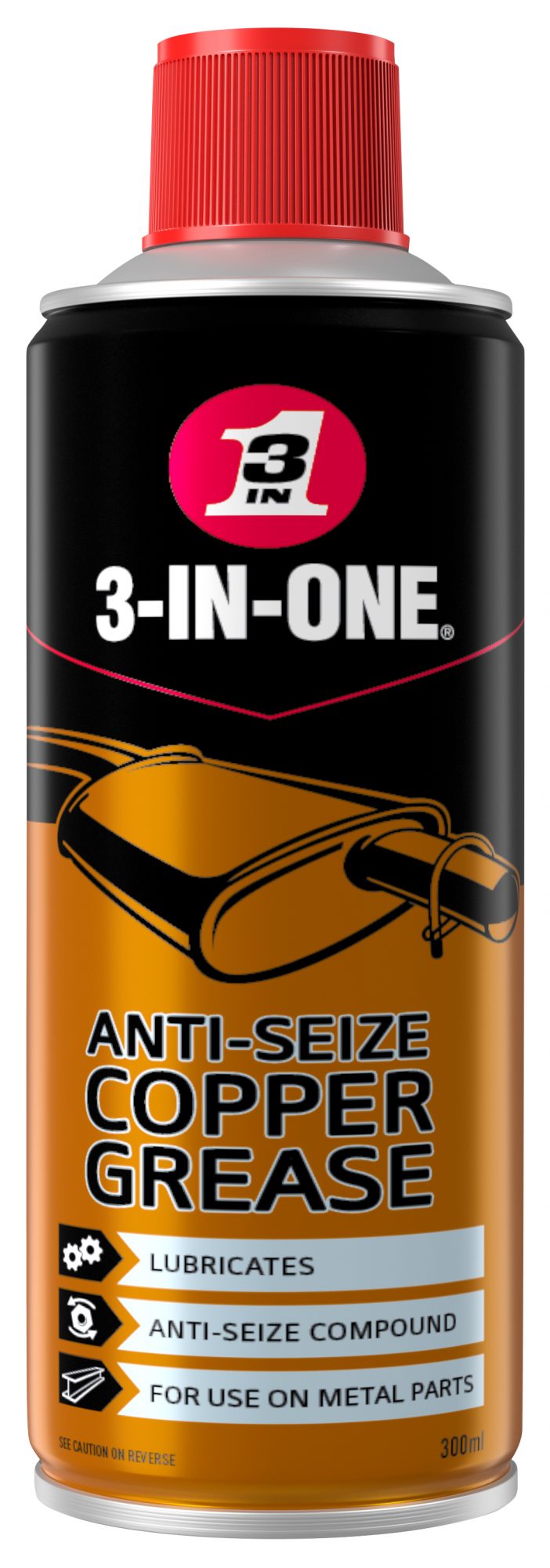
I use this - is this bad?

33746.jpg
 
No, we cannot. Trojan recommended Vaseline. Not my choice, but I'm not going to be the one to call out Trojan as inexperienced. :ROFLMAO:

Not every question needs or gets a single answer.
From the Trojan website:

“Reconnect the clamps to the terminals and thinly coat them with an anti-corrosive spray or silicon gel.”

It’s always interesting that anecdotes are hung onto long after their shelf life expires. I’ve worked in the marine business over 30 years and it’s as consistent now as it always has been.
 
I use this - is this bad?

33746.jpg
Its a bit BIG. Perhaps you could take a walk around the back and see what the caution mentioned is?'Perhaps something to do with explosive propellant"?

Probably fine. I'd have slight reservation about the copper possibly causing some electrochemical corrosion in rare circumstances, but thats mostly theoretical. There are aluminium and nickel based alternatives. I have a tube (wouldnt much want an aerosol of something as potentially messy as this) of the Al stuff but wouldnt use it on battery terminals, since itd be hard to replace in Taiwan.
 
The original question was about other connections than battery terminals, and what to do with those. Personally I wouldn't bother, it just makes things messy if you ever have to work on stuff and in that case you'll also need to clean all the vaseline (or whatever....) off.

As discussed even on battery terminals (which we need to be extremely low resistance) the benefits are debatable. If we are talking about some connection for just a few amps in a dry location I see no point at all, it won't corrode anyway and if it does you've got bigger problems than anything vaseline will solve.


Chris
 
The original question was about other connections than battery terminals, and what to do with those. Personally I wouldn't bother, it just makes things messy if you ever have to work on stuff and in that case you'll also need to clean all the vaseline (or whatever....) off.

As discussed even on battery terminals (which we need to be extremely low resistance) the benefits are debatable. If we are talking about some connection for just a few amps in a dry location I see no point at all, it won't corrode anyway and if it does you've got bigger problems than anything vaseline will solve.


Chris
I have heard of these "dry locations" of which you speak. I understand some of them are in Arizona. Also Arabia, Asia (The Gobi), the Atacama, and the Arctic, so it seems worthwhile to look for words beginning with A.

Alternatively, If you are Averse to grease, wax spreays of the WD40 ilk arent much (Any) trouble, or even usually detectable,, and are widely Available.

Electricians contact varnish isn't very messy either, since it dries hard. I've never tried to buy it but it seems to be Available in at least some parts of the WWW

PROTECTIVE VARNISH FOR ELECTRICAL CONTACTS SL 200ML - Geosantro

Some of them seem to be Alkyd resins, so perhaps a general purpose Alkyd like Penetrol could also be used.
 
Last edited:
I have heard of these "dry locations" of which you speak. I understand some of them are in Arizona. Also the Atacama, and the Arctic, so it seems worthwhile to look for words beginning with A.
Plenty of dry areas to fit electrical equipment on the vast majority of boats. If something has to be fitted in a high moisture area, just as a bilge pump, for instance, use waterproof connectors, rather than slopping grease, Vaseline or any other such substance on everything.
Alternatively, If you are Averse to grease, wax spreays of the WD40 ilk arent much (Any) trouble, or even usually detectable,, and are widely Available.
WD40 would be a total waste of time.
Electricians contact varnish isn't very messy either, since it dries hard. I've never tried to buy it but it seems to be Available in at least some parts of the WWW

PROTECTIVE VARNISH FOR ELECTRICAL CONTACTS SL 200ML - Geosantro

Some of them seem to be Alkyd resins, so perhaps a general purpose Alkyd like Penetrol could also be used.
Varnish isn't designed for battery terminals, which is the subject of this thread, neither is it designed for other terminals on a boat. If you read the description from the link you posted, it states "Prevents and repairs short circuits in coils and transformers" .
 
Top