Transducers ??? and found a gadget ????

waynes world

Well-Known Member
Joined
7 May 2011
Messages
1,569
Location
Manchester
Visit site
This is getting tech for me know, i can do all sorts but understand tech stuff :)

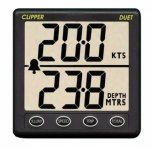
I have got these transducers fitted and these are the head units.

20220724-134558.jpg

20220724-161656.jpg


20220702_172449.jpg


Is it worth keeping these as i see these are older makes as there are MK2 out now ?

Found this gadget onboard also, what the heck is it ?

20220724-161803.jpg


Cfaffer :)
 
The NASA kit will either work or it won’t, but it won’t cost anything to try it. It might be possible to work out if the transducers are compatible but that is beyond my pay grade. The radio fix unit looks like a RDF unit for getting fixes from LW beacons. These were common until the ‘90s and I believe that there was someone who once claimed to have obtained a fix from one. I had the Seafix version which provided many hours of happy entertainment but was of almost no real use on board.
 
That looks like the correct echo sounder transducer but a new one from Nasa is very cheap compared to other makes. I would make a fairing block around it as the head could easily get knocked off as the plastic shaft is quite small. This would also reduced turbulence which tends to upset the readings.
If the displays work I would give them a go. You can often get a reading in air reflecting off a hard flat surface a few feet away. The readings will be wrong as sound travels slower in air than water. ( I think by a factor of about 4)
The paddle wheels usually foul up after a few weeks and stop working but there is no harm in trying.
 
The NASA kit will either work or it won’t, but it won’t cost anything to try it. It might be possible to work out if the transducers are compatible but that is beyond my pay grade. The radio fix unit looks like a RDF unit for getting fixes from LW beacons. These were common until the ‘90s and I believe that there was someone who once claimed to have obtained a fix from one. I had the Seafix version which provided many hours of happy entertainment but was of almost no real use on board.
I agree about the Seafix as my boat came with one. I replaced it with a Lokata that was much better and picked up the Azores beacon 300 miles away. It made navigation almost as easy as having a GPS.(way back in 1980). The Lokata also picked up the midnight LW shipping forecast in the Azores which was quite impressive as I have a lot of trouble picking it up around the UK coast now.
 
The NASA kit will either work or it won’t, but it won’t cost anything to try it. It might be possible to work out if the transducers are compatible but that is beyond my pay grade. The radio fix unit looks like a RDF unit for getting fixes from LW beacons. These were common until the ‘90s and I believe that there was someone who once claimed to have obtained a fix from one. I had the Seafix version which provided many hours of happy entertainment but was of almost no real use on board.

That looks like the correct echo sounder transducer but a new one from Nasa is very cheap compared to other makes. I would make a fairing block around it as the head could easily get knocked off as the plastic shaft is quite small. This would also reduced turbulence which tends to upset the readings.
If the displays work I would give them a go. You can often get a reading in air reflecting off a hard flat surface a few feet away. The readings will be wrong as sound travels slower in air than water. ( I think by a factor of about 4)
The paddle wheels usually foul up after a few weeks and stop working but there is no harm in trying.


I was wondering if i can try them in situation on the drive, the boat is on concrete so worth a try then. the paddle wheel is free and spins easy. I will be connecting up a soon.

so just a matter to spin the paddle wheel softly and see if the read out shows anything, although i cant see for an accurate speed. And depth see if it reads and divide my 4 ?

If they dont work are NASA good to stick with, say the MK2 ?

Are Nasa good to go with if can
 
Hope the instruments / transducers work and worry about upgrades later.

If you want fancy tech and the latest and greatest then I wouldn't go with NASA displays (although they're based in the UK and their support is excellent).

I went for Raymarine i70s and an upgrade to an NMEA 2000 network and it got expensive awfully quickly.
 
Hope the instruments / transducers work and worry about upgrades later.

If you want fancy tech and the latest and greatest then I wouldn't go with NASA displays (although they're based in the UK and their support is excellent).

I went for Raymarine i70s and an upgrade to an NMEA 2000 network and it got expensive awfully quickly.


Not bothered about all singing and dancing gear. Just to get it going for now and something useable will be good. I am a basic and low budget captain.
 
I think it's a charming nautical artefact. I'd hope never to be in a position to need one,
We had one, back when dinosaurs roamed the earth (1960s!) It came into it's own on one foggy day on the east Coast of Scotland by providing cross fixes that enables me to verify my DR. Unfortunately, that didn't allow me to check the off course distance and as we were coming down past Bell Rock, we were keeping a VERY good listening watch for fog-signals!

Even in those days, useable radio beacons were pretty thin on the ground; there was only one useful one on the Fife coast. They were mainly associated with air navigation.
 
You can spin the paddlewheel with your finger or blow on it with someone looking at the display, any shown speed would indicate it works.
You will only get the echo sounder transducer to work in water. Maybe drop it out of the hull and try it in the deepest bucket you have.
Some displays flash or similar if they have no imput from the transducers.
Have a look at nasa Web site. Certainly more value for money compared to the others.
 
NASA RDF: The cheapest and probably most difficult to use of the RDF sets. You had first to pick up the right RDF beacon, then swing the receiver horizontally through the approximate direction until you found the 'null' - the point where the signal was inaudible. That - theoretically - was the bearing of the RDF beacon.

Better ones had a compass and 'null meter' built in. When the meter needle dropped to zero you could read off the bearing. that was a lot of fun ina rough sea! But if the beacon was distant the signal could fade in and out, and give a false null.

Headlands and hgh ground between you and the beacon could bend the signal so that the null could be 10 or 15 degrees off its true bearing. I almost invariably found my DR was more accurate and soon learned not to rely on RDF, though it could be reassuring in thick weather - or just the opposite if it was giving a significantly different result! A decent RDF (i.e expensive!) set was capable of giving quite accurate results though.

Later on the Decca /Loran system, also using RDF and widely used by commercial shipping, gave significantly better results, though mine would without fail put me in Newport, High street IoW, when I was out by the Nab Tower!
 
This is getting tech for me know, i can do all sorts but understand tech stuff :)

I have got these transducers fitted and these are the head units.

20220724-134558.jpg

20220724-161656.jpg


20220702_172449.jpg


Is it worth keeping these as i see these are older makes as there are MK2 out now ?

Found this gadget onboard also, what the heck is it ?

20220724-161803.jpg


Cfaffer :)
If you had been sailing in the 1960s the Radiofix would have been a really fancy modern bit of kit. You tuned it in to a radio beacon that bleeped in a specific pattern (to identify which one it was) and peered through the little compass whilst swivelling it round. When the bleeping got faintest that was the compass bearing of the beacon -and that was marked on your chart. Then you found another beacon and did the same, or three beacons if you were lucky. The resultant position lines told you more or less where you were. All beacons long since shut down. The NASA and Seafix ones were the cheap ones, a Lokata was rather better.
 
My first RDF was a Hitachi radio with a rotatable aerial on top with a pelorus. This was far more useful for getting weather forecasts than for DF, when the set needed to be aligned with the boat and the relative bearing read off the pelorus. From what I remember, it failed to pick up W Hinder from only 5 miles away during thundery conditions and I replaced it with a Seafix. This had a nice Sestrel compass on top and digital tuning plus headphones. The chain needed changed every six minutes and the instant tuning made it relatively easy to use.

There was an automatic RDF, maybe the Lokata, which automatically gave the bearing I believe. I was curious to see something very similar at the RAF museum in Hendon that had been in use at the end of the war.
 
If you had been sailing in the 1960s the Radiofix would have been a really fancy modern bit of kit. You tuned it in to a radio beacon that bleeped in a specific pattern (to identify which one it was) and peered through the little compass whilst swivelling it round. When the bleeping got faintest that was the compass bearing of the beacon -and that was marked on your chart. Then you found another beacon and did the same, or three beacons if you were lucky. The resultant position lines told you more or less where you were. All beacons long since shut down. The NASA and Seafix ones were the cheap ones, a Lokata was rather better.
The "specific pattern" was probably a set of identifying letters in Morse Code. Although said code is said to have been phased out of commercial use, I have recently discovered, when experimenting with an old 'Airband' radio, that the Localisor Beam at Dublin Airport continously broadcasts "DUB" in Morse.
 
This is getting tech for me know, i can do all sorts but understand tech stuff :)

I have got these transducers fitted and these are the head units.

20220724-134558.jpg

20220724-161656.jpg


20220702_172449.jpg


Is it worth keeping these as i see these are older makes as there are MK2 out now ?

Found this gadget onboard also, what the heck is it ?

20220724-161803.jpg


Cfaffer :)
The transducers shown look very similar to the ones in my previous boat, which was first splashed in 1984. It had a Seafix Depth instrument.
The Target instruments shown are of much more recent vintage and I believe, still on NASA's current inventory.
 
Top