Thermostat or Timer ?

Andy Bav

Well-Known Member
Joined
8 Jun 2013
Messages
770
Location
kent. Boat in Sant Carles
Visit site
There is a school of thought that for a boat which remains in the water throughout the winter does not really need an engine bay heater to keep a harsh freeze at bay, the argument being that the relative warmth of the water convects through the leg.

The coldest I have know it to get in Newton Abbot was minus 12 a couple of years ago and we sustained two exploded shower heads and a froxen boiler in our holiday home. However, Torquay is likely to be slightly warmer.

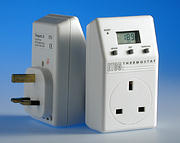
I am still inclined to put a tube heater in the engine bay this weekend, but the question is whether to connect it to a thermostatic plug in the engine bay or go for a timer switch just to get a regular dose of latent heat into it ?

We plan to use her at least a couple of times between Christmas an the end of Feb ...
 
In my opinion the argument about warm water is an old wives tale.
The air blowing through the vents and circulating the engine/raw water pipes will cause the freeze, although agreed the air may warm slightly .001 as it blows over the marina water.

Timer isnt really any use as frost damage occurs at any time of day.

thermostat is the way to go but avoid battery operated ones, as the battery gets cold it will fail.

mechanical thermostats are available for £15 but you need to hard wire them inline (between the plug and the tube is fine). just check they are rated in excess of your heater requirement.

http://www.ebay.co.uk/itm/CEWEL-CEN...arden_Hearing_Cooling_Air&hash=item416d8dad97
 
Last edited:
There is a school of thought that for a boat which remains in the water throughout the winter does not really need an engine bay heater to keep a harsh freeze at bay, the argument being that the relative warmth of the water convects through the leg.

The coldest I have know it to get in Newton Abbot was minus 12 a couple of years ago and we sustained two exploded shower heads and a froxen boiler in our holiday home. However, Torquay is likely to be slightly warmer.

I am still inclined to put a tube heater in the engine bay this weekend, but the question is whether to connect it to a thermostatic plug in the engine bay or go for a timer switch just to get a regular dose of latent heat into it ?

We plan to use her at least a couple of times between Christmas an the end of Feb ...
i BOUGHT A 13a PLUG IN THERMOSTAT
JUST GOOGLE
sorry damn cap lock
cost about £20 delivered & paid for its self the first season
 
We have a tube heater in the engine room and forward and aft cabin and oil filled radiator in the saloon. All are on thermostatic switches set to come on at 3C. We also have a dehumidifier but this is on a time switch set to come on overnight. It is of the dessicant type and also provides some heat when on.
 
mechanical thermostats are available for £15 but you need to hard wire them inline (between the plug and the tube is fine). just check they are rated in excess of your heater requirement.

http://www.ebay.co.uk/itm/CEWEL-CEN...arden_Hearing_Cooling_Air&hash=item416d8dad97[/QUOTE]

A frost stat should be used rather than a room stat as it turns on when temp drops the other turns of when temp reached, and can be set at a lower temp, using both would keep temp within set parameters
 
I have a low wattage (200Watts) frost protection heater with a built in thermostat. It does the job on my small boat.
I connect it to the mains via a plug in RCD circuit breaker (even though the supply is protected by breakers on the boat and at the shore power pillar).

You can now buy tube heaters with a thermostat built in.

.
 
A frost stat should be used rather than a room stat as it turns on when temp drops the other turns of when temp reached, and can be set at a lower temp, using both would keep temp within set parameters

One and the same thing, a frost stat usually operates @ 4 degrees, the room stat I linked to can be set at 5 degrees but others can be set at 4.


the battery ones are alright while power to the boat allows them to work
if power is cut (frequent in a marina) the alkaline button cel will freeze and will struggle to produce 1.2V , when the power is reinstated the tube heater will not come on because the button cel cant produce the 1.5v the thermostat / timer requires.
 
this is my setup to plug tube heaters into a pair of watertight sockets. the thermostat is also watertight and triggers at whatever setting I decide (3 degrees at present). my perceived benefit of this setup is it's fairly cheap to make up and the remote probe can be dangled between the engines to obtain a reading from there rather that from wherever you're needing to plug in a plug in thermostat type setup. My other concern with using household plug in thermostats is they're designed for internal use within a nice dry house not a damp engine bay so I hear they're prone to failure as a result

559013_4070140391780_1873450816_n.jpg
 
I'm berthed in Torquay, and it gets cold enough for ice to form on the pontoons.

I have 2 60W tube heaters in the engine bay on a thermostat plug, and another 2 on a separate thermostat in the head/master cabin, thermostats set at 6ºC. The max/min thermometer in the head is showing a min of 6ºC so far this winter season.

I have also set up a Meaco dehumidifier in the saloon, and this seems to be doing a very good job of keeping everything dry.

No problems with use of the boat, just have to allow a bit more time removing and replacing heaters etc, and remember to disconnect the shore power!
 
Not to hijack the thread but my concern with the typical mechanical "room stat" type setup was that when it switches there might be a small arc and in our case being a petrol powered boat any potential build up of fumes could be interesting.. Same would probably apply to any heater with a built in thermostat..

I bought one of the plug in types, ET05 I think it was, and opened it up to have a look at the relay and it isn't a sealed one.. My "quick fix" solution was to wrap the thermostat in cling film to prevent any fumes reaching the relay and increase the temperature a couple of degrees because it will probably be slightly warmer inside the casing where the sensor is..

Best solution by far is the "contraption" Gary has created, assuming the control panel and it's buttons and display on the front are sealed air tight protecting the relay in the box..
 
I use the ET 05 stats, and they are great when plugged in over the winter. However, you do need to keep them charged over the summer too, otherwise the. Internal battery will fail.
 
Best solution by far is the "contraption" Gary has created, assuming the control panel and it's buttons and display on the front are sealed air tight protecting the relay in the box..

Not sure about air tight as I was more concerned about moisture ingress but it'll be as airtight as the case it's been installed in I guess. silicon sealant around the temp control unit and the holes for the wiring/ sensor would make it airtight presumable..

this is the product I've used (edit: just noticed this one's 12v, obviously I used a 240v unit), the casing is of your own choice but it just so happened I purchased mine already made up by some fella selling them on Ebay.

http://www.ebay.co.uk/itm/Automatic...ial_Automation_Control_ET&hash=item51b2f9f06a
 
Not to hijack the thread but my concern with the typical mechanical "room stat" type setup was that when it switches there might be a small arc and in our case being a petrol powered boat any potential build up of fumes could be interesting.. Same would probably apply to any heater with a built in thermostat..

I bought one of the plug in types, ET05 I think it was, and opened it up to have a look at the relay and it isn't a sealed one.. My "quick fix" solution was to wrap the thermostat in cling film to prevent any fumes reaching the relay and increase the temperature a couple of degrees because it will probably be slightly warmer inside the casing where the sensor is..

Best solution by far is the "contraption" Gary has created, assuming the control panel and it's buttons and display on the front are sealed air tight protecting the relay in the box..
I have a petrol boat and so the have same concern, but the control panel doesn't need to be airtight. Assuming the sensor lead is long enough then the control panel can be mounted outside of the bilge, with only the sensor in the engine bay. I've just ordered something similar with a 3m sensor lead and will probably mount the control panel in the aft berth.
 
I have just bought a 700w oil filled heater for my boat. The instructions state that it should not be used with a timer. It does however have its own thermostatic control. Looks quite good for under £20 from Dunelm, but I will need to use it for a while to check the heat settings and see if it works as I expect..
 
Top