Pleinmont
Well-Known Member
Nice one, thanks ?
Seems like a good bit of housekeeping I could tackle over the winter.
Seems like a good bit of housekeeping I could tackle over the winter.

Nice one, thanks ?
Seems like a good bit of housekeeping I could tackle over the winter.
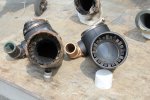
Virtually impossible to get right inside the elbow and remove hidden internal scale. Wether by chemical or physical actions.
If the external water exits are as bad as some of the pictures you will never clean out the interior.
If you refit and some of the internal scale becomes dislodged at later date it could totally block the riser, it may well be then a case of you discovering the overheat via the alarms before something goes bang or seizes.
The simplest,cheapest, but possibly two most critical things to keep an eye on are the impellers and the risers.
Refit a doubtful alternator or iffy air filter back on and not much happens.
If you look at mine on page 1 I think, preventative maintenance is better than repair, I have seen some injection bends coming off 40 series engines and KAD 300's that have been left way to long, leaking, cracking and failing. Any doubt replace them, reduce back pressure on your seawater coolling system and cool your engine and exhaust properly. On a seawater cooled engine the even spray of lots of water in an exhaust hose is the only thing stopping your exhaust hose catching fire.This post has got me thinking whether to just replace my 16 year old risers on my AD41-P engines. Regardless of their appearance. As mentioned its a cheap fix in comparison to the damage it could cause.


The hose on mine was "stuck" to the elbow after the hoseclips were removed. However, it was not stuck to the water-trap so it was very easy to remove the elbow together with the short piece of hose. Then, with the elbow on the floor it eas easy to work a blunt screwdriver around the hose to lever and break the bond to the elbow.interested in how easy or not it was to remove exhaust hose from elbow?
any helpful tips please
On my D4 it was stuck, but a lot of wiggling and twisting of the elbow freed it up.interested in how easy or not it was to remove exhaust hose from elbow?
any helpful tips please

I removed the hose from the water trap to get if off the boat, easy. Once home I tightened the hose into a vice and, reasonably easily, twisted the elbow free.interested in how easy or not it was to remove exhaust hose from elbow?
any helpful tips please
If you mean the blank and the water inlet I bought exhaust gasket material on ebay and made my own.Both elbows removed today and showing significant amount of corrosion. Now shopping around for a good price.
Do the gaskets need changing from pipe connection?


You probably won't notice any steam come the warmer weather, good resultI’ve just had my exhaust elbow (tamd41p) replaced and have noticed a big improvement in the steam and engine temp while testing it today.
There was hardly any steam below 10knots and only really started seeing any at about 14+.
It normally runs at 85° at cruise speed and drops to 80° when pottering around but today stuck at 80° regardless. It also felt much more responsive and faster but maybe that’s just because it’s been serviced too or that the kids weren’t on board (only 50kg the pair though).

Being supplied from Hong Kong it would be a safe bet.41 elbow on ebay at around £190 last week.
Exhaust Elbow for Volvo Penta Diesel TAMD31, TAMD41, KAD32, KAD42, TMD 31861289 | eBay
suspect all made in China ?

I’ve just had my exhaust elbow (tamd41p) replaced and have noticed a big improvement in the steam and engine temp while testing it today.
There was hardly any steam below 10knots and only really started seeing any at about 14+.
It normally runs at 85° at cruise speed and drops to 80° when pottering around but today stuck at 80° regardless. It also felt much more responsive and faster but maybe that’s just because it’s been serviced too or that the kids weren’t on board (only 50kg the pair though).