Standardising battery terminals

sarabande

Well-Known Member
Joined
6 May 2005
Messages
36,182
Visit site
I have a long-standing hatred of the multiple ways that battery posts are joined to cables for charging/power/starter supply, and to wires for e.g. the always-on VHF, bilge pump, and alrm kit.

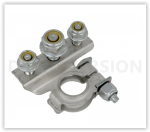
If I replace the cable terminals with something like this
1614322953638.png

which has 2 x 6mm studs and 1 x 8mm stud , will the 8mm stud be large enough to cope with the normal charging amps please ? And I have never seen a Nyloc nut used on a battery before. ??? The cable terminal is from 12v Planet's catalogue, and there is no info on the rating. Or would you expect 10mm studs for charging cable terminators ?

Proper ring terminals to be put on the cables, BTW, not just bending the wire round the stud :).
 
Last edited:
The stud just provides the compression. The contact area is down to the size of the ring termination so it should be fine for a normal sized boat engine. I cant see a problem with nylocs as the nylon bit a very small and added on the end of the nut.
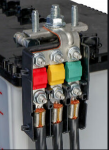
How about these:
1614324723613.png1614324828305.png
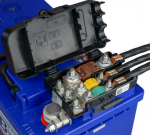
Most cars now have fuses on the battery connectors
 
Not a fan of those terminals Tim, i'd rather use these:

+ve_M8_Stud.jpg


If you have too many cables to connect to it, use a separate terminal post or busbar.
 
I have a long-standing hatred of the multiple ways that battery posts are joined to cables for charging/power/starter supply, and to wires for e.g. the always-on VHF, bilge pump, and alrm kit.

If I replace the cable terminals with something like this

View attachment 110090

which has 2 x 6mm studs and 1 x 8mm stud , will the 8mm stud be large enough to cope with the normal charging amps please ? And I have never seen a Nyloc nut used on a battery before. ??? The cable terminal is from 12v Planet's catalogue, and there is no info on the rating. Or would you expect 10mm studs for charging cable terminators ?

Proper ring terminals to be put on the cables, BTW, not just bending the wire round the stud :).

can you get those for battery 'bolt' terminals too ?
 
Not a fan of those terminals Tim, i'd rather use these:

+ve_M8_Stud.jpg


If you have too many cables to connect to it, use a separate terminal post or busbar.


Another vote for this advice. Ideally, you would not have anything connected to the battery apart from the primary cables. Everything else goes on a busbar. When I did my ABYC marine electrician training years ago, the guidance even back then was "one wire per fastener" - i.e you would not have multiple wires on one connection, the reason being that if one screw or post fails then you can lose multiple sources, and in the case of battery connections if one terminal failed you could have a loose connection leading to arcing.

Best practice would be to install a busbar (via a fused link) close to the battery for any permanent live connections.

It's the same guidance for positive and negative connections - i've lost count of how many times i've seen nicely wired positive connections with good distribution blocks, then a nest of cables on a negative terminal....
 
+1 You beat me to it, 15mm works well. :)

If going down this route, I would advise against using copper pipe for anything except small loads. The current rating is only as good as the individual wall thickness - flattening it does not improve the current capacity.

A better option for DIY bus bar would be some brass or even SS strip. I've just picked up a brass strip (for a different project) off eBay for £8 for a 600mm length, 32mm high and 5mm thick. I have a bit left over so may put it on some teak as a bus bar project thanks to this suggestion. :) (y)
 
If going down this route, I would advise against using copper pipe for anything except small loads. The current rating is only as good as the individual wall thickness - flattening it does not improve the current capacity.

When it's flattened with nuts and bolts through it, it will cope with starting loads, as mine did when used as negative busbar on a previous boat.
 
When it's flattened with nuts and bolts through it, it will cope with starting loads, as mine did when used as negative busbar on a previous boat.


Did, and could - absolutely. Is it the best choice for that - no. A bit like using an adjustable spanner instead of the correct size for a nut.

Not disputing that a copper pipe will work in a pinch, it's not the best choice for that job. Any verdigris in the pipe could lead to a bad connection. Fine for small loads (bilge pump, etc), but I'd go with flat bar myself.
 
A proper crimping tool for occasional use is only about £35 last time I looked. Which you will easily sell afterwards.
 
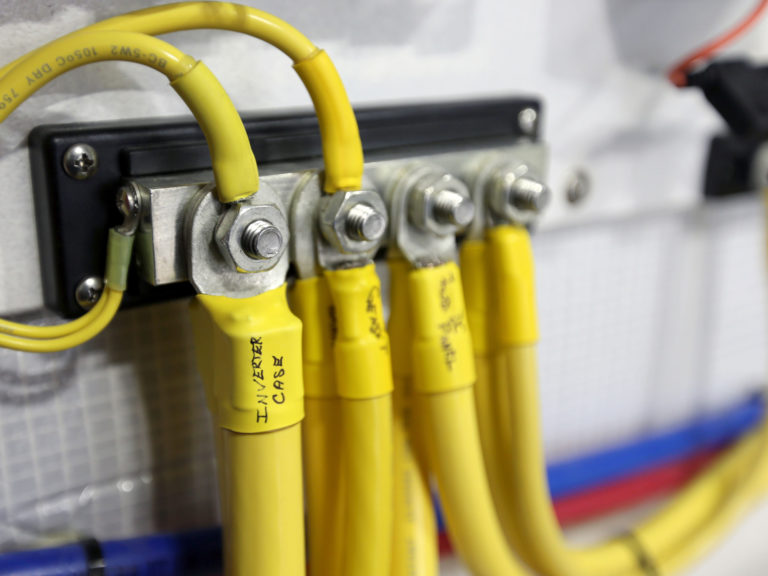
There is only one thing that should be on the end of your battery cables, see post #15, they should be crimped on with a decent crimping tool such as a hydraulic one.

Those nasty clamp on terminals are absolute rubbish. They just scrunch some of the wire up, very hit and miss, there will be an air gap around lots and lots of the strands and the individual strands will oxidise. Properly crimped, there will be no air gaps, if you cut through the connector and cable the cable will look like a solid copper bar, no air gaps around individual strands, so they won't oxidise. Properly done, they'll give decades of trouble free use.
 
Last edited:
Top