
Standardising battery terminals

Did, and could - absolutely. Is it the best choice for that - no. A bit like using an adjustable spanner instead of the correct size for a nut.

Not disputing that a copper pipe will work in a pinch, it's not the best choice for that job. Any verdigris in the pipe could lead to a bad connection. Fine for small loads (bilge pump, etc), but I'd go with flat bar myself.

Agreed, flattened copper pipe isn't giving you a lot of strength or cross section.
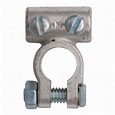
 
This is what I used to have:

1614420171405.png

These are really not so good. They damage the cable, tend to loosen and have poor electrical contact.

This is what I prefer and fitted.
1614420030855.png

They are reasonably fair to the wire, do not loosen, need no specialist tools to fit, are secure, and can be maintained, modified or adjusted using no specialist equipment or parts. The clamping screws can be replaced by bolts and locknuts if required, and are very handy for connecting small stuff like alarms.
In short they are adequate for most small boat use and excellent for the bloke who wants to modify or mend own stuff, go off piste or contemplate long trips using a basic battery set up.

If you have special requirements, are building lunar landing modules, or have an extensive battery system then the disadvantages of crimping with special tools is, no doubt, (y) worth it.


.
 
Is there a slight difference in size between positive and negative battery posts on standard LA batteries or terminals? perhaps to reduce risk or wrong polarity but found it a nuisance when bought a batch of terminals by click and collect and send all positives, some fitted easier than others???
 
Is there a slight difference in size between positive and negative battery posts on standard LA batteries or terminals? perhaps to reduce risk or wrong polarity but found it a nuisance when bought a batch of terminals by click and collect and send all positives, some fitted easier than others???

Yes, positive and negative battery posts are different sizes.
 
This is what I used to have:

View attachment 110165

These are really not so good. They damage the cable, tend to loosen and have poor electrical contact.

This is what I prefer and fitted.
View attachment 110164

They are reasonably fair to the wire, do not loosen, need no specialist tools to fit, are secure, and can be maintained, modified or adjusted using no specialist equipment or parts. The clamping screws can be replaced by bolts and locknuts if required, and are very handy for connecting small stuff like alarms.
In short they are adequate for most small boat use and excellent for the bloke who wants to modify or mend own stuff, go off piste or contemplate long trips using a basic battery set up.

If you have special requirements, are building lunar landing modules, or have an extensive battery system then the disadvantages of crimping with special tools is, no doubt, (y) worth it.
.

I don't see a disadvantage in doing things correctly. Properly done, the terminals need none of your "can be maintained, modified or adjusted", they just sit there and work. As for adding through bolts and adding wires to the clamps, least said the better.
 
This is what I used to have:

View attachment 110165

These are really not so good. They damage the cable, tend to loosen and have poor electrical contact.

This is what I prefer and fitted.
View attachment 110164

They are reasonably fair to the wire, do not loosen, need no specialist tools to fit, are secure, and can be maintained, modified or adjusted using no specialist equipment or parts. The clamping screws can be replaced by bolts and locknuts if required, and are very handy for connecting small stuff like alarms.
In short they are adequate for most small boat use and excellent for the bloke who wants to modify or mend own stuff, go off piste or contemplate long trips using a basic battery set up.

If you have special requirements, are building lunar landing modules, or have an extensive battery system then the disadvantages of crimping with special tools is, no doubt, (y) worth it.


.
But a reasonable hydraulic crimping tool is less than £40 from EBay and will last a lifetime.
 
But a reasonable hydraulic crimping tool is less than £40 from EBay and will last a lifetime.


I have nothing against crimping tools, but I don't personally want more tools I rarely use, on the boat or at home. I don't want to have to find the correct crimp, have to buy a number of them for just one job or find the tool is in the wrong place when I want it.

For me the fitting shown is a very good choice, I commend it to the house. If I was rigging a 45 footer with a bank of 6 batteries it would be different.

.
 
I have nothing against crimping tools, but I don't personally want more tools I rarely use, on the boat or at home. I don't want to have to find the correct crimp, have to buy a number of them for just one job or find the tool is in the wrong place when I want it.

For me the fitting shown is a very good choice, I commend it to the house. If I was rigging a 45 footer with a bank of 6 batteries it would be different.

.
The two most common reasons for a boat to breakdown are poor electrical contact somewhere and contaminated fuel. Therefore paying due attention to reduce as far as possible these happening on my boat is always my priority. But I am also an avid collector of tools I will need at some point.
 
I’ve had to use my crimping tool twice whilst at sail, both times to repair and get engine started. would not sail with out, as said electrical issues one of the most common. You don’t need too many different lugs and the crimping tool itself as also been used fir others jobs, I’ve used it to push small bearings and pins, also a strong vice.
 
A lot of learning from this thread; thanks everyone.

My strategic plan is now to make sure that high power applications (starting/charging, etc) are separated from the relatively small loads (alarm, bilge pump, VHF, etc), instead of running a mixed output from the two paralleled domestic batteries.

Heavy duty stuff gets battery terminals with a single 10mm threaded stud, with cables having ring terminations using my Klauke crimps; lighter loads come off a dedicated busbar and fuse box as shown by Paul R in #15. (many thanks PR.)

This enables me to go ahead with confidence to increasing my domestic battery bank, and to have just one type of cable terminal and hence just one spanner for high loads. Lighter loads for the 'Always ON' supply will be from a Blue Seas fused box (thanks Sandy) and can be managed by a single Philips screwdriver.

KISS !
 
But a reasonable hydraulic crimping tool is less than £40 from EBay and will last a lifetime.
something like that then Trev?
10T Hydraulic Crimper Crimping Tool Wire Battery Cable Terminal Lugs with 8 Dies | eBay

I ordered it in Nov, but eventually seller cancelled it (and returned my money back promply) something to do with brexit and deliveries overseas.

Not keen to order again from the same guy, so looking for other options atm.
I think the 8dies kits should be OK for around batteries/fuses for 5-100A range...
 
All you really need for the non professional is a set of crimping dies like these and use a vice to apply the force to crimp the cable/lug

The hydraulic tool is overkill for the odd crimp.
4-70mm2-Hydraulic-cable-crimping-tools-dies.jpg


cable crimping dies - Google Search

Now I'm going to be shot down again for saying this
 
something like that then Trev?
10T Hydraulic Crimper Crimping Tool Wire Battery Cable Terminal Lugs with 8 Dies | eBay

I ordered it in Nov, but eventually seller cancelled it (and returned my money back promply) something to do with brexit and deliveries overseas.

Not keen to order again from the same guy, so looking for other options atm.
I think the 8dies kits should be OK for around batteries/fuses for 5-100A range...

Lots of sellers offering those Vas, they make a good job of crimping battery cables etc
 
All you really need for the non professional is a set of crimping dies like these and use a vice to apply the force to crimp the cable/lug

The hydraulic tool is overkill for the odd crimp.

A rather strange logic there Roger. So "non professional" or "odd" crimps don't need to be as good as a professional one ?

Do amateur or "odd" crimps arc less when they are loose, or do they not catch fire, as opposed to professional ones ?


4-70mm2-Hydraulic-cable-crimping-tools-dies.jpg


cable crimping dies - Google Search

Now I'm going to be shot down again for saying this

Those dies are intended for a hydraulic crimping tool, which will exert a minimum of 8 to 10 tons of pressure, rather than a vice which might exert one ton. OK for the really small sizes, but increasingly unsuitable for anything over 10mm. A hydraulic tool will make a proper job of all of those sizes, up to 70mm (or more). It's light weight, portable and safe and easy to use. What happens with those dies when one of the pins bends or shatters, because it's being used incorrectly (in a vice).

With hydraulic tools available on Ebay for less than a tenner, why bodge it ?

hydraulic crimping tool | eBay

Edit: The cheapest hydraulic one on Ebay is £14.99
 
Last edited:
Well Paul I stand by my statement.

The hydraulic crimper just puts pressure on the dies and its the dies that have the correct profile for a proper crimp.

For you a professional electrical installer like you would need a dedicated crimper as your usage is greater than a non professional.

What I propose is that having proper dies that will give the same form of crimp and using a vice to provide the pressure would provide a correct crimp from the dies without the need for a dedicated tool as with the specified hydraulic crimper.

Using proper dies in a vice would be much better than using a nut in a vice.

I don't see using a proper die in a vice as a bodge as it will give a proper hex crimp.

As I have a 20 ton hydraulic press I would use that to produce the pressure.

You would ne suppressed how much pressure a proper engineering vice can exert
 
Well Paul I stand by my statement.

The hydraulic crimper just puts pressure on the dies and its the dies that have the correct profile for a proper crimp.

So if you put the dies in your mouth and bite down it will produce an adequate crimp ?

I think not. They need to be crimped with adequate pressure.

For you a professional electrical installer like you would need a dedicated crimper as your usage is greater than a non professional.

I don't see as the number of crimps is relevant, if you need 1000 crimps or just one, they all have to be dome correctly.

What I propose is that having proper dies that will give the same form of crimp and using a vice to provide the pressure would provide a correct crimp from the dies without the need for a dedicated tool as with the specified hydraulic crimper.

The dies will give the correct crimp if adequate pressure is applied (as i said before), a vice will not provide adequate pressure for anything greater than about 10mm cable.

Using proper dies in a vice would be much better than using a nut in a vice.

True, but two wrongs don't make a right :)

I don't see using a proper die in a vice as a bodge as it will give a proper hex crimp.

You're not only looking for a hex shaped crimp, you want it to have crimped the cable so tight as to exclude the air between the strands.

As I have a 20 ton hydraulic press I would use that to produce the pressure.

I don't follow you here Roger, you said you were using a vice ??

You would ne suppressed how much pressure a proper engineering vice can exert

A reasonable sized engineering vice produces about 1 ton of pressure, nowhere near enough for a proper job on battery cables.

As per my previous post, a proper crimper can be bought for less than a tenner.
 
  • Like
Reactions: pvb
So if you put the dies in your mouth and bite down it will produce an adequate crimp ?

I think not. They need to be crimped with adequate pressure.


I don't see as the number of crimps is relevant, if you need 1000 crimps or just one, they all have to be dome correctly.


The dies will give the correct crimp if adequate pressure is applied (as i said before), a vice will not provide adequate pressure for anything greater than about 10mm cable.


True, but two wrongs don't make a right :)


You're not only looking for a hex shaped crimp, you want it to have crimped the cable so tight as to exclude the air between the strands.


I don't follow you here Roger, you said you were using a vice ??


A reasonable sized engineering vice produces about 1 ton of pressure, nowhere near enough for a proper job on battery cables.

As per my previous post, a proper crimper can be bought for less than a tenner.


Just proves again you don't like me making alternative suggestion that are different to yours as with your east coast friend.
 
Top