Sprung Rubbing Strake Repair

ducked

Well-Known Member
Joined
6 Oct 2024
Messages
1,937
Location
Tainan, Taiwan
Visit site
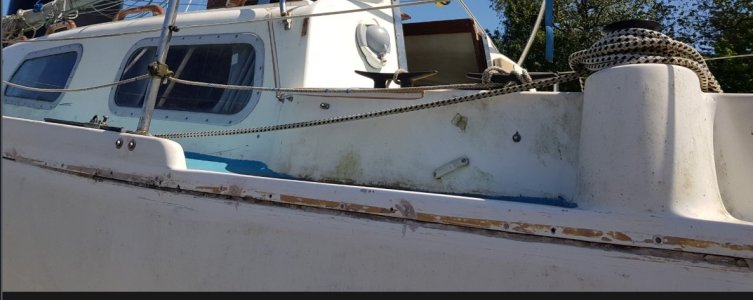
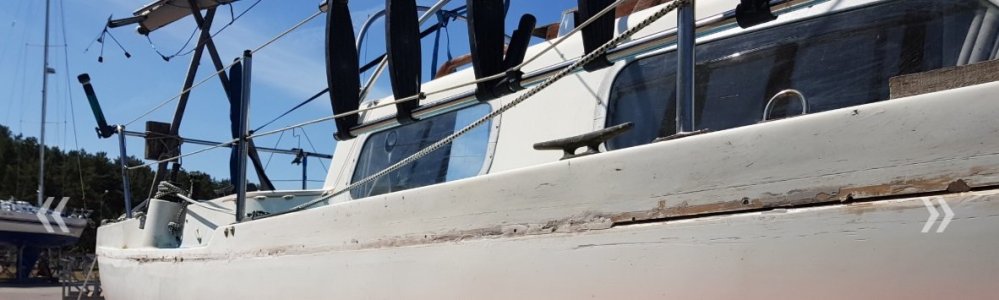
This is secured with screws from the inside of the boat into the back of a half round teak section. Most of the screws seem to be bronze, but some seem to have been steel. These steel screws are of course no more, and some of the bronze ones have broken or pulled out of the timber as it straightened. The same technique is also used (on a smaller scale) for the "eyebrows" at the cabin top, some of which dont look very secure either, but only one rubbing strake section has so far sprung.

I'll get some pictures when back at the boat, probably tommorrow

Possible repair techniques seem to include:-

1. Removing broken screws and replacing, perhaps screwing into plugged holes in the clamped strake, and/or making a psuedo-timesert thread insert in the holes with copper or stainless steel wire.

However, the heads of the screws inside the boat arent visible and, while I have to investigate further, I suspect I'll have to deconstruct quite a lot to get at them, and then they wont budge.

2. As a possible alternative, drill out the screws from the outside using a tubular drill slightly larger than the screw diameter, and then secure the rubbing strake either with deeply (say half thickness) countersunk bolts (bronze or SS) OR trennels.

Tubular drill bits dont seem to be as much of a thing as I would expect, given how often drilling out fastenings arises as a (difficult) problem, but they do seem to exist.

For example, these look like they might work, if a little larger. These, at max 3mm (I assume OD) are for fine jewellry -stylee jobs and a bit too small. The jive about drilling underwater will also have to be considered innapplicable unless I sink the boat.

Small Diamond Core Drills 1–3mm | Glass, Sea Glass, stone & Ceramic

I like the idea of trennels but I've never made any so it might be more expedient to use countersunk bolts. I shoiuld be able to get away with using fewer than the screws they replace since they should be stronger.

Whaddya think?
 
Last edited:
My wood strake - appeared as if it had screws all way through hull - but in fact they were not. They were machine screws into the GRP .... the wood haviung been steamed so it could be bent ... screwed and held in place while it cooled.

When it 'sprung' and the joints gave up - I tried various ways to 'screw' it back - with large head washers inside and out etc ... even cut a long fillet to insert into the strake as harder material ... it all failed.
Why ? Because basically the wood strake itself was soft on the inside and face to hull. The outer felt good - until I took a penknife and the blade just sank in ...

I decided to bite the bullet and had yard replace all strakes .. port / stbd and transom ...... when I saw the strakes they removed - it was a wonder they were still attached to boat !
 
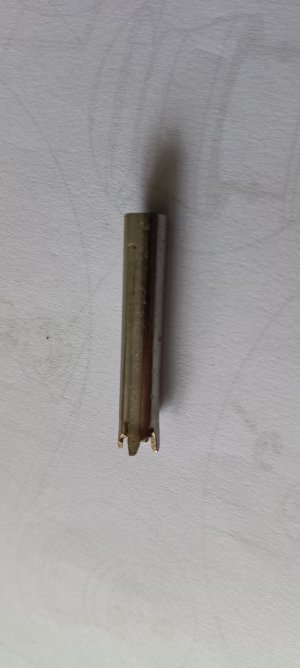
I had the same issue with the rubbing strakes and trim around the windows on my (24') boat. Attached by screws from the inside. The heads were glassed over but very thinly and with visible lumps so easy to locate and clean off with a dremel. Apart from the few stainless screws all the heads sheared at first sight of a screwdriver. The fasteners were a random mix of brass, bronze, steel, mild and stainless. I used a home made core drill using a bit of stainless tubing with teeth filed in it to remove the rotten screw stubs, which worked surprisingly well. The rubbing strake was refastened with countersunk through bolts. I found trying to drill out the stubs using a twist drill a waste of time, the drill invariably wanders off and just makes a mess.
 

Attachments

  • Home made core drill.jpg
    Home made core drill.jpg
    1 MB · Views: 14
I had the same issue with the rubbing strakes and trim around the windows on my (24') boat. Attached by screws from the inside. The heads were glassed over but very thinly and with visible lumps so easy to locate and clean off with a dremel. Apart from the few stainless screws all the heads sheared at first sight of a screwdriver. The fasteners were a random mix of brass, bronze, steel, mild and stainless. I used a home made core drill using a bit of stainless tubing with teeth filed in it to remove the rotten screw stubs, which worked surprisingly well. The rubbing strake was refastened with countersunk through bolts. I found trying to drill out the stubs using a twist drill a waste of time, the drill invariably wanders off and just makes a mess.
Yeh, thats what I was thinking.

A slightly larger bit of tubing MIGHT serve to make trennels too, but if those didnt work (which seems quite likely in my hands) it would then be difficult to countersink the hole for a bolt and plug.

So I'd better bin the trennel idea for now. If I have time I could practice and perhaps be ready for when the next one pops
 
Come to think ont, I suppose that, other than minimising the number of holes in the boat, I dont have any pressing reason to get the existing fastners out, and could perhaps just drill for bolts between them.

I mentioned this problem to (another) old bloke in the tool library who has some boat experience and he'd never heard of tube-drills but mentioned having used rubber expanding Rawlplugs for this job, I THINK within the strake, under a plug.
 
I wouldn’t remove any existing screws. Instead redrill between failed fasteners and use stainless self tapping screws from the inside. Through bolting, could defeat the purpose of the rubbing strake if the bolt heads were not suitably recessed. To improve the bond, the screws could be epoxy bonded in place by brushing epoxy into the self tapping pilot hole. You can buy epoxy glues for teak which eliminates any preparation, degreasing. The epoxy can also be bought in small quantities for little cost. The objective is to preserve or extend the life of the threaded hole, rather than provide extra strength.

Epoxy All Wood Glue. No. 1 for permanent strong joints
 
I wouldn’t remove any existing screws. Instead redrill between failed fasteners and use stainless self tapping screws from the inside. Through bolting, could defeat the purpose of the rubbing strake if the bolt heads were not suitably recessed. To improve the bond, the screws could be epoxy bonded in place by brushing epoxy into the self tapping pilot hole. You can buy epoxy glues for teak which eliminates any preparation, degreasing. The epoxy can also be bought in small quantities for little cost. The objective is to preserve or extend the life of the threaded hole, rather than provide extra strength.

Epoxy All Wood Glue. No. 1 for permanent strong joints
Thanks. The special glue is certainly of interest.

My reservations about the technique outlined are

1. It essentially reproduces the approach that already failed, albeit with better materials
2. I oiled the rubbing strake, which might compromise the adhesive. While I didn't oil the inner face in the sprung area, I wasnt very careful to avoid getting oil on it either.

I understand the point about the potential negative consequnces of exposed bolt heads, but think the rubbing strakes are thick enough that they could be adequately recessed.

Trennels would avoid the bolt head hazard entirely, but I doubt I have the skill to make them.

TBH if I was doing this job in Taiwan I'd seriously consider sewing them on with the heavy nylon monofilament that holds the oyster rafts and PVC pipe boats together, which would also fully avoid the bolt head hazard.

Wouldn't be very "yachty", but then neither am I.

Final decision may depend on what fastners I can scrape together ftom the shed, when and if I vanquish the suspected cat flea infestation
 
Last edited:
Are you sure the 'meat' of the wood is still good for screws ?

As I posted earlier - the outer surface of my strakes appeared hard and good - but the real 'meat' of the strakes was soft and rotten ...

All the 'remedies' are - I'm sure you understand - only delaying the inevitable day of replacing the strakes. I went through same for over 2 years until finally gave up and had the strakes replaced.
 
If your boat is older, following the original fixing approach that failed the first time isn't necessary a bad thing - the original approach lasted 40 years or more at a guess, if you fasten it in a way that lasts another 40 the wood is unlikely to last that long. And sometimes in a GRP boat the rubbing strake hides the hull to deck join and the screws or bolts are part of that join. In that case fresh screws are probably an essential part of the answer.

Some old wood rubbing strakes are still pretty sound, some are as Refueller describes. When I thought mine was worse than it turned out to be, I considered replacing it with a white D-section rubber. Won't look classic-yachty and no doubt will attract comment and speculation about whether I moor like a bumper-car, but it's easier to get hold of than equivalent bits of good teak and should be low maintenance. But in my case the wood turned out good enough to hang on to and I prefer that.
 
When it came to replace my Teak strakes .... it was hard to find suitable air dried .... and we decided to use American Oak ... but Kiln Dried .... I was anxious about it ... but the yard had perfected use of this and because they had supply on hand at a discount I went with it ...

The steamer they have is about 25ft long !! not your DIY affair...

I can honestly say that the new strake was worth every penny ....

Here you can see the hull to deck joint that is hidden under the strake normally :

SA new strake d.jpg

SA new strake c.jpg

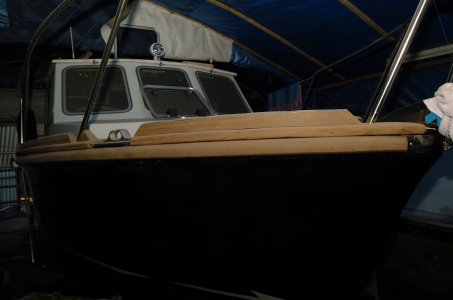
Here is the new strake in progress :

SA new strake a.jpg

SA new strake b.jpg
 
I'm surprised that the fake teak manufacturers don't make a rubbing strake profile as a replacement. There must be many people with the same problem as you and with the difficulty and expense of new teak as an original fitment.
 
Are you sure the 'meat' of the wood is still good for screws ?

As I posted earlier - the outer surface of my strakes appeared hard and good - but the real 'meat' of the strakes was soft and rotten ...

All the 'remedies' are - I'm sure you understand - only delaying the inevitable day of replacing the strakes. I went through same for over 2 years until finally gave up and had the strakes replaced.
There were some signs of wood rot at the cockpit coming last year, (see picture) when I treated all the wood with antifreeze, but afaik the rubbing strakes are OK apart from some surface discolouration, though I havnt probed them much.

Coaminrot.jpeg

Other than the suspicious fact that the screws pulled out of it, ironically the sprung section seems likely to be in better nick than the rest, since water trapped against the hull will have had a chance to dry out. Its been sprung for at least a year.

In the past week I painted the toe rail and rubbing strakes with a couple of coats of not-very-yachty sump oil (modern skinny car sump oil rather than thick marine diesel stuff), trying to work it down between the hull and strake, especially where there was a fine water trapping gap. This is of course noxious stuff, both to wood rot fungi and to humans, but I dont plan to be touching these areas much. I suppose this has some disaster potential, but so far so-so.

BowsSumpStbd20.jpg
 
I've seen faketeak toerail on a newish Beneteau. So it is out there. It looked OK and must have coped with a few knocks (heavily used sea-school boat). Many of the faketeak manufacturers don't seem very interested in engaging with the DIY market.
 
For treating strakes .... my goto is patio / decking stain ... it has anti-fungal and UV additives in it ... its usually water based .. it soaks in and easily touched up after a light quick sanding ...

In fact I use it for teak gratings ... cabin soles .... under varnish on hatches ..... etc.
 
I'm thinking maybe a hybrid approach for now, put a bolt or two in towards the end where more strength is needed, and just goop the existing screw ends into the existing holes. The screw at the join end, which was probably under most tension, seems to have been mild steel, with the predictable hilarious consequences.

Might have to make/modify some clamps. Tried a standard sash clamp yesterday but couldnt get it to align right.

I took some pictures but Yahoo on my phone WILL NOT STOP pushing a lot of webshite at me instead of letting me into mail, and I ran out of patience. You can probably guess what a sprung strake looks like anyway.
 
I've seen faketeak toerail on a newish Beneteau. So it is out there. It looked OK and must have coped with a few knocks (heavily used sea-school boat). Many of the faketeak manufacturers don't seem very interested in engaging with the DIY market.
Wilks of Tollesbury do superb fake teak rubbing bands. Plus toe rails and gunwale cappings.

DSCF6942.JPG
 
There were some signs of wood rot at the cockpit coming last year, (see picture) when I treated all the wood with antifreeze, but afaik the rubbing strakes are OK apart from some surface discolouration, though I havnt probed them much.

View attachment 205981

Other than the suspicious fact that the screws pulled out of it, ironically the sprung section seems likely to be in better nick than the rest, since water trapped against the hull will have had a chance to dry out. Its been sprung for at least a year.

In the past week I painted the toe rail and rubbing strakes with a couple of coats of not-very-yachty sump oil (modern skinny car sump oil rather than thick marine diesel stuff), trying to work it down between the hull and strake, especially where there was a fine water trapping gap. This is of course noxious stuff, both to wood rot fungi and to humans, but I dont plan to be touching these areas much. I suppose this has some disaster potential, but so far so-so.

View attachment 205982
Surface staining has washed off to a large extent in moderately heavy rain. Probably has penetrated/preserved to some extent but the patchiness of the formerly overgrown timber is again evident, and it makes a bit of a mess of white topsides, though that comes off with white spirit.

So not looking so useful now.
 
Surface staining has washed off to a large extent in moderately heavy rain. Probably has penetrated/preserved to some extent but the patchiness of the formerly overgrown timber is again evident, and it makes a bit of a mess of white topsides, though that comes off with white spirit.

So not looking so useful now.
I may not go about things the same way as you but I do appreciate your experimental attitude. Thanks for reporting what worked and what didn't. The world of boats is absolutely mad with proprietary potions and I think your basic principle that a lot of work can be done with common substances is sound.

Unfortunately I think care of exterior wood on seasonally-used coasting boats is a really hard problem :-(

Good luck with the re-attaching. If your strake screws are really a random mix of aged copper-alloy and knackered mild steel then I think ordering an abundance of the right size in A4 stainless from somewhere cheap-but-reliable like kayfast or bolt-world (etc) and replacing the lot is probably the way to go. As you say, clamping these things is a pain.
 
I may not go about things the same way as you but I do appreciate your experimental attitude. Thanks for reporting what worked and what didn't. The world of boats is absolutely mad with proprietary potions and I think your basic principle that a lot of work can be done with common substances is sound.

Unfortunately I think care of exterior wood on seasonally-used coasting boats is a really hard problem :-(

Good luck with the re-attaching. If your strake screws are really a random mix of aged copper-alloy and knackered mild steel then I think ordering an abundance of the right size in A4 stainless from somewhere cheap-but-reliable like kayfast or bolt-world (etc) and replacing the lot is probably the way to go. As you say, clamping these things is a pain.
The rainwater still seems to be mostly beading on it, and its no longer leaking stain onto the topsides, so I'm not absolutely binning the sump oil treatment idea just yet.

Applying it to probably damp timber just a day before several days of intermittantly fairly heavy rain and wind, while probably typical for Scotland, was quite a big ask.

Might be able to reduce the mess by "burnishing" the surplus oil off with a rag, as one is apparently supposed to do with trad oil finishes like linseed and tung.
 
Top