
lampshuk
Well-Known Member
Wanting to keep Drifter's batteries topped up over winter I bought a couple of cheap, portable, solar panels last November. I think they are something like 6W max output, so not too bad for £15 each, or something. Nice and compact, they fold up like a little briefcase to stow, so easy to store and keep safe.
I asked if they were "waterproof" and was told that they should be showerproof. Since they will only be sitting in the cockpit in harbour I assumed that would be OK. After all, the worst that could happen is that they just leak a bit and get spoiled. So cheap that it's not a big deal.
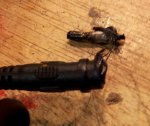
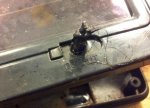
Everything has been fine: batteries kept healthy etc, until this weekend when I found one of them lying face down, with the connector melted and the wires desoldered from the plug that connects them in to the front of the panel. (see photos for the front panel and the remains of the connector).
Assuming that the plastic was not melted by Southampton's intense February sun, I assume that rainwater getting in to the unit (I dismantled it and it was quite wet inside) must have created a short, so the battery discharged through the connector, melting the connector and solder so that luckily the wire disconnected before draining the battery or starting a fire. I dismantled the other one and it, too, is quite damp inside.
I was slightly surprised that rainwater was sufficiently conductive to get 12V flowing at high enough current to do this. I suppose it's possible that the wind blew the panel around and stressed the connector in such a way that there was a mechanical short.
Anyway, I thought I would post this as a cautionary tale. I plan to rebuild both panels with a more robust connector and properly waterproofed. Assuming the regulator isn't blown, of course
 se.
se.
I asked if they were "waterproof" and was told that they should be showerproof. Since they will only be sitting in the cockpit in harbour I assumed that would be OK. After all, the worst that could happen is that they just leak a bit and get spoiled. So cheap that it's not a big deal.
Everything has been fine: batteries kept healthy etc, until this weekend when I found one of them lying face down, with the connector melted and the wires desoldered from the plug that connects them in to the front of the panel. (see photos for the front panel and the remains of the connector).
Assuming that the plastic was not melted by Southampton's intense February sun, I assume that rainwater getting in to the unit (I dismantled it and it was quite wet inside) must have created a short, so the battery discharged through the connector, melting the connector and solder so that luckily the wire disconnected before draining the battery or starting a fire. I dismantled the other one and it, too, is quite damp inside.
I was slightly surprised that rainwater was sufficiently conductive to get 12V flowing at high enough current to do this. I suppose it's possible that the wind blew the panel around and stressed the connector in such a way that there was a mechanical short.
Anyway, I thought I would post this as a cautionary tale. I plan to rebuild both panels with a more robust connector and properly waterproofed. Assuming the regulator isn't blown, of course
se.


 ) to a diode in the regulator or in the wiring connections at the battery.


