Satin Varnish for interior work

davidmh

Well-Known Member
Joined
30 Jan 2015
Messages
474
Visit site
I need to freshen up a number of areas in the cabins of my yacht, the existing finish is satin i want to continue with this. I want an oil based varnish, not water based varnish. I have looked at general non-marine satin varnishes and they all seem to water based these days, and no longer cheap. What experience do forum members have with International Goldspar Satin, Hemple Dura Satin and Epifanes Rubbed effect satin varnishes. what other ones have you tried?
David MH
 
I've used Hempel Dura easy to apply and quick drying, the others are also urethene varnishes so should be similiar.
 
Do a test area first?
I love goldspar satin but it works by having some sort of opaque filter materiél in it I think.
So if you slap it on and on, the underlying wood and grain becomes darker, murkier less visible. Exactly what you do not want .
So one might as a purist consider stripping the original finish and starting from scratch depending on how much you love the boat etc. Which can look simply stunning but is a job for the purist and technically highly competent.

I have no other relevant experience to offer you with other products but I believe there are things that can produce a ‘flat’ rather than a ‘satin’ finish, without relying on fillers.
 
Doesn't it rather depend on what's on there already? I'd stick with oil based if already oil based, lacquer if currently lacquered (lots of boats are) etc. Not sure what your boat is but quite a lot of 70s/80s/90s boats were originally cellulose lacquer which is pretty easy (and fast!) to work with and comes in several different levels of matt/satin/gloss. More modern ones likely to be urethanes. Old classics oil varnish.
 
Any particular reason for not wanting a water based varnish?

I used Ronseal Diamond Hard on several bits of our last boat, and it did what it said on the tin.
I have used Ronseal clear satin interior varnish. The finish is good but it goes on very thin so I now use a good oil based gloss varnish (I have been using Temac) and when thoroughly dry, rub down and finish with one coat of the Ronseal so you end up with a satin finish on a good film thickness.
 
Tend to agree with Blueboatman that the water based satin varnishes tend to be quite a flat finish. Though it is what I use when install wooden or bamboo floors (carpenter) and. They certainly seem durable. But I do like the Goldspar Satin finish and will be using that on my sole boards when redoing this spring.
 
Without knowing who built the boat, you are assuming the woodwork is finished with a varnish. It will most likely have been finished with a lacquer. For boat builders there are many advantages of lacquer over varnish. Firstly it is a 2 part mix, fast drying allowing multiple coats in a day, plus does not remain sticky whilst drying. If you look at the link in my signature, you will find my presentation on refinishing interior woodwork.

Lacquers come in finishes from matt through to full gloss. They are hard wearing. They also are cheaper to buy than varnish.
 
I always use an aerosol satin polyurathane varnish, you can use it mid-panel and it matches in without showing edges or brush marks. There's no need for thick multi-coat finishes...
 
How can you tell varnish from lacquer my boat ,a Degero28, could do with a touch up in places but I don't want to do the whole lot. I'm not sure what the Finnish is.
 
How can you tell varnish from lacquer my boat ,a Degero28, could do with a touch up in places but I don't want to do the whole lot. I'm not sure what the Finnish is.
First call is the boats documents from the manufacturer that you may have received with it. Eg my last boat listed pretty much everything used in the build)
Second call . Ask the owners association. Chances are that at least one person has been here before and got their shirt.

Third call might be to investigate destructive testing in an inconspicuous place . Different finishes behave differently with chemicals, heat or scraping with a very sharp implement and examining the ‘shavings’
 
I have successfully applied polyurethane varnish over an acid lacquer, and vice versa, so if you want to try a poly varnish you can do a test in an unobtrusive area.

Two components like the lacquer (and certain poly varnishes) will last longer and often dry quicker, but good ventilation & a properly filtered mask are essential if you care about your health,
 
I have successfully applied polyurethane varnish over an acid lacquer, and vice versa, so if you want to try a poly varnish you can do a test in an unobtrusive area.

Two components like the lacquer (and certain poly varnishes) will last longer and often dry quicker, but good ventilation & a properly filtered mask are essential if you care about your health,
When I used the lacquer to refinish my Fulmar interior, I found mixing a maximum of 60ml was the maximum that could be brushed before it started setting. The fumes were very minimal and I never used a mask, just had the hatches open for ventilation. I applied 3 coats, but jointing sections on large panels like the main bulkhead was easy. This meant sections of the boat could be completed in a day with 3 coats. Any parts that could be unscrewed were taken home to work on and lacquered in the garden (during lockdown).
 
I use Ronseal solvent based 50/50 satin and matt. Found the satin too shiny to match my boat. Did the cabin sole 15 years ago and it still looks good. Its nice and thin so easy to get a good finish and easy to touch in damage. Much better than water based varnishes which are more difficult to get a good finish.
 
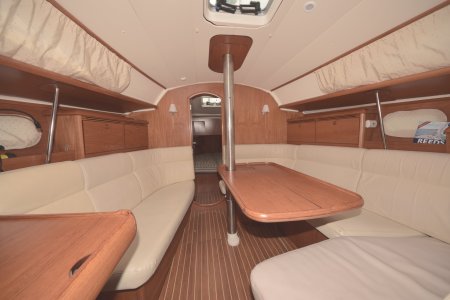
I have used polyurethane varnish over a lacquer finish. Very light wet and dry to key sound areas, sanding more on some solid wood trim where damaged. Several coats of gloss varnish, then a final coat of 50:50 mix gloss and Epifanes rubbed effect varnish to finish. Gave a pretty good match to original semi-gloss lacquered surfaces. In the photo the chart table and saloon table have been varnished over lacquer.
 

Attachments

  • DSC_4937.JPG
    DSC_4937.JPG
    1.7 MB · Views: 8
Top