Reversed polarity, is it an issue?

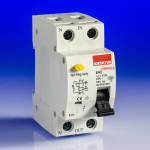
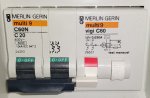
I think what you have to be wary of are CUs with single pole RCBOs which disconnect what is normally the "line" conductor but is of course only the "neutral " if the supply polarity is reversed, leaving the unwary to the full effects of electrocution.
If RCBOs are fitted in a situation where reversed polarity of the supply may be encountered they must be double pole

The "garage" consumer units with a 2 pole RCD and a couple of ( single pole ) MCBs may not be so bad in so far as an earth leakage fault or contact with the "line" conductor, will disconnect both line and neutral which ever way the supply is polarised and so prevent electrocution , but the single pole MCBs still present a problem.

The vast majority of UK boats have single pole MCBs, there is nothing in currents standards to prevent that, providing a reverse polarity warning exists, as it doe with the OP.

They do not "present a problem" as long as the system is as working as it should be, as in, the correct AC polarity.
 
Most things should work, but not usually a good idea. Unless you have dual pole circuit breakers you will have the negative "fused". A fault in a appliance could leave it live.

Usual thing would be to carry a short shore power cable (1 metre would be plenty) with the polarity reversed in one of the connectors.

That's just what I did after the same experience at my first port of call in Europe in 2007, (Bayona IIRC).
 
Just to add to this, I found that because my boat is fitted with European sockets. some had reverse polarity which wouldn't matter unless you have polarity sensitive equipment being plugged in. Because a european plug can go into the socket both ways round they have had to allow for it but using a UK plug in an adapter it can often only go in one way round because of the spring loaded cover that tends to be fitted on boats. Some battery chargers are polarity sensitive and I've seen 2 destroyed when plugged into French marinas with reversed polarity.
 
Many boats will have single pole mcb's as as mentioned before if the polarity is reversed they may trip leaving the equipment live, not good. I have never seen a single pole rcd on a boat or any landbased board main switch (single pole RCBOs are common but not used on boats much). With metal boats it's the earth that is the problem not the live/neutral as they should never come to contact with the boat! If you fit an isolation transformer common on metal boats the polarity comming in dosent matter as the transformer corrects it at its output. As long as you are aware the polarity is incorrect and always assume items are live even it they are switched off everything should work you just need to be much more careful until you correct the issue, as suggested a short crossed lead seems a good idea.
 
Many boats will have single pole mcb's as as mentioned before if the polarity is reversed they may trip leaving the equipment live, not good. I have never seen a single pole rcd on a boat or any landbased board main switch (single pole RCBOs are common but not used on boats much). With metal boats it's the earth that is the problem not the live/neutral as they should never come to contact with the boat! If you fit an isolation transformer common on metal boats the polarity comming in dosent matter as the transformer corrects it at its output. As long as you are aware the polarity is incorrect and always assume items are live even it they are switched off everything should work you just need to be much more careful until you correct the issue, as suggested a short crossed lead seems a good idea.
I dislike, intensely, the concept of everybody on board my boat needing to be " much more careful than usual " to protect themselves from a potentially lethal hazard. The prime purpose of all electrical protection (fuses, MCBs, RCDs, RCBOs) is to protect life when equipment fails or is operated incorrectly.

My boat has a dual pole RCD then single pole MCBs so, on connecting to the mains, we use a B&Q socket tester to confirm that live and neutral are not crossed over in the supply. If they are crossed over the immediate action is to unplug, rather than using 240 V. equillment, just because it will work in this less safe state. Correcgion, as Paul Gooch has noted is just a matter of incorporating a short extra cable with a further L to N crossover in the supply and of course rechecking that Live and Neutral are now properly connected. In boating terms, a socket tester and a short crossover connecting cable are not expensive, I would guess £30, and would keep you safe.

It's common to hear Brits deriding European electricity supplies as unsafe, because of this issue, but european electrical engineers find the UK habit of fitting cheap single pole protection systems equally derisive. Ihave to say, I find the european approach of universal double pole protection the safer option of the two.

Peter.
 
I dislike, intensely, the concept of everybody on board my boat needing to be " much more careful than usual " to protect themselves from a potentially lethal hazard. The prime purpose of all electrical protection (fuses, MCBs, RCDs, RCBOs) is to protect life when equipment fails or is operated incorrectly.

My boat has a dual pole RCD then single pole MCBs so, on connecting to the mains, we use a B&Q socket tester to confirm that live and neutral are not crossed over in the supply. If they are crossed over the immediate action is to unplug, rather than using 240 V. equillment, just because it will work in this less safe state. Correcgion, as Paul Gooch has noted is just a matter of incorporating a short extra cable with a further L to N crossover in the supply and of course rechecking that Live and Neutral are now properly connected. In boating terms, a socket tester and a short crossover connecting cable are not expensive, I would guess £30, and would keep you safe.

It's common to hear Brits deriding European electricity supplies as unsafe, because of this issue, but european electrical engineers find the UK habit of fitting cheap single pole protection systems equally derisive. Ihave to say, I find the european approach of universal double pole protection the safer option of the two.

Peter.

Sorry if I offended you, my intention was to express what I would do as an electrician.
If I turn up late at a marina and find the polarity is reversed, I would still put the kettle on and plug the fan heater in BUT I would be aware and would explain to my crew that If something stopped working don't assume it is isolated and safe as you might at home, treat it as if it were still live.
If I were there for a few days I would make up a lead to correct the polarity or I would swap the wires in my plug making sure I swapped it back after!
Perhaps working with electronics for the last 40years has given me a slightly different approach to it than you, that's fine we all have different levels of risk we find acceptable. You still have overload protection, you still have earth fault protection with the rcd, you may have a mcb in the neutral. Personally I fitted an isolation transformer and I don’t care what polarity comes out of the socket in the marina - that's was the result of my risk assessment for our metal boat!

Where did you get the idea I was criticising European engineers? I didn't mention what country I was referring to, you are just as likely to have polarity problems in the UK!
Regulations, standards and expectations change and what we use on boats has changed, I was working on an American Legend with the mains 230v and12v systems in the same panel no separation, you could easily put the 12v wire in a 230v terminal, that was how legend built there boats then hopefully not now. Many of the 12v and 230v systems on older boats are not what we would expect now, the same with houses. I would expect a new boat electronics from any manufacturer to be double pole mcb's now as caravans have been for many years. I would still like the correct polarity.
 
Sorry if I offended you, my intention was to express what I would do as an electrician.
If I turn up late at a marina and find the polarity is reversed, I would still put the kettle on and plug the fan heater in BUT I would be aware and would explain to my crew that If something stopped working don't assume it is isolated and safe as you might at home, treat it as if it were still live.
If I were there for a few days I would make up a lead to correct the polarity or I would swap the wires in my plug making sure I swapped it back after!
Perhaps working with electronics for the last 40years has given me a slightly different approach to it than you, that's fine we all have different levels of risk we find acceptable. You still have overload protection, you still have earth fault protection with the rcd, you may have a mcb in the neutral. Personally I fitted an isolation transformer and I don’t care what polarity comes out of the socket in the marina - that's was the result of my risk assessment for our metal boat!

Where did you get the idea I was criticising European engineers? I didn't mention what country I was referring to, you are just as likely to have polarity problems in the UK!
Regulations, standards and expectations change and what we use on boats has changed, I was working on an American Legend with the mains 230v and12v systems in the same panel no separation, you could easily put the 12v wire in a 230v terminal, that was how legend built there boats then hopefully not now. Many of the 12v and 230v systems on older boats are not what we would expect now, the same with houses. I would expect a new boat electronics from any manufacturer to be double pole mcb's now as caravans have been for many years. I would still like the correct polarity.

You will be disappointed then. There is no current requirement for manufacturers to fit double pole MCBs.

It is very, very, very common to see AC and DC in the same cabinet on a boat.

I have to agree with Peter, using appliances when you know the polarity is reversed isn't good practice. Just carry a suitably marked cross over cable, sorted!
 
Last edited:
Thanks Paul, great advice as always. Im here for another week before moving on so might as well just swop the wires over in my socket that goes into the supply tower on the pontoon.

Presumably its no more complicated than that?

Until you go to the next marina or back to the UK and the polarity isn't reversed, but your wiring is.
 
....Perhaps working with electronics for the last 40years has given me a slightly different approach to it than you, that's fine we all have different levels of risk we find acceptable.....

Yes, it's made you complacent. Telling people to be careful isn't good enough. People don't understand, people forget.
 
Some of the newer Sunseekers have polarity protection built in. Unless the polarity is correct, it won't pull in the mains contactor.

Can be fun when the supply neutral floats above earth more than usual (>10V)
 
Are you on a 16a or 32a supply ?

Your circuit breaker is 20a, do you have additional circuit breakers ?
Oh! 16a. No other breakers. Immersion heater 1.5kW (via 13a fuse), two 13a sockets and a battery charger (vis 5a fuse). This is what was supplied by Beneteau in 1999. Should I be worried?
 
Last edited:
Most things should work, but not usually a good idea. Unless you have dual pole circuit breakers you will have the negative "fused". A fault in a appliance could leave it live.

Usual thing would be to carry a short shore power cable (1 metre would be plenty) with the polarity reversed in one of the connectors.
Exactly what I did in France. Worked fine after that.
 
You will be disappointed then. There is no current requirement for manufacturers to fit double pole MCBs.

It is very, very, very common to see AC and DC in the same cabinet on a boat.

I have to agree with Peter, using appliances when you know the polarity is reversed isn't good practice. Just carry a suitably marked cross over cable, sorted!
I agree it is not good practice and greatly reduces safety, just like choosing not to ware a life jacket on a sunny day in harbour, its all down to assessing the risk and making an educated decision.

In response to Rainbow as he seems to have a problem with any posts I put on this forum-

Complacent or educated, personally as caravans have been required to have double pole mcbs for the last 2 editions of BS7671 and through out the Electrical industry it has not been acceptable to open a cupboard door with no tool and access 230v terminals for as long as I can remember, it isn't acceptable to have unshielded 12v terminals right next to 230v terminals. If you are happy with this arrangement and continue to do such dangerous and shoddy work perhaps you should do a few courses and up your game a bit perhaps you should stick to what you are good at? Criticism!
 
Just to add to this, I found that because my boat is fitted with European sockets. some had reverse polarity which wouldn't matter unless you have polarity sensitive equipment being plugged in. Because a european plug can go into the socket both ways round they have had to allow for it but using a UK plug in an adapter it can often only go in one way round because of the spring loaded cover that tends to be fitted on boats. Some battery chargers are polarity sensitive and I've seen 2 destroyed when plugged into French marinas with reversed polarity.
This may explain an observation. If I charge a car battery from one socket I feel a tingle from the metal charger casing. It does not happen if I use other sockets.
French plugs and sockets have an earth pin that allows connection only one way. Dutch ones (and others?) do not, so they can be connected either way.
 
This may explain an observation. If I charge a car battery from one socket I feel a tingle from the metal charger casing. It does not happen if I use other sockets.
French plugs and sockets have an earth pin that allows connection only one way. Dutch ones (and others?) do not, so they can be connected either way.
French sockets are wired up pretty much at random. In an average house you will find about half the sockets wired up the wrong way.
 
Oh! 16a. No other breakers. Immersion heater 1.5kW (via 13a fuse), two 13a sockets and a battery charger (vis 5a fuse). This is what was supplied by Beneteau in 1999. Should I be worried?

If your 13a plugs are all fused the individual circuits are correctly fused. The 20a fuse cannot protect you from having too many things on at the same time and exceeding the 16a shore power supply. If this happens you rely on the marina breakers tripping. Ideally, you should have a 16a MCB onboard, but i probably wouldn't lose too much sleep over it, it can be an inconvenience, but isn't likely to cause an issue onboard.
 
Top