
Chiara’s slave
Well-Known Member
We should have outsourced, took weeks of misery to get back to gel, or rather epoxy. Looked like a couple of smurfs at the club summer ball?

And your long term health?We should have outsourced, took weeks of misery to get back to gel, or rather epoxy. Looked like a couple of smurfs at the club summer ball?

Advice please.
The anti-foul on my Leisure 18 is looking a bit rough, with some chipping off.
How aggressive can you be without damaging the underlying gel coat or fibreglass?
I don't need to remove it all but just get it to a smoothish finish prior to re-antifouling it.
Short of removing the lot, it depends on what method you use. When mine was several years old it started flaking in places due to poor adhesion to the original a/f. I just used a scraper and got the loose stuff off. I then used a sander to feather the edges before painting the patches with primer, resanding by hand and adding more primer and a/f, leaving a smooth surface. I found a rotary sander the easiest and quickest way of feathering off with a coarse disc, which sounds alarming but can be quite gentle. After a few years of this I came to my senses and had the lot taken off by a pro.

Do the sandpaper gets easily blocked when removing palative a/f? Is there a trick when sanding a/f?
Thanks.
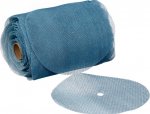
Whatever you use ensure it can be used wet, and use lots of water to wash the dust away as it is designed to be toxic. Its not a good idea to get antifoul dust near your eyes, nose or mouth.Do the sandpaper gets easily blocked when removing palative a/f? Is there a trick when sanding a/f?
Thanks.


Although true, I only ever sanded small areas around the edges to feather them, which I found impossible to do by hand.Whatever you use ensure it can be used wet, and use lots of water to wash the dust away as it is designed to be toxic. Its not a good idea to get antifoul dust near your eyes, nose or mouth.
Having done a complete scrape back to GRP by hand, I strongly advise getting somebody in to do the job by either blasting or dry ice.Advice please.
The anti-foul on my Leisure 18 is looking a bit rough, with some chipping off.
How aggressive can you be without damaging the underlying gel coat or fibreglass?
I don't need to remove it all but just get it to a smoothish finish prior to re-antifouling it.
Sandy,Having done a complete scrape back to GRP by hand, I strongly advise getting somebody in to do the job by either blasting or dry ice.
My current boat was professionally blasted back and copper coated. The 1 knot increase in average speed has been a joy.
I had my boat soda blasted at a yard in Plymouth but that was back in 2009. Pleasant guy who traveled around the yards in the area so it should not be difficult to find someone now if you ask at the boatyards. I applied the epoxy and Coppercoat myself after tenting the hull with tarps.Any recommendation for blasting and copper coating (Plymouth area)

You'll be using Wetordry sandpaper. The paint dust washes out.Do the sandpaper gets easily blocked when removing palative a/f? Is there a trick when sanding a/f?
Thanks.
For the sake of both your own health and that of the environment, and so as not to get blue dust all over neighbouring boats, you should only abraded anti fouling with wet-sanding media.Short of removing the lot, it depends on what method you use. When mine was several years old it started flaking in places due to poor adhesion to the original a/f. I just used a scraper and got the loose stuff off. I then used a sander to feather the edges before painting the patches with primer, resanding by hand and adding more primer and a/f, leaving a smooth surface. I found a rotary sander the easiest and quickest way of feathering off with a coarse disc, which sounds alarming but can be quite gentle. After a few years of this I came to my senses and had the lot taken off by a pro.
For the sake of both your own health and that of the environment, and so as not to get blue dust all over neighbouring boats, you should only abraded anti fouling with wet-sanding media.
I empty the bucket down the drain at hardstanding where the boats are powerwashed on liftout.Interested how you deal with the wet residue, with regard to health and environment?
Contact Mylor Yacht Harbour.Sandy,
Any recommendation for blasting and copper coating (Plymouth area) - I'm thinking of having this done on my boat in coming season.

Didn't you read to the end of JohnAlison's post and learn what he did when he "came to his senses"?The PBO one is to remove it all. Why don't they do an article to tell you how to do patching job and then go sailing, Patching is fine for cruising. I find that if you do little each year it is easy to keep on top on it. JohnAlison's method works well.
David MH
I beg to disagree.There is a state known as stable rust which forms a protective layer over the unconverted metal underneath. Bearing in mind rust, so long as it remains attached, is heavier than cast iron blasting back to bare metal every year might affect your ballast ratio ?