
Regroove Teak Deck - Najad

goeasy123

Well-Known Member
Joined
10 Nov 2018
Messages
762
Visit site
The teak deck on my 2003 Najad 400 looks great. It's 8mm to 10mm thick, but the caulking groove is max 3mm deep and in places 0mm deep.

Any suggestions on the best way/tools to deepen the groove a little?...or... know a company that has a good reputation for doing it?
 
You could do it with a small powered router but you would need to be very careful not to run out of the existing groove. The other way would be to use a plough plane; easier to control but more tiring!
 
The teak deck on my 2003 Najad 400 looks great. It's 8mm to 10mm thick, but the caulking groove is max 3mm deep and in places 0mm deep.

Any suggestions on the best way/tools to deepen the groove a little?...or... know a company that has a good reputation for doing it?

It's a real problem. I've been there with a Hallberg-Rassy deck which was only about 12 years old, but the boat had been in Spain and had been scrubbed a bit. The difficulty in deepening the grooves is to do it without wrecking the sides of the groove. On the worst bits of my deck, I used a multitool with a grout cutting blade, very carefully. Use a vacuum cleaner to remove the dust so you can see where you're working. Not easy, but it can be done! My knees haven't recovered yet...

PS If you're recaulking, check what sort of caulk was used originally. HR used silicone caulk for many years, and ordinary caulk may not stick too well to the grooves.
 
Last edited:
Vintage Hand Tool beats Modern Fancy Power Tools!!

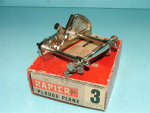
OP here. Eventual solution: A used £18 vintage Record plough plan of ebay. Perfect results, quick and easy to use.
 
I made a fancy headboard with a shadow line groove all round, cut it with a circular saw, worked well with clean neat grooves though I did splay out the teeth a little before I started. Fine for straight bits but would not try it on curves.
 
OP here. Got great results using the old plough plane I got off ebay. See pic. It cuts an accurate groove very quickly without much user skill required. This gives me 8 to 10mm for 'new' deck across the whole boat.

Question: I can get right down to the gel coat leaving no wood to wood contact between the planks. If I do this do you reckon the planks will stayed glued to the deck with the screws removed; just with the original Najad applied glue? I've heard that the screws where only put in to hold the planks down while the glue went off.

1601506627252.png
 
do you reckon the planks will stayed glued to the deck with the screws removed; just with the original Najad applied glue? I've heard that the screws where only put in to hold the planks down while the glue went off.

If PU bedding was used originally, I think the planks would not move. But, out of interest, what would be the purpose of removing the screws?
 
If PU bedding was used originally, I think the planks would not move. But, out of interest, what would be the purpose of removing the screws?
I suspect because the teak plugs have popped out with insufficient teak depth remaining to glue in new plugs. Hence remove screw, flood with high Viscosity epoxy, re cut deeper and re plug.
 
OP here. Got great results using the old plough plane I got off ebay. See pic. It cuts an accurate groove very quickly without much user skill required. This gives me 8 to 10mm for 'new' deck across the whole boat.

Question: I can get right down to the gel coat leaving no wood to wood contact between the planks. If I do this do you reckon the planks will stayed glued to the deck with the screws removed; just with the original Najad applied glue? I've heard that the screws where only put in to hold the planks down while the glue went off.

View attachment 99728
How did you keep the plane exactly in line with the groove curvature? I imagined that a parallel fence would be needed to keep precisely in-groove?
 
I suspect because the teak plugs have popped out with insufficient teak depth remaining to glue in new plugs. Hence remove screw, flood with high Viscosity epoxy, re cut deeper and re plug.
Yes, possibly so.
An other alternative, if unsure of the original bedding, could be to deepen the hole somewhat and change out the screw to the type with a thin, flat head.
 
Re screws: The original screws are already flat headed. The existing plugs are thin and coming out. When removing the screws and repluging the holes I don't want to put a screw in if it's not actually doing anything. I'm doing something like Robih suggests.... Remove screw, drill down to deck with a forstner bit, fill the screw hole and coat the bottom of the plug hole with free-flowing epoxy. Then glue in new plug with waterproof Tightbond. Because the forstner bit cuts vertically on its edge it does not cut very far before the edge reaches the bottom of the hole. I.e. you will see some wood at the bottom, but it s no longer connected to the surrounding plank.

Re: keeping the plane in the groove: I take the fence off. The plane has a 2mm wide X 15mm deep guide that the blade protrudes through. This runs the whole length of the plane and keeps it in the groove. There needs to be a little but of groove left for it to work. The blade is ground to the width of the groove. The side of the blade are rounded over very slightly so they don't damage the sides of the groove. It takes about 5 minutes to deepen a 3 meter long groove by 5mm. It won't get to the last 50mm of the groove. That's finished with a 4mm chisel.

BabaYage or anyone else.... What does PU stand for? Do you think a 2003 Najad is likely to have it?
 
Last edited:
BabaYage or any else.... What does PU stand for? Do you think a 2003 Najad is likely to have it?

PU = polyurethane based bedding compound. I don't know for sure, but would guess so.
I had a professional put new teak on my coach roof at around that year and he used it. He had worked at several of the Orust yards and I believe that was the current method.
 
I suspect because the teak plugs have popped out with insufficient teak depth remaining to glue in new plugs. Hence remove screw, flood with high Viscosity epoxy, re cut deeper and re plug.
Friends did exactly this on a Bowman 45. Complete failure! They ended up replacing these planks with new ones. It really didnt work for them
 
Friends did exactly this on a Bowman 45. Complete failure! They ended up replacing these planks with new ones. It really didnt work for them
Ouch, that was a bad day in the office. Cause of failure? It seems to be a common refurb methodology So surprised to read that.
 
Ouch, that was a bad day in the office. Cause of failure? It seems to be a common refurb methodology So surprised to read that.
The cause of failure was lack of screws. It appears that a screwed down deck does need screws. Under the deck was a substance like butyl. It may depend on what the deck is laid on. Presumably if it was laid of something like sikaflex then it wouldn't have had screws at all just like a modern teak deck
 
The cause of failure was lack of screws. It appears that a screwed down deck does need screws. Under the deck was a substance like butyl. It may depend on what the deck is laid on. Presumably if it was laid of something like sikaflex then it wouldn't have had screws at all just like a modern teak deck
So could you remove the screws and relay the old strips on Sika? I've got this job on the radar :(
 
It appears that a screwed down deck does need screws.

I don't think that there is necessarily a correlation between the type of bedding material used and how the planks are fastened or held in place. During one period it was common to lay 'plugless' teak decks by using screwed down clamps to hold the planks in position while the PU bedding cured. (The screws then positioned in the grooves and holes seled before caulking). Nowadays I believe decks are more often vacuumed.
Obviously, something like butyl bedding would never hold the planks without any screws.
 
The teak deck on my 2003 Najad 400 looks great. It's 8mm to 10mm thick, but the caulking groove is max 3mm deep and in places 0mm deep.

Any suggestions on the best way/tools to deepen the groove a little?...or... know a company that has a good reputation for doing it?
This is what we start using, Fein 63903200210 Teak Deck Blade, Colour Coded, 3 mm - bought on Amazon, nice on cordless multi tool, so we can do on anchor with out need of main supply from marina.
 
Top