Regroove Teak Deck - Najad

Are you using this to remove the caulking or cutting the wood out of the groove to deepen the groove?

I also wondered that. The Fein tool is designed for removing caulking, rather than removing wood, although I guess it might rip wood out of the bottom of the groove.
 
I also wondered that. The Fein tool is designed for removing caulking, rather than removing wood, although I guess it might rip wood out of the bottom of the groove.
...and I don't think it would do a tidy job of wood. I'm wondering if it's a better option than my little hand plane.

TDS has a pdf on using their caulking. It recommends using and little circular saw or a powered router. It shows pictures. I'd like to see a video of someone deepening a 10mtr long curved groove like on Shamaya's nice looking Najad. I don't think it's possible.
 
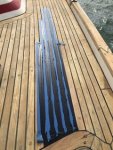
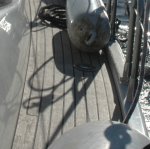
The teak deck on my 2003 Najad 400 looks great. It's 8mm to 10mm thick, but the caulking groove is max 3mm deep and in places 0mm deep.

Any suggestions on the best way/tools to deepen the groove a little?...or... know a company that has a good reputation for doing it?
I’ve done this. I used a plunge saw. Two blades on top of each other fits the groove width. The plunge depth set to the deck. You could adapt a guide pin to the saw to help, which is what is on the tools the pros use. I think you can buy one from Teak Decking Systems. Email to get details. I caulked down to the deck. You could put a de-bonding tape down first, but I didn’t bother and it’s been ok two years now. I think modern caulks are good enough to not need it.
 
OP here. Got great results using the old plough plane I got off ebay. See pic. It cuts an accurate groove very quickly without much user skill required. This gives me 8 to 10mm for 'new' deck across the whole boat.

Question: I can get right down to the gel coat leaving no wood to wood contact between the planks. If I do this do you reckon the planks will stayed glued to the deck with the screws removed; just with the original Najad applied glue? I've heard that the screws where only put in to hold the planks down while the glue went off.

View attachment 99728
I have a similar problem on my Southerly, the teak planks are butt up against each other and one edge has been rebaited to form a groove, which has then been filled with caulking. Over the years the teak has worn, so now the caulking is very thin in places, however there is still plenty of teak left. I'm told that the teak was laid on epoxy and there are no screws holding it down.

I'm really reluctant to use a power tool on the deck, it could lead to a very expensive mistake, and using a plough plane seems like a good way to go.

The deck planks are just on the side deck, so they are long and have gentle curve, which I think is manageable with a plough plane.
I inherited my grandfather's tools, he was a cabinet maker and I have a Record No: 043 plough plane with a selection of blades in good condition.

There are 9 planks running down each side deck and the boat is 14m (46ft).
I know this is an impossible question, but here goes anyway:

Would anyone like to estimate how long it would take to manually plane out the old caulking?

Each side of the teak side deck is butted up to GRP gelcoat, so the plough plane wouldn't work there. I've already taken some of the caulking out in these areas to repair leaks, using a 4mm mortice chisel, which is very time consuming. The caulking is quite rubbery and resilient and well bonded to the gelcoat, but not well bonded to the teak.

Any thoughts on removing the caulking from the edges of the side decks, other than chopping it out with a mortice chisel?teak side decks.JPG
The photo is from 2013 and now has a lot more wear than shown in the photo.
 
Ian,

I have a Rapier which is replica of your Record 043. This is what I found worked:

See pic... PLane.JPG
Grind a blade to 4mm thick (or the width of the groove less a tad), but leave the top of it wide otherwise the screw won't hold the blade in place. Make the edges of the blade blunt/slightly rounded over otherwise they'll tear out the top edge of the wood. You don't need the depth stop or edge guide.

A few passes will get you down to the gel coat. You need to finish the ends with your chisel. I then sanded the groove with 80 grit over the end of a 4in wallpaper scraper. Count on taking 5mins per meter once you get going. It's quicker and safer that using a power tool.

Try using TDS's reefing hook to get the side seems out.
... or save the money and make one.

Let us know how you get on?
 
Top