Probably a silly question - headsail sheets

Racer thing. They are faster to tack.
Can’t see why a non self trailer winch is any faster to tack. Use of the self tail bit is optional, and not used when spinning the sheet in during the tack, only when grinding the last bit tight (when two hands on the handle can be faster).

Flaming will be a long later to advise, but a quick look at some JPK race boats shows plenty of self tailer winches, and they ain’t slow.

Think it is just an old boat / equipment thing.
 
Last edited:
My reasons are more prosaic . Two three speed Harken 65 three speeds and two Harken 53 three speeds would cost a fortune to replace and we only tack when we have to, anyway.

In my dreams, I fit electric winches; in real life we have self tailers on the halyards and for reefing and a Winchrite!
 
Can’t see why a non self trailer winch is any faster to tack. Use of the self tail bit is optional, and not used when spinning the sheet in during the tack, only when grinding the last bit tight (when two hands on the handle can be faster).

Flaming will be a long later to advise, but a quick look at some JPK race boats shows plenty of self tailer winches, and they ain’t slow.

Think it is just an old boat / equipment thing.
Depends.

In the smaller sizes there is very little difference, but as you go up in size, threading the self tailer starts taking a bit more time. And in any case the number of crew available starts getting to the point where there's no issue having someone tailing.

But then you go up a bit further and the winch is being run off a coffee grinder, and self tailing is better again....
 
Depends.

In the smaller sizes there is very little difference, but as you go up in size, threading the self tailer starts taking a bit more time. And in any case the number of crew available starts getting to the point where there's no issue having someone tailing.

But then you go up a bit further and the winch is being run off a coffee grinder, and self tailing is better again....
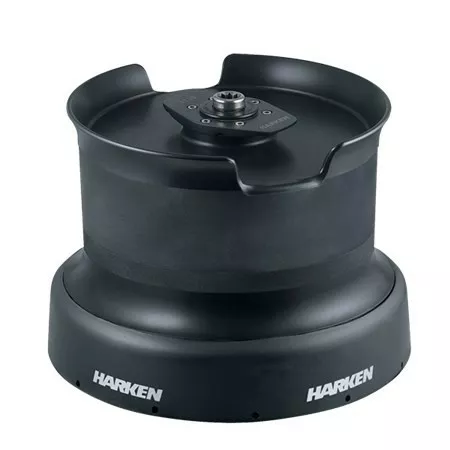
e.g.
product_094aead6-fcee-4703-8687-bb1537e5604b.jpg
 
Can’t see why a non self trailer winch is any faster to tack. Use of the self tail bit is optional, and not used when spinning the sheet in during the tack, only when grinding the last bit tight (when two hands on the handle can be faster).

Flaming will be a long later to advise, but a quick look at some JPK race boats shows plenty of self tailer winches, and they ain’t slow.

Think it is just an old boat / equipment thing.
Depends.

In the smaller sizes there is very little difference, but as you go up in size, threading the self tailer starts taking a bit more time. And in any case the number of crew available starts getting to the point where there's no issue having someone tailing.

But then you go up a bit further and the winch is being run off a coffee grinder, and self tailing is better again....
The stripper arm does get in the way. I have both, have had both on many boats, and it is a thing. You can, of course, work with what you have.

The other factor is size. On larger boats, particular raced short handed, self-tailers are great. On smaller boats, without question, non-tailing is faster. Small boats tack quicker and you don't need two hands to grind. They will have cam cleat just down stream of the winch.

It's one of those no single answer things.
 
The stripper arm does get in the way. I have both, have had both on many boats, and it is a thing. You can, of course, work with what you have.
I have never found the stripper arm getting in the way. Wonder if it depends how you align them?

Still struggling to see how the bit on the self trailer bit on top could slow a tack. Always take out of self trailer on the loaded side before the tack, and in our case ensure have two turns pre loaded on the new side (some prefer just one turn or none on small boat). Spin in the new sheet, flick on turn 3 and can either start to winch instantly if got a tailer, or flick another loop into the self trailer if short handed.
 
I have never found the stripper arm getting in the way. Wonder if it depends how you align them?

Still struggling to see how the bit on the self trailer bit on top could slow a tack. Always take out of self trailer on the loaded side before the tack, and in our case ensure have two turns pre loaded on the new side (some prefer just one turn or none on small boat). Spin in the new sheet, flick on turn 3 and can either start to winch instantly if got a tailer, or flick another loop into the self trailer if short handed.

The stripper arm is normally located on the right side at about a 90 degree angle, but there are 2 factors that determine the exact angle (you know this, but for others following the thread):
  • Where you want the tail to drop. Right in front of you is common, but it could be other if there is a built-in bin.
  • An angle that allows you to easily give it a light tug to set the tail in the jaws.
If you have a self-tailer you learn to spin the sheet off and on in a larger circle. Not a big problem, not at all. But some identify it as a reason to have plain winches.
 
I use retired climbing ropes, so all mine are different colours. Difference in stretch is minimal, not noticeable on my boat, although the saving is. Rope quality seems much superior, some of the ropes I see at chandlers are cheap rubbish.
 
I use retired climbing ropes, so all mine are different colours. Difference in stretch is minimal, not noticeable on my boat, although the saving is. Rope quality seems much superior, some of the ropes I see at chandlers are cheap rubbish.
The amount of stretch built in to climbing rope would be interesting, on my boat. I doubt it would be possible to tension the mainsail luff. Pretty good for mooring though, assuming that some lardy climber hasn’t already had a heavy fall on it.
 
I use retired climbing ropes, so all mine are different colours. Difference in stretch is minimal, not noticeable on my boat, although the saving is. Rope quality seems much superior, some of the ropes I see at chandlers are cheap rubbish.


For general use ... I agree ... in fact a little bit of 'give' on a sheet is not such a bad thing ... in squalls - it may be enough to save the sail ...

But as Chiara says - not so good on halyards if performance related.

For the average cruising ? Why not ..

I buy Kingfisher braid ... its Indian version of Marlow ... When I've compared the two - I find no real difference and use has been excellent. Be interesting to know the background of Kingfisher Rope ... I wonder if .........
I know next to little about fancy Dyneema ... but years of seagoing have taught me about the normal stuff ... no expert - far from it - but I can tell crap from good !!

Many of the cheaper become hard with use .. literally like steel bar ... unlike a quality line that may stiffen up as the lay / braid settles in use - but still retains reasonable flexibility. It is a costly exercise for a boat to replace running rigging .. and temptations abound ...
 
I use retired climbing ropes, so all mine are different colours. Difference in stretch is minimal, not noticeable on my boat, although the saving is. Rope quality seems much superior, some of the ropes I see at chandlers are cheap rubbish.
Great for mooring ropes - but hopeless for sheets, and worse for halyards.

In gusts there will be more tension on halyards and sheets. The worst thing you want is the ropes stretching and making the sails fuller in a gust.
Prestretched multiplait poly rope is OK for small cruising boats, but cruising dyneema is materially better once boat size and strains increase. Climbing ropes for anchor snubbers etc.
 
Normal jib sheets, 6mm white polyester with black flecks.
Jib sheets to hold out club foot, blue 4mm dyneema, just cos I had some spare.
Halyard jib black 4 mm dyneema
Halyard main red 4 mm dyneema.

Yep it's a small mini keelboat, the jib is 25sqft, main 95sqft.
 
Seems like anchors - there's opinions !!

Having seen results of sails torn in the 2023 Regatta held here and the comments from owners ... we'll agree to differ on sheets ...

I agree that its preferred to be able to set a sail and know its 'set' will stay - but the little bit of give that a severe gust can have - could save that sail ...

Comments on this thread seem to indicate that give is going to be significant amount ... c'mon - be real - the amount of give is slight .. enough on Luff / halyards - but on sheets - especially a genny ???? I wouldn't use on a spinny or cruising chute ... but ...
 
As a life-long climber I've had many retired climbing ropes. I like saving money. But there are only a few applications:
  • Not halyards.
  • Not reacher or spin sheets.
  • Not lines that are winched, like jib sheets, unless the boat is quite small, less than 8 meters.
  • Maybe tackles that are hand tensioned. The load won't be more than 40-50 pounds, so stretch will be limited. And a little stretch in a main sheet will ease a gust by opening the top of the sail, not by making it more full, like a jib. But I've never done this.
  • Not mast raising tackle. It will stretch and bounce. I did that in a pinch once. I knew I wouldn't like it, but I left the proper rope at home. No harm, but not plesant.
  • Anchor lines and chain snubbers. Won't work in a windlass, but nice in the hands and stretch is good. Smaller boats for rode.
  • Mooring. Can't splice it, but OK.
  • Travelers. I have used it for this. Once I upgraded from polyester to Spectra. It was like jibing against a brick wall, even in light winds. I changed to 8mm ice rope. Very nice. Yes, you could watch it stretch ~ 1" in strong, gusty weather, which was not harmful. Under the impact of a rough jibe it would stretch several inches, which really helped take the sting out. (Yes, my normal practice is to haul the mainsheet in and control the jibe, but mistakes happen, and even with perfect technique, there is still a good thump when it's fresh).
Obviously, we are talking about used rope, so much depends on condition. Some are nervous and retire ropes that are barely broken in. Sometimes a rope is damaged in the middle and becomes to short for climbing. If it is seriously fuzzed all over, like any rope, maybe it's just done in. But top rope falls and a few modest lead falls don't actually matter much. Lots of rappelling can take a toll.
 
Last edited:
Seems also that people tend to forget that climber rope is limited diameter to allow length in volume ... unlike the ships hawsers many use on their boats !!

Meaning it has limited use due to boat size.
 
Last edited:
Seems also that people tend to forget that climber rope is limited diameter to allow length in volume ... unlike the ships hawsers many use on their boats !!

Meaning it has limited use due to boat size.
Yes. But it will work for snubbers and travelers up to about 40 feet, based on user experience.

And this does not mean just climbing rope. Nylon double braid serves the same uses.
 
A mate of mine bought a job lot of GPO braided rope. He couldn't work out why his sails kept flapping after initial trimming.

Turned out that the rope was designed for going up telegraph poles etc with a fair bit of give. I assume similar to climbing rope.
 
Top
