

Cardo
Well-Known Member
I know some of you do this kind of stuff day in day out, so I'm wondering if I could have some assistance...
This relates to our system to control various boat bits from a Pebble smart watch. We have a Raspberry Pi that is connected to a set of relays, which in turn can control various bits and pieces.
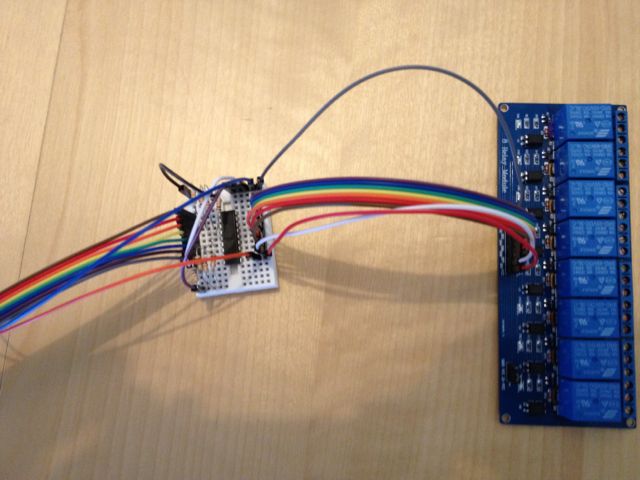
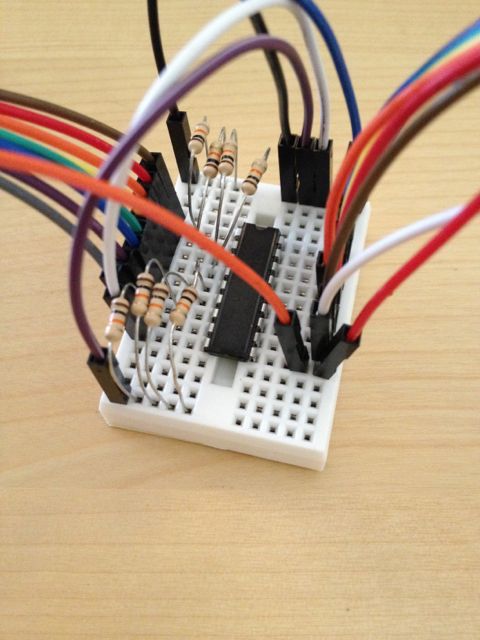
Unfortunately, the Pi can't be connected directly to the relay board, it currently goes through a bread board with a ULN2803A chip and some resistors to accommodate the difference in voltages (3.3v on Pi vs 5v on relay board), reverse the active low nature of the board, and also pull down any float voltages on the Pi's GPIOs so we don't inadvertently activate any relays on startup.
This is what it looks like:
and a closeup:
I'm wondering if it would be possible to get a simple PCB made up to make this neater and more secure? I'm guessing smothering the bread board with glue isn't the most ideal solution!
This relates to our system to control various boat bits from a Pebble smart watch. We have a Raspberry Pi that is connected to a set of relays, which in turn can control various bits and pieces.
Unfortunately, the Pi can't be connected directly to the relay board, it currently goes through a bread board with a ULN2803A chip and some resistors to accommodate the difference in voltages (3.3v on Pi vs 5v on relay board), reverse the active low nature of the board, and also pull down any float voltages on the Pi's GPIOs so we don't inadvertently activate any relays on startup.
This is what it looks like:
and a closeup:
I'm wondering if it would be possible to get a simple PCB made up to make this neater and more secure? I'm guessing smothering the bread board with glue isn't the most ideal solution!

