Portable power

zoidberg

Well-Known Member
Joined
12 Nov 2016
Messages
7,124
Visit site
Above and beyond our 'wrangles' about LFP installations - which I've followed with interest - I now notice a crop of online ads for 'more-or-less' portable lithium battery packs from the likes of Jackery and Ecoflow.

These seem aimed at the van-camping and home 'prepping' market.

I'm wondering if and how such products might find a place in our boaty range of 'must have' goodies.
 
Been around for some time - and discussed here more than once. Useful if you have other uses such as camping powering tools off grid or running a market stall etc but an expensive way of getting power plus limited ways of recharging. So useful for powering tools on the boat if no 240v available and maybe for short term 240v on the boat but small ones not enough to power a kettle for example.

The major chandlers stock them but the makers never seem to feature boat usage in their marketing puff so maybe they don't see a big market.
 
Zero installation, unlikely to have any insurance worries.
But they're a hideously expensive way of adding battery capacity and really only start to make sense if you also want the other stuff like the inverter etc.

They're also very bulky and will take up a big chunk of space, whereas a proper installation will occupy whatever nooks and crannies you can fit the individual components in to.
 
I ask here as I've been notified by Scottish & Southern Electricity that one of the above suppliers will shortly gift one of their units, as a consequence of the household being on a 'Priority List' due to a family member's needs. This is intended, I think, as a means of meeting a statutory obligation in event of a 'lecky supply failure.

I'm simply wondering what use I/we might make of it.
 
I bought one of these about a year ago.
1771185971131.png
1771185949729.png
So far I have only used it on the boat . Certainly not a cheap purchase .
It has effectively doubled the on board lead acid domestic battery bank and taken away any battery capacity anxiety. It charges from shore power relatively quickly and I find this meets my needs as we are only very rarely away from shore power about 4 days maximum. The capacity remaining is on the screen but can be monitored via bluetooth and a phone app.
It can charge from solar by simply plugging in a cable direct from solar panels although I don't have solar panels yet .
Another option is to charge from the engine via a separate battery to battery charger which I also don't have.

I find this a great alternative to a petrol generator . But it will not suit everyone.
The absolutely silent operation rather than using a petrol generator is great.
 
Last edited:
We have a 3kw unit; it’s brilliant but has one significant limit, the issue is charging - if it’s a high output then by default it has high input demands and that means mains power. The unit we have though can be charged by 12v when the engine is running so not impossible to charge.
It removes the need to charge using a generator which has been an irritant and can also heat the calorifier but only for a few hours.
 
No matter which way you look at it . It is a battery an inverter and a charger. The capacity of the individual parts is what matters. All in one box may be an advantage but for a boat we will often want a separate inverter engine or shore power recharge and may want to stick with existing LA batteries or go lithium.
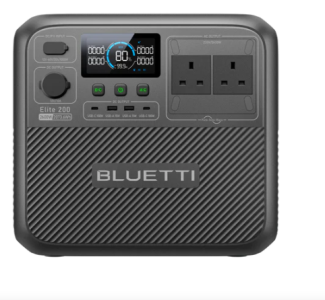
The power pack pictured equates to about 160AH (usable) of 12v battery which is impressive. (if correct).
One thing for sure the advertising might describe the whole device as a miracle machine but it is just ordinary technology bundled into one box. ol'will
 
I have been looking at the DJI Power 2000 3000W Portable Power Station for some time after I saw an episode from In Her Ocean Wake and they show cased the eco flow power station. I am particularly looking at the set up with the folding solar panel. I have a lightly used portable petrol generator small enough for my needs but the noise is something that puts me off these days, especially now that I am based in the non tidal Thames. The DJI is way more expensive but the manufacturer claims up to 10 years service life, super fast charging etc. For me, this will be the way forward as I don’t want to put solar panels on my boat. Will be selling the petrol generator for a small price if anyone is interested.
 
I have been looking at the DJI Power 2000 3000W Portable Power Station for some time after I saw an episode from In Her Ocean Wake and they show cased the eco flow power station. I am particularly looking at the set up with the folding solar panel. I have a lightly used portable petrol generator small enough for my needs but the noise is something that puts me off these days, especially now that I am based in the non tidal Thames. The DJI is way more expensive but the manufacturer claims up to 10 years service life, super fast charging etc. For me, this will be the way forward as I don’t want to put solar panels on my boat. Will be selling the petrol generator for a small price if anyone is interested.
I would start by looking at the space you have available for panels, and work back from there, rather than buying a whole kit.
 
I have been looking at the DJI Power 2000 3000W Portable Power Station for some time after I saw an episode from In Her Ocean Wake and they show cased the eco flow power station. I am particularly looking at the set up with the folding solar panel. I have a lightly used portable petrol generator small enough for my needs but the noise is something that puts me off these days, especially now that I am based in the non tidal Thames. The DJI is way more expensive but the manufacturer claims up to 10 years service life, super fast charging etc. For me, this will be the way forward as I don’t want to put solar panels on my boat. Will be selling the petrol generator for a small price if anyone is interested.
If it's a Honda 2kw and really a "small" price I might be interested.PM by all means.👍
 
No matter which way you look at it . It is a battery an inverter and a charger. The capacity of the individual parts is what matters. All in one box may be an advantage but for a boat we will often want a separate inverter engine or shore power recharge and may want to stick with existing LA batteries or go lithium.
The power pack pictured equates to about 160AH (usable) of 12v battery which is impressive. (if correct).
One thing for sure the advertising might describe the whole device as a miracle machine but it is just ordinary technology bundled into one box. ol'will
The Bluetti seems to perform as claimed in terms if capacity. And yes of course it is existing technology.
The same technology could be fitted usung seperate components and very probably at less cost if fitted on a DIY basis.
 
I would start by looking at the space you have available for panels, and work back from there, rather than buying a whole kit.
The issue is that the MF 895 has a limited space on the top of the pilot house and it is not flat either. I saw an episode from The Rudder, an Aussie guy that has the same boat and he managed to place two small flexible panels on top, but even he said is not ideal. I see the benefits of the solar panels since I never leave my boat connected to the shore power if I am not around, which means I need to travel to the marina at least every two weeks to make sure the batteries are topped up. The idea of the power station is to allow me to be off grid if I can’t find a power outlet whilst cruising the Thames for days at a time.
 
Above and beyond our 'wrangles' about LFP installations - which I've followed with interest - I now notice a crop of online ads for 'more-or-less' portable lithium battery packs from the likes of Jackery and Ecoflow.

These seem aimed at the van-camping and home 'prepping' market.

I'm wondering if and how such products might find a place in our boaty range of 'must have' goodies.

I have one. A 'Bluetti 180'. Very happy so far.

Boats it has been used on both had/have LA house banks and inverters. Using the Bluetti keeps more in the house banks while the fast charging Bluetti takes up the slack. 45 minutes from flat by mains, slower from solar or the cigar lighter socket.

We use it for high draw, short time things, toaster, air fryer, instant pot, vaccum cleaner and mains hand tools.

Cant fault it so far, it does what it says on the box.

I know, as some are bound to tell me, that I could have done it cheaper by making a DIY job. A DIY job would not be in such a convenient package if I made it..............................
 
I did wonder about these portable units for boat use. A 2kWh pack would be equivalent to around 160Ah battery with perhaps 140Ah useable. I have 450Ah on my boat but only use about 225Ah at most and average is more like 90-100Ah daily. A single unit would probably meet my needs, charge faster and have longer life than lead acid batteries. It would also come with a modest built-in sine wave inverter and possibly connections for solar panels with MPPT. I might actually consider something like this in certain situations. A neighbour was considering one for his camper van.

I actually bought 3 Ecoflow Stream units for home use a few months ago and they work well. The Ecoflow Stream range is a little confusing. Cheapest is just a battery, then they add an inverter with 13A outlets, next one has some MPPT and then more MPPT. Buying one with some solar panel connections would be useful on a boat if not already fitted.

I bought 1 unit with 13A outlets and 2 units with 3 solar panel connectors and 13A outlets. I would actually have bought a pair with just 13A outlets but weirdly, it was cheaper to buy a pair with MPPT facility. They had a sale at the time and I got 10% discount codes. I think they might still be valid if I need another unit.

They are pretty expensive for the capacity and a much larger 16kWh battery actually makes more sense in pounds per kWh but you also need to add an inverter and installation cost. I didn't need 16kWh and the hassle of extra kit and paying for installation. My existing 5kWh battery hasn't had the backup power wired yet and Ecoflow gave the possibility of instant backup. I can just unclip a connection and carry individual units to anywhere needed and plug kit into them. I can see it working on a boat or camper van as a quick fix for extra power. I'm pretty certain the non-MPPT equipped models are lighter than my 2kW Honda generator.
 
…But they're a hideously expensive way of adding battery capacity and really only start to make sense if you also want the other stuff like the inverter etc…
They’re expensive if they’re using cheap’n’cheerful cells and parts, but less so if they use quality stuff (anyone know?). I reckon a decent equivalent LiFePo battery, various sockets etc and a 2.5 kw PSW inverter charger wouldn’t be massively cheaper than the £900 that the Bluetti unit above seems to cost.
 
Top